 by
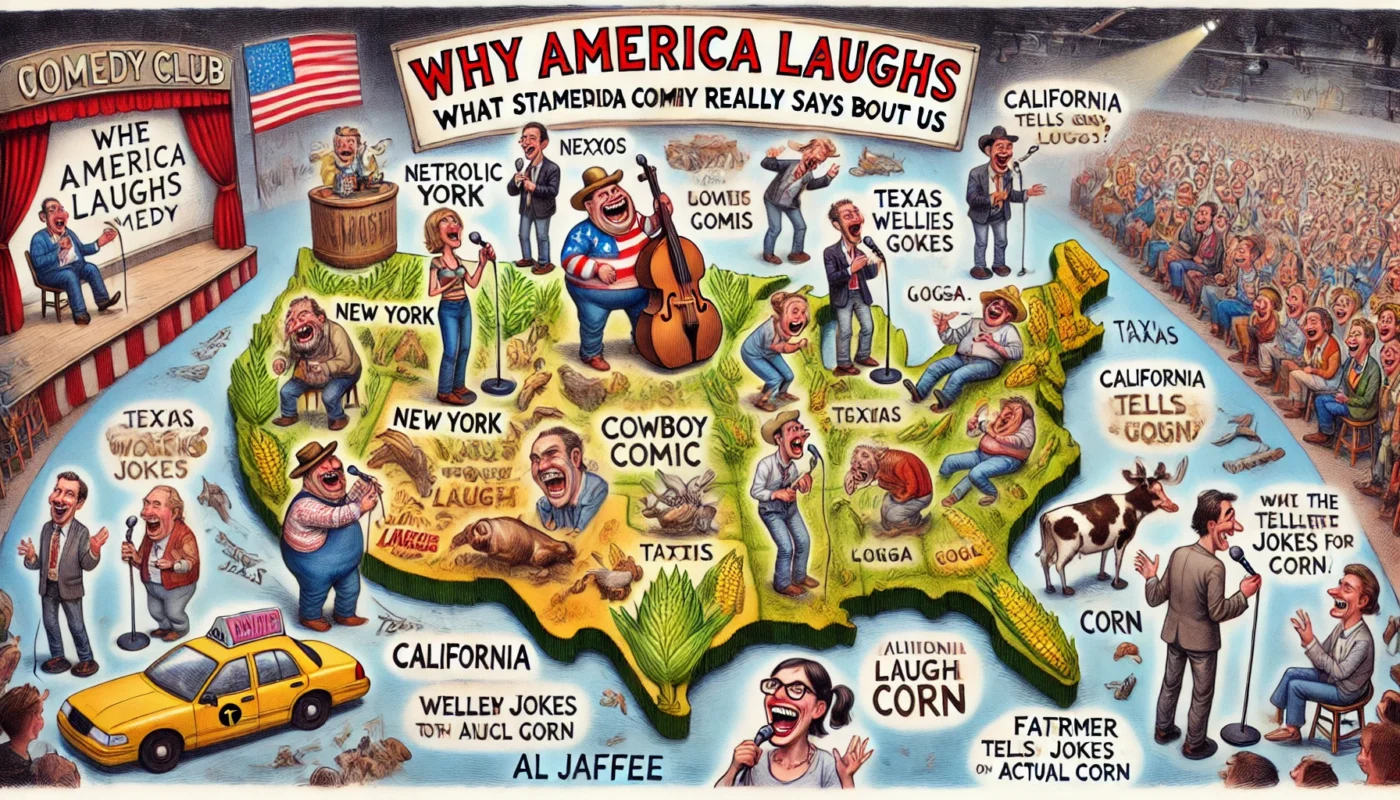
by Why America Laughs: What Stand-Up Comedy Really Says About Us
by Alan Nafzger | ComedyWriter.info
Stand-up comedy in America isn’t just a cultural product — it’s a deeply personal national ritual, like football, fireworks, or posting cryptic passive-aggressive memes on Facebook. It’s our group therapy, political rebellion, and late-night snack binge rolled into one.
The Comic Is the Product — And the Punchline
Americans don’t just go to comedy clubs to laugh. We go to like the comic. That’s why comedians like Kevin Hart sell out arenas even when half the audience can’t quote a single joke from the last special. Why? Because they “love him.” He’s “relatable.” He’s got that whole “short guy who made it” energy that’s both aspirational and just vulnerable enough to be cuddly.
It’s not always about the jokes. Hell, it’s rarely about the jokes.
Jerry Seinfeld could read a grocery list in a nasal monotone and we’d still lean in and go, “You know what, he’s right — there is something weird about low-fat yogurt.” Meanwhile, Mike Birbiglia could confess to accidentally joining a cult and the audience would be like, “Awww. Classic Mike.”
Affection Is the Admission Price
In the U.K., it might be about irony and edge. But in the U.S.? If the audience doesn’t like you in the first five minutes, your set might as well be a TED Talk about tax policy.
Even edgy comics like Dave Chappelle, who constantly push boundaries, rely on the audience’s affection. The laughter often comes from relief — “He said what we’re all afraid to admit… and he’s still alive!” It’s a bizarre national trust fall. We want to be dropped, but only if we believe the comic has our back on the way down.
Maria Bamford once said, “The audience doesn’t want your sanity — they want your damage to have punchlines.” Americans love a trauma-to-tour-ready transformation story. Especially if you can sell T-shirts afterward.
Comedy Is a Personality Contest with Hecklers
The stand-up stage is our only remaining gladiator pit — except instead of lions, there’s three drunk bachelorettes from Tulsa shouting “Tell the one about the squirrel again!” But we keep going because, deep down, we’ve decided that personality is content.
Bo Burnham didn’t go viral for writing punchier punchlines. He got famous because he reflected back our digital despair in musical form — and did it while looking like an emotionally fragile Abercrombie mannequin.
Meanwhile, Marc Maron has built a cult-like fanbase not by being consistently funny, but by being consistently Maron. Rage, insecurity, caffeine withdrawal, and a never-ending feud with whatever therapist quit on him last. It’s not “ha-ha” funny — it’s “leave the club feeling seen” funny.
Why We Laugh Is Why We Cry
There’s a reason Hannah Gadsby’s Nanette confused half the country and converted the other half into queer theorists. It wasn’t comedy in the traditional sense — it was a slow-burning act of personal rebellion delivered with the cadence of stand-up but the emotional structure of a group exorcism.
Americans don’t mind if the laughter stops — as long as the feeling doesn’t.
We want to laugh with someone, not at them. Unless they’re rich. Or British. Or a senator caught trying to order meth at a Chick-fil-A. Then it’s open season.
The Stand-Up Comic as Emotional Sherpa
Every American comic is now an “emotional brand.” John Mulaney isn’t just a comedian. He’s an archetype: Catholic schoolboy turned cocaine phoenix. He doesn’t even have to make a joke anymore — just walk onstage in a suit and go, “So I relapsed again,” and the audience claps like it’s the State of the Union.
It’s not that Americans are obsessed with recovery. We just appreciate structure.
The Hot Comic Paradox
Attractive comics in the U.S. face a bizarre dilemma: be funny, but not too sexy, or risk losing credibility. Ali Wong subverted this by delivering savage material in a dress so tight it looked like it might sue her for constriction. Meanwhile, male comics often downplay their looks — see: Pete Davidson’s entire career — because hotness in comedy feels like cheating. “If you’re hot and funny,” says the American public, “we’ll laugh, but only through gritted teeth.”
The Self-Deprecating Arms Race
In Britain, they say things like “Sorry I exist.” In America, we say things like “I grew up with ADHD, four therapists, and a haunted Furby.” And if it doesn’t get a laugh? We add: “But it’s fine. I’m in therapy now.”
We love comedians who hurt out loud — as long as they come with a Spotify podcast and an optional merch bundle.
Marc Maron once said, “I didn’t get into comedy to heal. I got in because I didn’t want to work retail.” That’s relatable. But now, healing is retail. It’s a business model. If your joke doesn’t make someone cry and subscribe to your Substack, are you even doing stand-up?
Why We Hate Some Comedians
We don’t just love comics — we love to turn on them. The same audience that lifted Louis C.K. to sainthood was later seen in the Yelp reviews of his apology tour writing things like, “Three stars — not enough contrition.”
Once a comic becomes a symbol, they lose their license to improvise. Kevin Hart learned this the hard way. One Oscar tweet later, he went from national treasure to moral liability. We don’t just want them to be funny — we want them to be our spokesperson, too.
And when they fail us? We post screenshots with hashtags like #IsThisYourHero.
Comedians as American Archetypes
In America, each comedian plays a cultural role:
-
Chris Rock is the philosopher-king in sneakers.
-
Tig Notaro is the deadpan nurse who saves lives with dry one-liners.
-
Amy Schumer is the drunk bridesmaid who still made it to brunch.
-
Joe Rogan is the gym bro who read one book and made it a religion.
-
Hasan Minhaj is the cousin who went to med school and drama school — and never lets you forget it.
We don’t just want jokes. We want avatars of our neuroses.
The American Need to Connect
Why do we laugh?
Because life is horrifying and capitalism smells like menthol-flavored doom. But also because we want to feel connected. A good comedy show in the U.S. feels like church — minus the hymns, and with more fart jokes.
And if a comic bombed? We don’t boo. We ghost. The most American form of rejection is silence and scrolling. Which is why comedians now ask the real question:
“Are you following me on Instagram?”
Final Thought: The Comic Is the Brand Is the Mirror
In America, we don’t watch comedians. We join their Patreon. Their career depends on our parasocial investment. And in return, they give us what we crave most: the illusion of intimacy, vulnerability with WiFi, and the belief that somewhere, someone else also cried while watching The Great British Bake Off.
So next time you wonder why Americans laugh, just remember:
We’re not laughing at the joke.
We’re laughing at the fact we’re still here.
Originally posted 2025-05-12 05:49:07.