 by
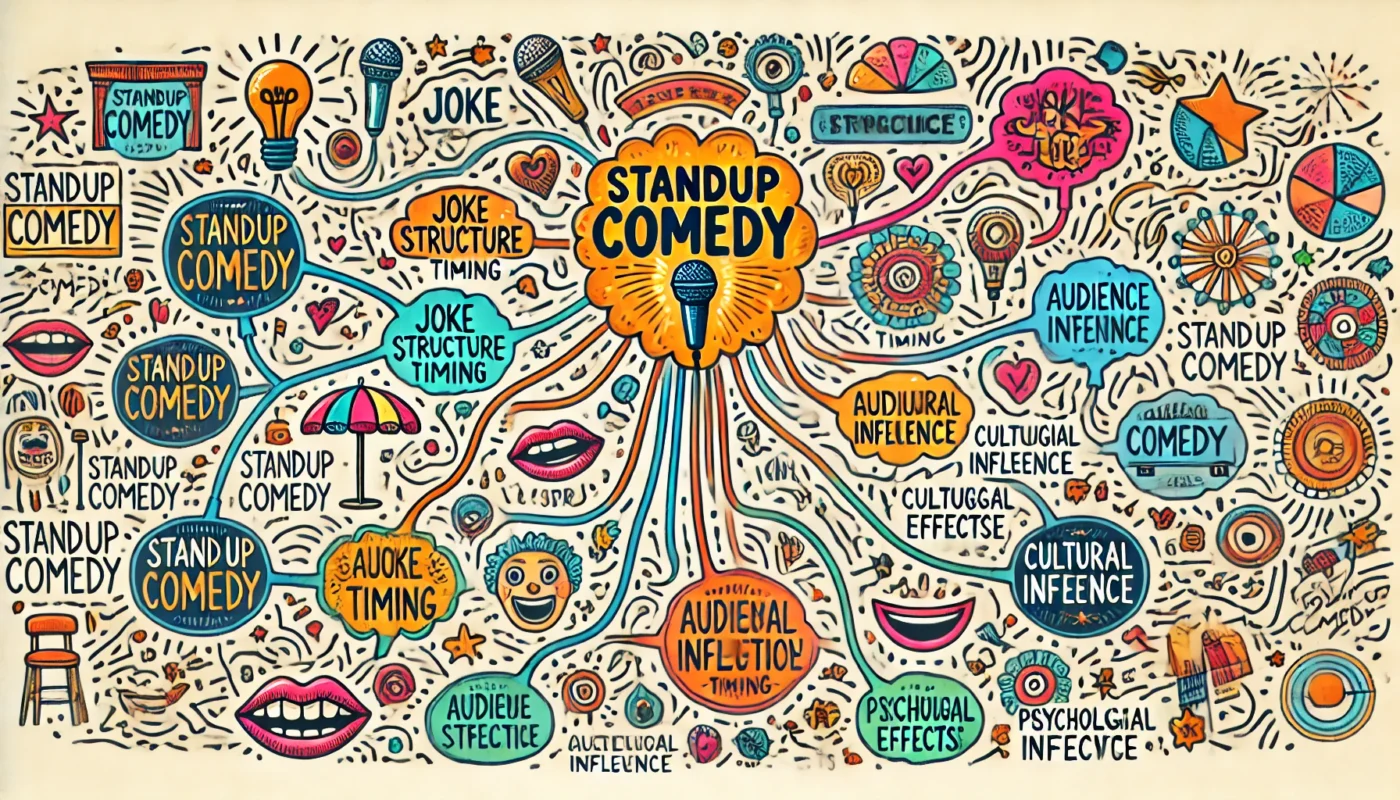
by Mind Mapping for Comedy: The Art and Science of Standup Comedy
The Structure of Standup: Crafting a Set That Connects
Standup comedy is often seen as an effortless art form, but beneath the surface lies a complex interplay of psychology, timing, and cultural awareness. A successful standup set is not simply a collection of jokes; it is a carefully structured performance designed to engage an audience. Comedians develop their routines through a mix of storytelling, observational humor, and punchline-driven delivery, refining their material through constant iteration.
Comedy writer Judd Apatow, who has worked with some of the most influential standup comedians, emphasizes the importance of structure in comedy. “Every great comedian builds a set like a house,” he explains. “You have your foundation, your big laughs, and your callbacks to keep the audience engaged.”
One of the critical elements in this structure is the callback—a technique where a comedian revisits an earlier joke, often with a twist that recontextualizes the original punchline. Callbacks create a sense of cohesion within a set, making the performance feel intentional rather than a random sequence of jokes. Legendary comedian Richard Pryor was a master of this technique, seamlessly tying his jokes into a broader narrative that felt both personal and universal.
Comedy as a Psychological Artform
Standup comedy is deeply rooted in psychology. Laughter is a social response, often triggered by surprise, incongruity, or the release of tension. Neuroscientists have studied how humor affects the brain, revealing that jokes activate multiple regions associated with pleasure and problem-solving. The incongruity-resolution theory suggests that humor arises when an expectation is subverted in an unexpected but logical way.
Comedians like George Carlin and Louis C.K. often play with audience expectations, setting up a premise that leads viewers in one direction before delivering a punchline that defies those assumptions. This cognitive dissonance forces the brain to reconcile the contradiction, resulting in laughter. Carlin, in particular, was known for deconstructing language and social norms, exposing absurdities that audiences had never fully considered.
Additionally, laughter plays a crucial role in human bonding. Studies have shown that people are more likely to laugh in social settings than when alone. This is why live standup performances are so effective—comedy is a communal experience. The energy of a room, the responsiveness of the crowd, and the comedian’s ability to read the audience all contribute to the effectiveness of a performance.
Cultural Influence and the Evolution of Comedy
Comedy does not exist in a vacuum; it evolves alongside society. The jokes that resonated with audiences in the 1950s would likely fall flat today due to shifts in cultural norms, values, and sensitivities. The rise of politically charged comedy in the 21st century reflects broader societal trends, with comedians like Dave Chappelle, John Mulaney, and Hasan Minhaj tackling issues of race, politics, and identity in their routines.
The changing landscape of humor can be seen in the transition from the classic one-liner comedians of the mid-20th century, such as Henny Youngman and Rodney Dangerfield, to the more narrative-driven storytelling comedians of today. In the past, standup was often a rapid-fire series of jokes without much personal investment. Today, comedians frequently use their personal lives as the foundation for their sets, blending humor with vulnerability.
Ali Wong’s standup special Baby Cobra exemplifies this shift. By discussing topics like pregnancy, marriage, and gender roles with unfiltered honesty, Wong connects with audiences in a way that feels both raw and hilarious. The blend of personal storytelling and sharp comedic writing makes her work resonate with a wide demographic.
The Business of Standup: Success Beyond the Stage
Standup comedy is no longer confined to clubs and late-night specials. The rise of streaming platforms, podcasts, and social media has dramatically altered the industry, allowing comedians to reach audiences without traditional gatekeepers.
Kevin Hart is a prime example of a comedian who has leveraged multiple platforms to build an empire. From standup specials to movie deals, brand endorsements, and even a fitness company, Hart has turned comedy into a business model. His approach demonstrates how standup comedians today are not just performers but entrepreneurs who must navigate a constantly evolving media landscape.
Social media platforms like TikTok and Instagram have also given rise to a new generation of comedians who bypass traditional industry channels. Figures like Matt Rife have cultivated massive followings by sharing short, digestible clips of their standup sets online, attracting audiences who may never have attended a comedy club.
However, this digital revolution has its downsides. The rise of “cancel culture” and the scrutiny of old jokes have created new challenges for comedians, forcing them to navigate a landscape where their material is often judged through a contemporary lens, even years after it was written. The debate over free speech in comedy is ongoing, with some comedians arguing that political correctness stifles artistic expression, while others contend that humor should evolve alongside social progress.
The Science of Timing: Why Delivery Matters
A joke is only as good as its delivery. The best comedians understand that timing, pacing, and intonation are just as important as the words themselves. Studies on comedic timing suggest that pauses—sometimes referred to as “beats”—allow the audience to process a setup before the punchline lands.
Comedians like Eddie Murphy and Joan Rivers mastered this technique, using strategic pauses to build anticipation before delivering their punchlines. Timing also plays a role in audience engagement. A poorly timed joke can lose its impact, while a well-delivered punchline can elevate even a mediocre setup.
Robin Williams, known for his frenetic energy on stage, had a unique ability to manipulate timing by alternating between rapid-fire jokes and unexpected pauses. His improvisational style made each performance feel spontaneous, even though it was often meticulously rehearsed.
Comedy as a Coping Mechanism
Laughter has long been recognized as a powerful coping mechanism. Many comedians use humor to process personal pain and adversity. Richard Pryor famously turned his struggles with addiction and near-death experiences into material that resonated with audiences on a deep emotional level. Similarly, Tig Notaro’s set about her breast cancer diagnosis (Live) was both heartbreaking and incredibly funny, demonstrating comedy’s ability to find light in the darkest moments.
The concept of “gallows humor” has been studied in psychology, with research indicating that people who use humor as a coping strategy tend to be more resilient in the face of stress. Standup comedy provides a space for audiences to confront difficult topics—racism, mental health, trauma—through the lens of humor, making these subjects more approachable.
The Future of Standup Comedy
As technology continues to reshape the entertainment industry, the future of standup comedy is likely to be a hybrid of live performance and digital innovation. Virtual reality standup shows, AI-generated comedy scripts, and interactive audience engagement could all play a role in shaping the next generation of comedians.
However, the essence of standup—human connection—will remain unchanged. Comedy thrives on authenticity, and while technology may change the medium, the fundamental need for laughter and connection will always drive the art form forward.
Conclusion
Standup comedy is more than just entertainment—it is an art form deeply rooted in psychology, culture, and human interaction. From the precise structure of a set to the way humor reflects societal shifts, comedy serves as both a mirror and a coping mechanism for audiences. As the industry continues to evolve, the core principles of timing, storytelling, and connection remain the pillars that define great standup.
The next generation of comedians will face new challenges, but the fundamental appeal of standup—the ability to make people laugh and think simultaneously—ensures that it will always be a relevant and powerful form of expression.
Originally posted 2023-09-15 06:15:02.


