 by
by Why We Like Comedians: Why It’s Funnier Than You Think
by Alan Nafzger | ComedyWriter.info
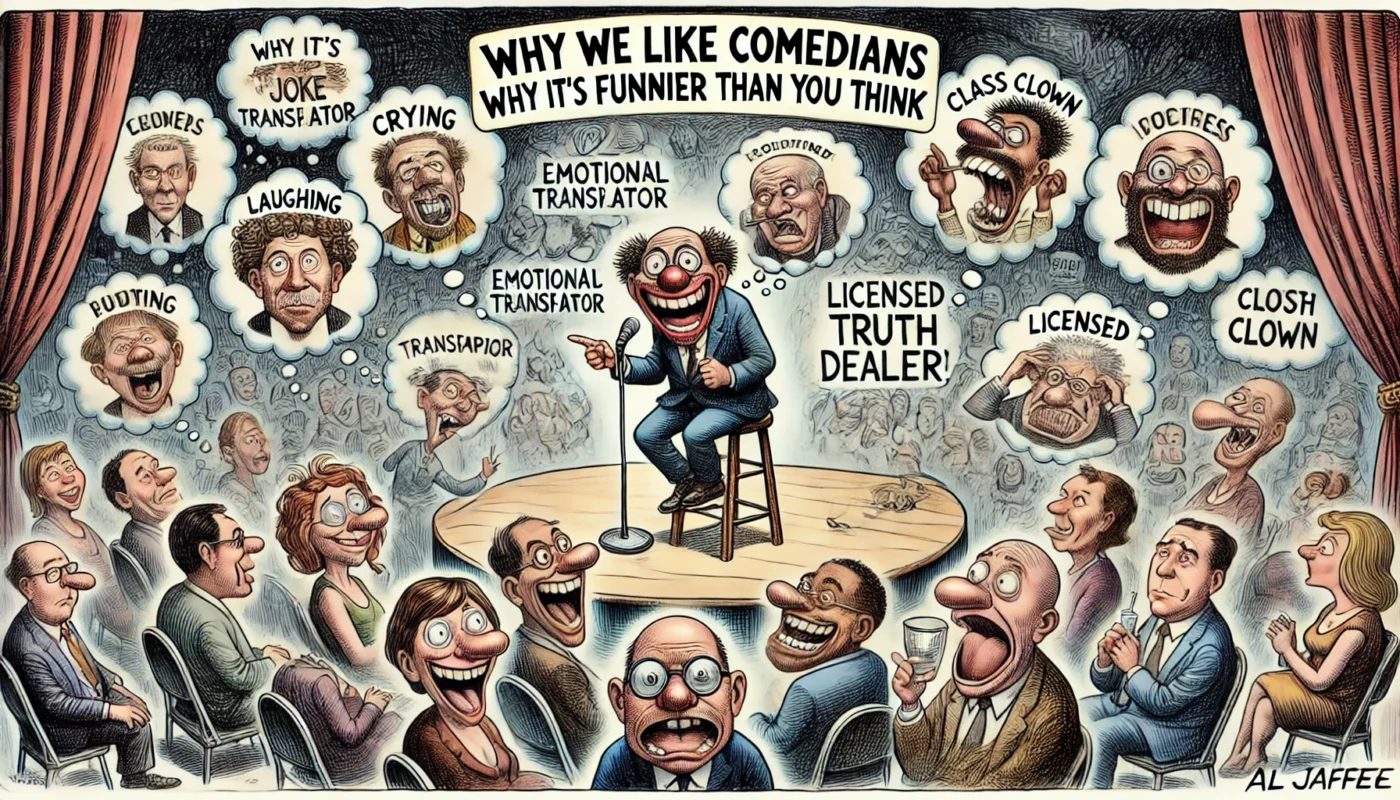
We don’t just laugh at comedians. We like them. Or we don’t. And if we don’t, they bomb – even if they’re delivering the tightest material this side of George Carlin’s ashes. In American comedy, likeability is currency. More than that – it’s survival gear. And understanding why we like certain comics (and love others) reveals something about both the audience and the nature of funny itself.
This article digs deep – with the wit and recklessness of someone on their third Red Bull at an open mic – into why “likeability” might just be the biggest punchline of all.
The Warm-Up Act: Affection Before Laughter
Here’s the rule of thumb in American stand-up: if the crowd doesn’t like you within the first 30 seconds, your jokes better be good enough to raise the dead – and even then, they’ll probably tweet that you’re “not for everyone.”
Stand-up isn’t just joke delivery. It’s a charm offensive.
That’s why Jerry Seinfeld can walk on stage and immediately talk about cereal, or why Wanda Sykes can make us laugh by saying she’s tired. Their personalities carry them before the jokes kick in.
The audience thinks: “They’re one of us.” And more importantly: “They see the same dumb stuff we do.”
Comedians as Mirror Neurons with Netflix Specials
We like comedians because they reflect us – or who we wish we were.
We like John Mulaney because he’s the anxious control freak in all of us. We like Hasan Minhaj because he brings TED Talk vibes to family trauma. We like Iliza Shlesinger because she personifies every party girl who somehow graduated magna cum laude.
Liking the comic gives us permission to laugh.
Without that emotional clearance, the funniest joke in the world will die faster than a GameStop stock tip on Reddit.
Why Did the Audience Cross the Road? Because They Cared.
According to multiple comedy writers – including me, and my dog who growls at late-night monologues – audience affection is the real MVP. Here’s why:
- Neuroscience: Studies show we respond to facial expression, vocal cadence, and even body posture before we process language. A warm comic smile can be funny before a single word lands.
- Cognitive Dissonance: We’re more likely to laugh if we’re comfortable. That means if we like the comic, we want to agree with them – even if their material’s dark, weird, or involves a rant about why squirrels are the real Illuminati.
- Social Proof: When the rest of the audience laughs, we laugh more – but only if we think the person on stage deserves it.
Charisma: The Laugh Track You Didn’t Know You Had
Comedians don’t need to be good-looking (though that helps until it backfires), but they need presence. Call it charisma, stage energy, or “whatever the hell Robin Williams was running on.”
Some comics radiate such magnetism that even a bad joke becomes a shared joke – like we’re all in on it, even when it flops. That shared goodwill lets the audience carry the comedian across rough patches.
Case in point: Ron White. He doesn’t sprint onstage or bring wild pacing. He saunters. He’s the guy who’s seen too much and decided to tell jokes instead of write country music. And you like him the minute he lights that cigar and shrugs at your judgment.
The “Friend You Wish You Had” Effect
A big part of why Americans like comedians is that they feel like friends we admire but don’t have to bail out of jail.
- Kevin Hart is the relentless hustler buddy.
- Sarah Silverman is the inappropriate BFF with a conscience.
- Jim Gaffigan is the exhausted dad in cargo shorts.
They feel familiar. Intimate. Like people who’d show up at your cookout and bring weird potato salad but tell great stories.
Charm Beats Edge 9 Times Out of 10
Yes, there’s room for edgy comics. Yes, we like being shocked. But if that edge doesn’t come with some warmth – some charm – it turns abrasive fast.
Dave Chappelle is sharp, but there’s a sly smile underneath the provocation. Michelle Wolf delivers roast-level burns but laughs with us at the end. Bill Burr rants like your furious uncle – but with a wink that says, “I know I’m being extra.”
We like them because we trust them. And trust precedes laughter.
The Danger of Trying Too Hard to Be Liked
Ironically, nothing kills likeability faster than obviously wanting to be liked.
When comics pander to the audience – seeking approval, begging for applause breaks, or shifting gears mid-set to please everyone – we sense it. And we recoil.
It’s like someone telling you, “I’m very cool, right?” while sweating through a fake leather jacket.
The best comics don’t need our approval. They command it.
Why We Like Some Comics Who Bomb Constantly
Here’s the paradox: we’ll forgive a comedian for bombing if we like them.
Plenty of comics have sets that don’t land. But if the crowd likes their energy, their honesty, or their vibe, they’ll still clap. Still root for them. Still buy a T-shirt that says “I Suck But I’m Charming.”
It’s why Pete Holmes had an entire HBO show about failing upward. It’s why Maria Bamford can pause for an entire 12 seconds and still hold the room.
Emotional Honesty = Instant Likeability
Comics who open up – who bleed funny – are often the ones we like most.
Think Richard Pryor talking about lighting himself on fire. Tig Notaro announcing her cancer diagnosis on stage. Taylor Tomlinson’s self-deprecating spirals about therapy.
We like people who don’t pretend. Who don’t hide behind ironic detachment. Who risk awkwardness.
In a world of curated content, the rawness of comedy is refreshing. We lean in because it’s rare.
Sometimes We Like the Comic More Than Their Comedy
This is awkward to say, but true: some comics win our hearts while losing our laughs.
A few examples:
- Trevor Noah (funny-ish, but people liked him more for how he explained the news).
- Steve Martin (his late-stage career got standing ovations for just showing up).
- Phoebe Robinson (delightful on podcasts, less so on stage for some fans).
And guess what? That’s still a win.
Because in American comedy, being likable can sustain a career longer than being consistently funny.
We Like Comedians Who Feel Like Underdogs
American audiences love underdogs. We always have.
That’s why so many comics perform underdoggery, even if they’re successful:
- Bo Burnham plays the shy genius.
- Amy Schumer doubles down on self-deprecation.
- Nate Bargatze leans into his slow-talking, confused-everyman persona.
Even when they’ve made it big, they wear their awkwardness like a badge. Because the audience doesn’t just want laughs – we want someone to root for.
We Hate Phonies, Not Jerks
A comic can be abrasive, rude, confrontational – and still win the room.
But if they’re fake? If the audience smells insincerity, pandering, or playing it too safe? It’s over.
That’s why Louis C.K. came back and got mixed reactions. Some liked him, but others now doubted the authenticity of his vulnerability. It felt calculated, not confessional.
We want real, not rehearsed.
We Like Comedians Who Like Us Back
There’s something incredibly simple but powerful about a comic who seems to enjoy the audience.
Robin Williams glowed with love for the crowd. Ellen (before the backlash) radiated warmth. Bert Kreischer literally takes his shirt off as a love language.
The comedians who look like they’re having fun? We like them. Because fun is contagious.
The Clapter Trap: When Liking Replaces Laughing
There’s a dangerous flip side to this too: comics who stop going for laughs and start going for applause.
We call it clapter – when people clap because they agree, not because they found it funny.
This is more common in political comedy or identity-based material. It still works, but it changes the goal. You’re no longer a comic. You’re a rally speaker in a hoodie.
We like these comics – but it’s not the same kind of liking.
The Likeability Index: A Real (Satirical) Metric
Based on extensive research conducted at my kitchen table, here’s what boosts a comic’s “Likeability Index”:
- Vulnerability: +10 points
- A good podcast: +5 points
- Relatable wardrobe (hoodie + jeans): +7 points
- A viral TikTok about anxiety: +8 points
- Actual jokes: optional
Kidding. (Mostly.)
Liking Is a Two-Way Street
Comics build their sets around what audiences respond to – but audiences also build relationships with comics.
We don’t just laugh with them. We follow them. We post their quotes. We buy their memoirs.
Likeability becomes legacy.
It’s why Bob Saget was mourned like a saint. Why Joan Rivers is remembered as fierce and fabulous. Why Norm Macdonald’s deadpan genius lives on in out-of-context YouTube clips.
Conclusion: Funny Is Good – But Likeable Lasts Longer
In the end, we like comedians because they reflect, connect, confess, and endure. Because they hold up a mirror and add just enough distortion to make us laugh – and just enough truth to make us care.
So the next time a comic walks on stage and the crowd roars before they say a word, remember:
It’s not the punchline they’re cheering. It’s the person.
Originally posted 2025-05-20 13:12:57.