 by
The Comic Who Refuses to Smile: Personality as Weaponized Deadpan
by Alan Nafzger | ComedyWriter.info
In the grand American tradition of razzle-dazzle showbiz – the toothy grin, the twinkle in the eye, the “let’s get loud!” comic energy – there stands a rebel. A quiet warrior. A sullen saint of sarcasm.
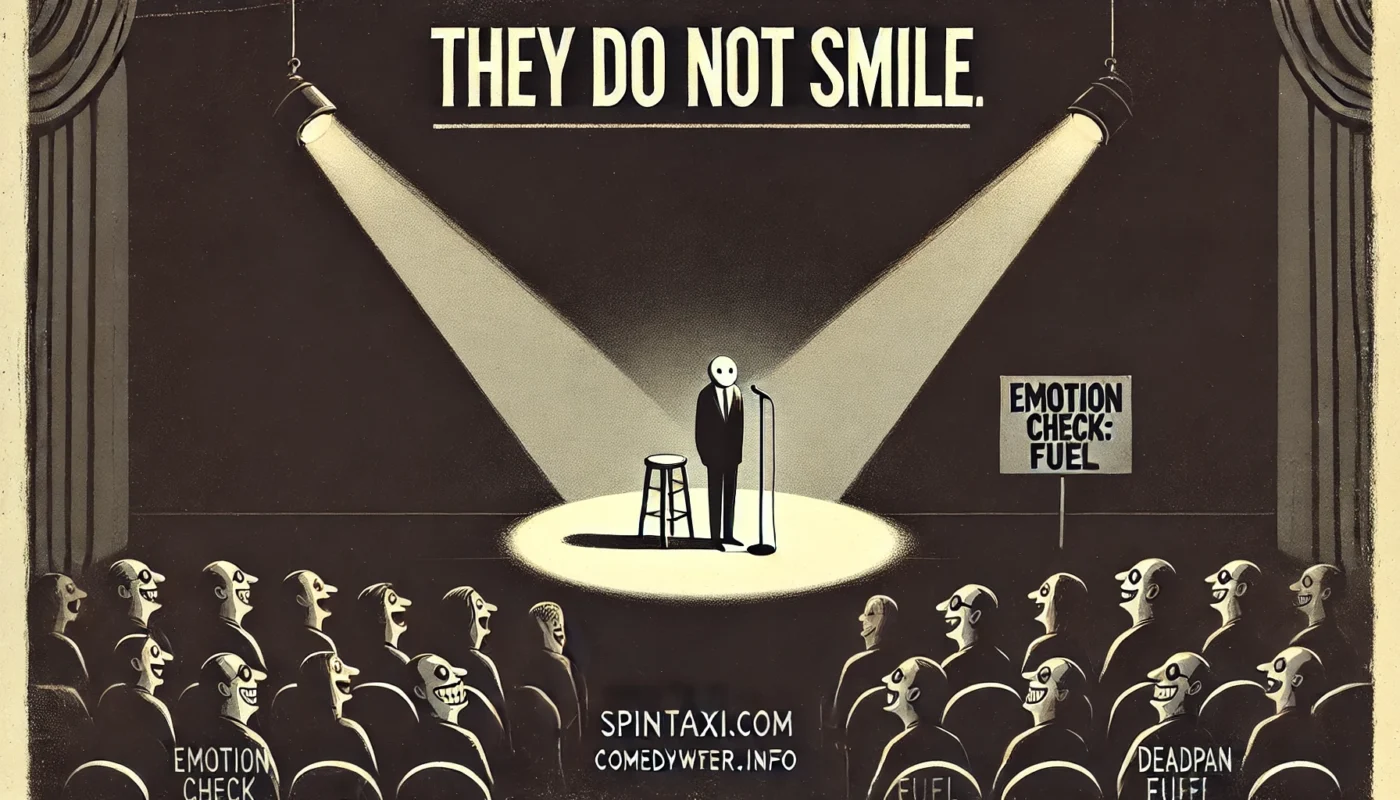
They do not smile.
They do not dance.
They do not gesture unless provoked.
They are the deadpan comic, and their personality is so dry it should come with a warning label and a bottle of Gatorade.
But here’s the kicker: this refusal to emote? This ironclad commitment to being stone-faced while the audience wheezes with laughter?
It’s hilarious.It’s deliberate.It’s art.
Let’s break down how deadpan comedians weaponize their personality – not despite their emotional flatline, but because of it.
What Is Deadpan? (Besides Sexy Sad Clown Energy)
Deadpan comedy is:
- Emotionally neutral delivery.
- Minimal expression.
- A total lack of visible joy, shame, or even awareness of the audience’s existence.
It says:
“I could be telling jokes or reading the side effects of Prozac – and you’ll never know.”
This works because it contrasts the material. The absurdity of the joke is heightened by the flatness of the tone.
Deadpan isn’t monotone. It’s controlled withholding. And when done right, it’s funnier than fireworks.
Comics Who Mastered the Anti-Smirk
- Steven Wright: Delivered philosophical nonsense in the tone of a DMV worker who hasn’t slept since Reagan.
- Tig Notaro: A master of pause, glance, micro-reaction – and zero interest in appeasing the room.
- Norm Macdonald: Could tell a joke about a dead turtle and make the punchline feel like a whisper from God.
- Nate Bargatze: So emotionally flat his audience leans forward just to find the joke – and then gets hit with it sideways.
These comics aren’t emotionless. They’re strategically cold.
Why Refusing to Smile Works
Smiling signals:
- “I’m in on the joke.”
- “You’re supposed to laugh here.”
- “We’re all having fun!”
Deadpan says:
“I’m not here to help you. If you want the punchline, you’ll have to earn it.”
This dynamic flips the traditional performer/audience contract. Instead of the comic chasing laughs, the audience starts chasing approval.
It’s reverse charisma. And it’s addictive.
How Deadpan Comics Use Personality as Power
1. They create tension.The audience doesn’t know when to laugh – so when they do, it’s explosive.
2. They make silence work.Deadpan comics weaponize awkward pauses. They hang in the quiet like cats on a bookshelf – calm, mysterious, quietly judging.
3. They make the absurd feel real.“I once got a microwave stuck in a tree” sounds stupid when yelled. But whispered with dead-eyed sincerity? Poetry.
The Comic’s Face Is the Joke
Deadpan comics often rely on micro-expressions:
- A single blink.
- A delayed head tilt.
- An imperceptible shrug.
These movements land like punchlines. They’re laugh grenades: tossed casually, explode on delay.
If expressive comics are jazz bands, deadpan comics are minimalist pianists with one key – and the audience still dances.
The Smile Refusal as Social Rebellion
In a country that values:
- Positivity
- Customer service energy
- “You should smile more” passive-aggression
…the deadpan comic is resistance.
They say:
“I’m not here to entertain you. I’m here to present data.”
It’s punk rock in sweater form. It’s the comic equivalent of wearing sunglasses indoors and refusing to explain your playlist.
The Myth: “They’re Not Performing”
People often think deadpan comics are just being themselves.
False.
They’re acting. They’re:
- Timing every pause.
- Calculating every beat.
- Measuring the exact wattage of their blank stare.
The performance is precise. The delivery is strategic.
It just looks lazy.
Deadpan Doesn’t Mean Dull
Deadpan is not:
- Monotony
- Boredom
- Nihilism
It’s contained chaos.
It says:
“I have feelings. I just won’t show them – and that makes you more uncomfortable, which makes me funnier.”
Why Audiences Love It (Even If They Don’t Know Why)
Audiences like being challenged. Deadpan forces them to:
- Listen closer
- Lean in
- Interpret silence
And when the laugh hits? It feels like solving a puzzle.
Deadpan comedy creates the illusion of depth – even if the joke is about a squirrel who thinks he’s a dentist.
What Happens When the Deadpan Comic Smiles?
Laughter.
Not just any laugh – a relief laugh. An “I caught you” laugh.
Because when a deadpan comic finally cracks?
- A smile becomes a punchline.
- A laugh becomes a climax.
- A chuckle becomes a callback to their humanity.
The break is rare. That’s why it works.
The Downside of Being Stone-Faced
Deadpan can backfire when:
- The audience thinks you’re serious.
- You are serious.
- The joke is too dark without emotional signal flares.
It’s a tightrope.
No smile? You might bomb hard.Smile too early? You lose the bit’s edge.
The margin for error is tiny – but when you hit it, you own the room.
How to Develop a Deadpan Personality Without Dying Inside
- Practice timing in front of a mirror. Watch how long you can pause before it gets creepy.
- Write jokes that sound sincere but feel absurd.
- Test different cadences. Slow doesn’t mean sleepy.
- Watch Tig Notaro’s Live. Then watch it again – but this time, study her cheek twitches.
When Deadpan Meets Crowd Work (Spoiler: It’s Hilarious)
Deadpan comics are surprisingly good at crowd work – because they:
- Disarm hecklers with politeness.
- Turn awkward answers into silent judgment.
- Roast people without changing expression.
Example:
Audience: “I’m a substitute teacher.”Deadpan Comic: slow blink”That explains the trauma I’m feeling.”
One dead stare = 30 seconds of laughter.
Final Thought: You Don’t Need to Smile to Kill
In a world that demands performative joy, deadpan comics say:
“I’ll pass.”
They aren’t cold. They’re calculated.
They aren’t shy. They’re surgical.
And their refusal to grin isn’t a lack of warmth – it’s a sign that they’ve chosen the joke over the gesture.
So the next time you see a comic onstage looking like a human security camera with a slow leak?
Pay attention.
They might just be the funniest person in the room.
Originally posted 2025-05-20 15:35:31.