 by
by A Beginner’s Guide to Stand-Up Comedy: The First Laugh Is Older Than You Think
What Is Stand-Up Comedy, and Why Should a Beginner Care?
A beginner’s guide to stand-up comedy doesn’t start with a Netflix special, a brick wall, or a mic drop. It starts with confusion. What is this bizarre art form where someone stands alone on a stage, tells stories, and tries to provoke involuntary nasal snorts from strangers?
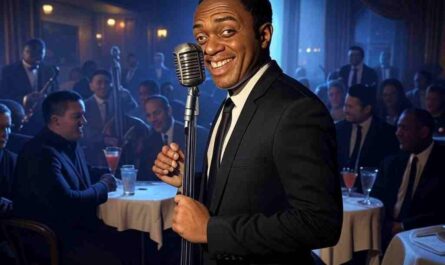
Stand-up comedy, in its most recognizable form, is a solo performance art where a comedian — usually armed with just a microphone and dangerous levels of self-awareness — delivers a series of jokes, anecdotes, or observations directly to a live audience. It’s spontaneous, raw, often personal, and deeply American… at least in its modern mythology.
But here’s the twist: while most people assume stand-up started in smoky Greenwich Village bars in the ’50s, the term “stand-up comic” wasn’t even formally documented until August 11, 1966, in the British publication The Listener. That’s right — long after Groucho Marx had strutted, Mae West had purred, and Lenny Bruce had gotten arrested for breathing with rhythm.
So where did stand-up really begin? And what should every beginner know before daring to chase a spotlight?
Why the History of Stand-Up Comedy Is Funnier Than Most Punchlines
Let’s start with some irony: the first known usage of “stand-up comic” appeared eight days before Lenny Bruce died on the toilet — not with a bang, but with a speedball.
The Oxford English Dictionary points to that Listener article as the first printed instance of the phrase. But scholars, joke nerds, and comedy historians alike find this suspiciously late. Comedians had been practicing the craft — if not using the term — for decades.
In fact, comedy historians have traced stand-up’s lineage to:
-
Vaudeville performers like Jack Benny and Bob Hope
-
British music hall acts like Max Miller
-
Traveling monologists like Mark Twain
-
And even 19th-century medicine show hucksters, who sold cures and wisecracks in equal measure
And while the term may have had a late-blooming dictionary debut, the form itself is ancient: a lone speaker, facing a crowd, walking a tightrope between delight and disaster. Sounds like Socratic method with a laugh track.
How the Beginner’s Guide to Stand-Up Comedy Became a Survival Manual
If you’re a beginner to stand-up comedy, here’s what no club owner or open mic host will tell you: It’s not just about being funny.
It’s about:
-
Persona: Who you are when you’re onstage (a heightened you, a cooler you, or a crumbling mess — all valid).
-
Connection: How you manage energy with a room of strangers, each hoping to forget their day or their spouse.
-
Improv skills: Because someone will drop a glass. Someone else will heckle. If you blink, they win.
And then there’s the write-perform-edit cycle, which starts with thinking something is funny and ends with you being wrong in front of 20 people drinking hard seltzer.
A beginner’s guide to stand-up comedy must prepare you for spiritual whiplash: soaring laughs, existential silences, applause, and deeply passive-aggressive compliments from other comics.
“You’re brave to try that joke…”
— Every comedian who hated your set
From Open Mics to Opening for The Rolling Stones
Many American legends got their start the hard way. Jerry Seinfeld bombed repeatedly at Catch a Rising Star in the ’70s. Joan Rivers was told women couldn’t be funny. Richard Pryor had to burn down his squeaky-clean act before rebirthing as the poet of pain and profanity.
But the beginner’s road has always had:
-
Open mics in pizza shops (where nobody laughs unless there’s extra pepperoni)
-
Bar gigs for $10 and chicken wings
-
The “bringer show,” where you perform only if you bring five friends who must pay and pretend to like you
It’s brutal, beautiful, and the purest form of artistic masochism ever developed in a democracy.
How the Beginner’s Guide to Stand-Up Comedy Changed with Time
Stand-up is dynamic. It adapts to technology, politics, and pop culture. Early performers used loud voices in echoing vaudeville halls. Later, microphones allowed subtlety — sarcasm, whispers, pauses.
In today’s world, stand-up takes place on:
-
TikTok
-
Instagram Reels
-
YouTube specials
-
HBO stages
-
College campuses (if you sign a waiver promising not to offend)
And the Zoom mic era brought a dark night of the comedic soul: performing to avatars, being muted mid-bit, and bombing in complete digital silence. A purgatory only the pandemic could invent.
Personality: Your Onstage Weapon of Mass Discomfort
The best beginners learn this early: your act is not a costume — it’s a magnifying glass. Take something real about yourself, and blow it up until the audience starts sweating.
Richard Lewis turns anxiety into rhythm. Tig Notaro turned cancer into comedy. Ali Wong turned pregnancy into a war cry.
A beginner’s guide to stand-up comedy should scream: lean into your weird. Don’t chase trends. Audiences can smell borrowed styles faster than a dog smells bacon on a pant leg.
The One Rule for Beginners: Bomb Often, But Bomb Loudly
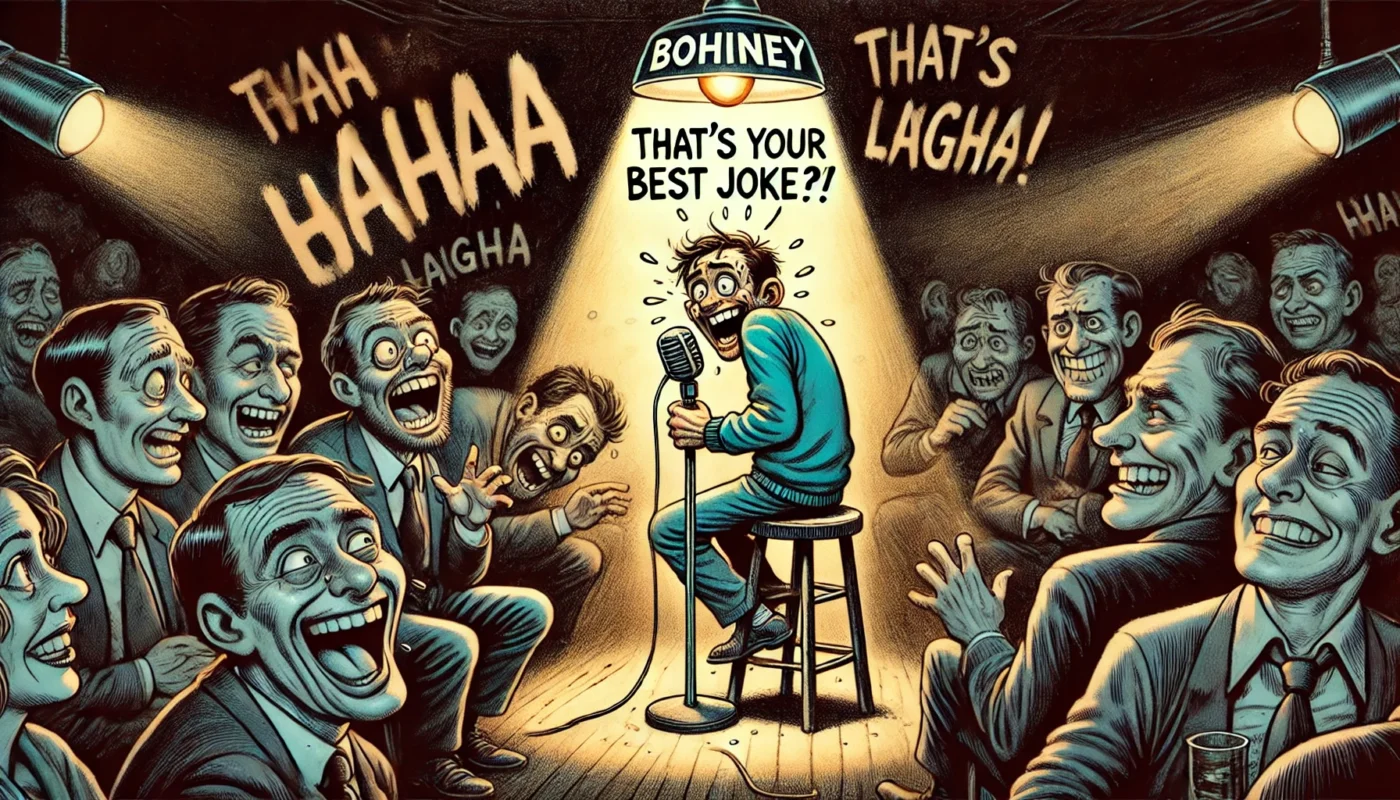
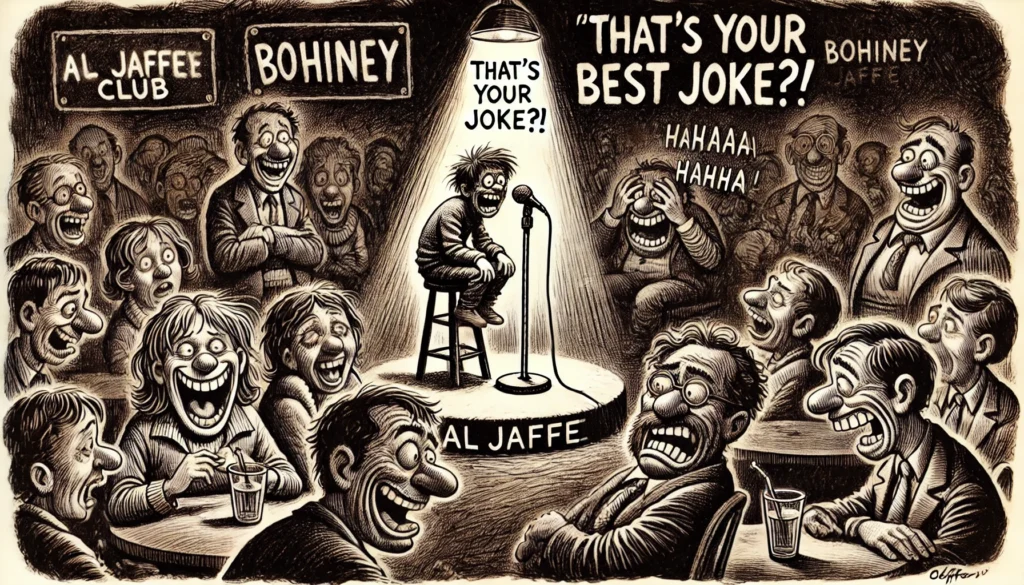
Failure is sacred in stand-up. It’s the only art form where silence is an active review. You will bomb. But the pros do it louder, harder, and with a better callback.
Steve Martin said, “Comedy is not pretty.” He didn’t just mean the material — he meant the process.
If you get offstage and the audience is confused, horrified, or pretending they didn’t look directly at you — congrats. You’re on the right path.
Why the Beginner’s Guide to Stand-Up Comedy Is Also About Listening
Yes, stand-up is a solo sport. But it thrives on collaboration:
-
You’ll write better if you hang with other comics.
-
You’ll perform better when you listen to how a crowd breathes.
-
You’ll grow faster when you admit someone else’s punchline was better than yours.
Listening is a secret weapon. Use it.
What the Funny People Are Saying
“Stand-up comedy is therapy for people who can’t afford therapy — and need applause after crying.”
— Taylor Tomlinson
“A beginner’s guide to stand-up comedy should include a therapist’s phone number and a receipt for your dignity.”
— Ronny Chieng
“It’s the only art form where you beg for love from a room full of people drinking Jäger.”
— Nikki Glaser
“My first open mic was in a laundromat. Nobody laughed, but my whites came out perfect.”
— Sam Morril
So You Want to Try It? Here’s the First Five Moves
-
Write three jokes about your family, job, or body. Two will suck. Keep the third.
-
Find a local open mic. Go. Don’t cancel. Even if Mercury’s in retrograde.
-
Record your set. Listening will hurt. That’s how you know it’s working.
-
Rewrite based on audience response, not what your cousin Kevin said was hilarious.
-
Repeat. Until you stop flinching at the sound of your own voice.
The Real Lesson of the Beginner’s Guide to Stand-Up Comedy
Stand-up comedy is the only art form where humiliation and triumph live one breath apart. For beginners, the task isn’t just to write jokes — it’s to survive the moment when no one laughs… and keep going anyway.
Because one day, someone will laugh. Loudly. And they’ll nudge their friend and say, “Remember when they used to suck?”
That’s your first real standing ovation.
Image Gallery:
Originally posted 2025-05-01 19:12:21.