 by
Truth in Stand-Up: Why Oversharing is the New Punchline
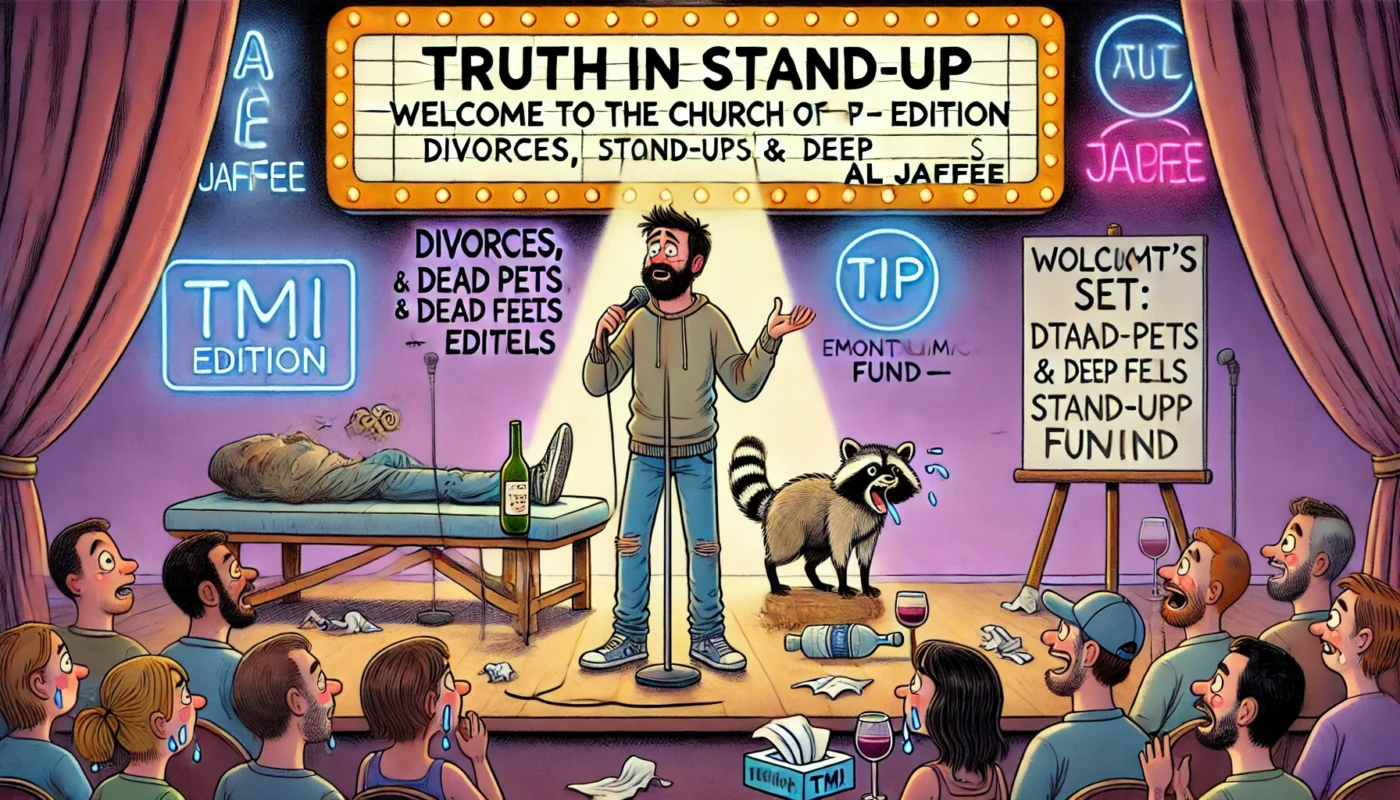
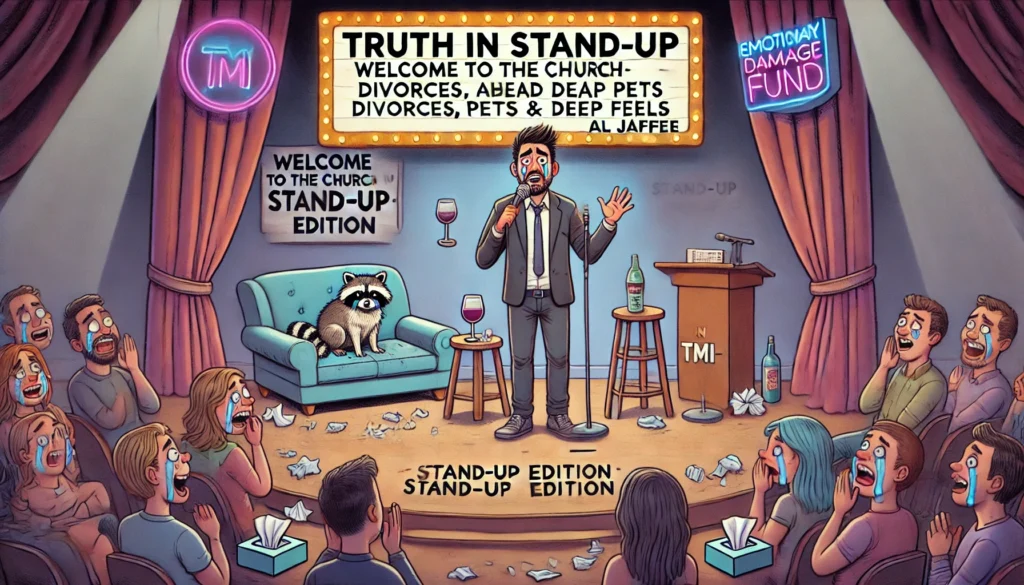
Welcome to the Church of TMI—Stand-Up Edition
America doesn’t just like its comedy personal. It likes it unfiltered, half-sobbing, and ideally involving someone’s disastrous childhood, a raccoon in the attic, or both. If the British like their humor dry and clever, Americans like it medium-rare with blood on the plate. Stand-up comedy in the U.S. has become the country’s favorite therapy session—except the therapist is drunk, and nobody’s billing insurance.
Truth in comedy is a weird beast. It’s not about literal facts. It’s about emotional accuracy. When John Mulaney opens a special by saying, “Hi, I’m John Mulaney, and I’m a recovering cocaine addict,” the crowd doesn’t gasp—they cheer. Why? Because the only thing more American than confession is monetizing your rock bottom.
We Don’t Want Bits—We Want Breakdowns
Gone are the days when a comedian could spend 60 minutes riffing on airline peanuts. These days, if your set doesn’t include at least one DUI, two panic attacks, and a moment where your voice cracks mid-trauma flashback, the audience isn’t sure you’re even trying.
It’s not just “truth” they want—it’s damage. The realest stand-up now sounds like a court-ordered apology read with better timing. If your joke doesn’t end with “…and that’s when I knew my mom loved my sister more,” you’re probably not getting booked on The Tonight Show.
The Trauma Olympics of Comedy Clubs
The green room has turned into a backstage for competitive suffering.
“Your dad abandoned you? Cute. Mine faked his death to get out of child support.”
“I was molested by my babysitter. She was a nun.”
“Oh, you went bankrupt? I was reposessed emotionally by my cat.”
It’s not cruelty. It’s currency. American comics know that pain sells. And not just any pain—relatable pain. Divorce. Rejection. Farting in yoga class. A miscarriage during your MFA program. If you’ve been hurt and you can link it to a Spotify special, you’re golden.
What the Funny People Are Saying
“I used to lie to get laughs. Now I tell the truth and get sympathy—and that sells more tickets.” — Taylor Tomlinson
“The truth in my set isn’t just what happened. It’s how it felt. So technically, I’ve been broken up with by the same guy five times.” — Nikki Glaser
“I did a joke about my alcoholic dad, and three people in the audience cried. Two more tried to buy me dinner. I should do this more often.” — Sam Morril
“I started telling the truth on stage. Now my family won’t talk to me. But strangers hug me in the Trader Joe’s parking lot.” — Mike Birbiglia
Lenny Bruce Walked So Hannah Gadsby Could Trauma Dump
The concept of truth in comedy didn’t start with TikTok confessions and podcast overshares. Lenny Bruce went to jail for saying the word “schmuck.” Richard Pryor burned himself with crack and told the story. Margaret Cho got canceled by both the church and her mother.
What’s changed is the pace and platform. With the rise of comedy clips on Instagram, YouTube, and viral reels, a comic’s “honest moment” has to hit harder than ever. You’ve got 30 seconds to convince people you’re funny, broken, and lovable. If your punchline doesn’t make them laugh and whisper “same,” it dies on arrival.
From Observational to Confessional
Jerry Seinfeld observed cereal brands. Kevin Hart confesses to cheating on his wife. Louis C.K. admitted to… well, a lot. Ali Wong gives pregnancy the tone of a failed drug deal. Bo Burnham tells you he’s depressed in 17 different rhythms and camera angles.
What changed?
In short: we stopped trusting jokes that were too polished. In the age of fake news and influencers with rented jets, “authenticity” became the only thing people believed in. If your joke sounds too perfect, Americans assume it was written by an intern in a TikTok scriptwriting house in Encino.
So you better make it raw. Make it ugly. Make it honest enough that your mom texts you, “Did you have to say that part?”
Truth ≠ Facts
Here’s the irony: most comics are lying. Just not in the traditional sense. They’re telling emotional truths. The facts may be blurry, but the feeling is real.
You didn’t literally puke on your date. But you felt like you did, and the audience relates to that version more. You didn’t get dumped in a Wendy’s—but your heart felt like Frosty-melt, and that’s what sells the laugh.
This isn’t deception—it’s editing. Comics aren’t court reporters. They’re memoirists with better timing and worse impulse control.
The Ethical Grey Zone: Are You Exploiting Yourself?
There’s a darker side to all this “truth as comedy.” Some comics feel like they have to keep digging deeper just to stay relevant. The pressure to self-expose can border on self-harm.
An open mic in Brooklyn can start to feel like a group therapy session where nobody gets better, they just get more followers.
The logic is brutal:
“If I joke about my divorce, I get five claps.
If I joke about my suicidal ideation during my divorce, I get five claps, a booking, and two podcast invites.”
Is that comedy? Is that healing? Or are we just trauma-mining with punchlines?
Comedy Clubs as Confession Booths
In the American club scene, it’s common now to hear stories that would’ve once been offstage only. Comics talk about:
-
Childhood abuse
-
Being broke and homeless
-
Their mental health meds
-
Addiction and relapse
-
Gender transitions
-
Surviving cancer
-
Being the “ugly” sibling
-
Getting ghosted during a eulogy (yes, that happened once)
And the crowd? They eat it up. They nod. They laugh. Sometimes they cry. But mostly, they buy the next ticket.
Because the truth, when funny, is the most addictive drug in American entertainment.
The Rise of the “Sad Clown” Special
Check Netflix, and you’ll see a new genre: the Sad Clown Stand-Up. These are specials where you laugh hard—and then pause, horrified, realizing you’ve just chuckled at someone’s trauma spiral.
-
Hannah Gadsby’s Nanette
-
Neal Brennan’s Blocks
-
Drew Michael’s self-shot experimental breakdown
-
Hasan Minhaj’s tragicomic TED Talk with punchlines
These aren’t bits. These are emotional TED Talks with punch-ins. They’re part therapy, part theater, part hostage situation—where the comic holds their pain hostage until the audience claps.
The American Obsession with Redemption
It’s no accident this form of “truth comedy” is popular here. America is the land of the comeback. We love a sinner with a mic. From rehab to resurrection—if you can fall, rise, and still make us laugh about it, you’re better than a superhero.
Truth in comedy works because it mirrors the American myth:
Fall → Cry → Confess → Monetize → Rise → Tour.
Closing the Gap Between Truth and Performance
So where does that leave the artform?
Some comics are finding a balance. They tell the truth, but with guardrails. They edit, shape, perform. They don’t just bleed—they direct the blood spatter for maximum laugh yield.
Others lean fully in. They let it all out. They turn stand-up into an emotional fireworks show where the joke is the wick and the therapy bill is the finale.
But either way, the American audience no longer wants just the joke. They want the journey.
Final Thought: Should You Tell the Truth?
If you’re writing your own stand-up and wondering, “Do I need to share my darkest secrets?”—the answer is: not all of them.
But you do need to tell your truth. The stuff only you could say. The thing that makes someone in Omaha go, “Oh my god, me too.”
That’s what makes American comedy so human. So absurd. So gut-wrenchingly funny. It’s not just “ha-ha.” It’s “ha-ha… ouch… yeah, same.”
Originally posted 2025-05-11 10:36:54.