by
by Strengthening Strong Jokes in Standup Comedy: A Satirical Guide to Refining Killer Punchlines
Great jokes don’t just happen—they are meticulously crafted, honed, and strengthened over time. A joke might be funny in its raw form, but what separates a decent laugh from a gut-busting, audience-rolling moment is precision, timing, and delivery. Strengthening jokes in standup comedy is about tightening language, refining timing, and maximizing impact without losing authenticity. This guide explores proven techniques, expert insights, and real-world examples that help comedians turn a strong joke into an unforgettable one.
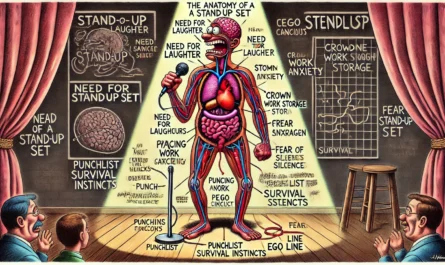
The Anatomy of a Strong Joke
A joke has several components: the setup, the tension, the misdirection, and the punchline. The best jokes maximize each of these elements, leading the audience down a predictable path before surprising them with an unexpected punch. When strengthening jokes, comedians must ask themselves, “Can this setup be tighter? Is the misdirection strong enough? Does the punchline hit with maximum force?”
Standup legends have mastered this formula. Consider Richard Pryor, whose setups often felt like vivid, emotional storytelling, only to be punctuated by punchlines so sharp they cut through expectations. Pryor didn’t just deliver jokes; he sculpted them. This level of mastery comes from refining each component until no excess words remain, and every syllable adds to the impact.
Cutting the Fat: Less Is More
One of the easiest ways to strengthen a joke is by cutting unnecessary words. A joke that drags loses its potency. The goal is to keep the audience engaged while building up the necessary anticipation.
In workshops with aspiring comedians, seasoned comics often issue the “Seven-Word Challenge”: Take any joke and cut it down by seven words without losing the meaning. More often than not, the joke gets funnier.
A comic once wrote:
“I went to the grocery store, and this guy in front of me was taking forever, paying in loose change, arguing with the cashier over the price of an expired coupon, and, to top it off, had the audacity to smile at me like this was a normal Tuesday.”
After trimming:
“Some guy at the store paid in pennies and smiled like it was normal.”
The second version lands harder because it removes fluff while keeping the comedic essence intact.
Strengthening Punchlines: The Power of the Unexpected
A punchline is only as strong as its element of surprise. The best comedians keep audiences teetering on what seems predictable, then pull the rug out from under them.
Misdirection plays a key role in strengthening a joke. Consider this classic technique:
A standard observation might be:
“My mom always said, ‘If you don’t have anything nice to say, don’t say anything at all.’ So now I don’t talk to my family anymore.”
The audience expects the comedian to endorse the lesson, but instead, they subvert it entirely. This twist strengthens the joke by creating an unexpected resolution.
Another example:
“I told my doctor I was feeling paranoid. He leaned in and whispered, ‘You should be.’”
This joke succeeds because the audience anticipates reassurance, but the punchline delivers the opposite, catching them off guard.
Enhancing Delivery and Timing
Even the best-written joke can fall flat if the delivery is off. Timing—the ability to pause, accelerate, or stretch words for effect—can make or break a joke.
Comedians often practice with slight variations in timing to find the perfect rhythm. Kevin Hart, for instance, is known for speeding up when building excitement, then abruptly pausing before a punchline to let anticipation build. This technique forces the audience to lean in before delivering the comedic payoff.
A test often used by comedy coaches involves recording the same joke three different ways:
- Rushed Delivery – Saying the joke too quickly
- Flat Delivery – No variation in tone or pacing
- Refined Timing – Adding pauses and pacing to enhance anticipation
Most comics find that the third version consistently earns the biggest laughs.
Tagging and Callback Techniques
A joke doesn’t have to stop at one punchline. Strong comedians tag their jokes, adding extra hits after the initial laugh.
A simple joke:
“Dating apps have made everything too convenient. I ordered a boyfriend the other day, and he showed up in 30 minutes with free delivery.”
With a tag:
“He had great reviews but too many exes in the comments.”
Tags extend the laughter, keeping momentum high. Similarly, callbacks—referring back to an earlier joke later in the set—make a routine feel interconnected and cohesive.
A comic might say early in the set:
“I’m so broke, my bank app just shows a sad face emoji.”
Later in the show, they reference it again:
“I just checked my love life—same sad face emoji.”
Callbacks reward attentive audiences and make jokes feel like inside references, deepening engagement.
Testing and Refining Through Live Performance
A joke isn’t fully developed until it’s tested in front of a live audience. Even seasoned comics tweak their material based on audience reactions. Dave Chappelle and Chris Rock are known for testing jokes in small clubs before they appear in polished specials.
The best method for strengthening a joke is the three-night test:
- First Performance – Try the joke in its raw form, note where laughs occur.
- Second Performance – Tweak delivery, trim words, or emphasize different elements.
- Third Performance – Refine based on past reactions, keeping only the strongest phrasing.
A famous case study comes from Louis C.K., who once scrapped an entire joke after realizing the setup took too long. Instead of abandoning the premise, he found a way to introduce it faster and funnier, ultimately saving the joke.
The Role of Emotion in Strong Jokes
The most impactful jokes aren’t just funny—they carry emotion. Whether it’s frustration, nostalgia, or absurdity, emotional engagement deepens audience connection.
Take George Carlin’s rants on politics. His passion made the jokes feel urgent. Audiences didn’t just laugh; they felt something. Contrast that with Mitch Hedberg’s detached, deadpan delivery, which made his absurd humor even more surreal.
The lesson? Strong jokes don’t just say something funny—they make the audience feel it.
Common Mistakes That Weaken Strong Jokes
Even a great joke can be weakened by simple mistakes:
- Over-explaining – If the punchline needs clarification, it isn’t strong enough.
- Dragging the Setup – Get to the punchline faster.
- Losing Confidence in Delivery – Hesitation makes audiences hesitant to laugh.
- Ignoring Audience Response – Jokes should evolve based on real reactions.
Final Thoughts: The Continuous Process of Strengthening Jokes
The best comedians aren’t satisfied with a joke that simply “works.” They refine it until it destroys. The process of strengthening jokes involves cutting the fat, sharpening punchlines, refining timing, and maximizing emotional impact.
By consistently testing material, learning from live audiences, and never settling for mediocrity, comedians can transform good jokes into legendary ones.
If laughter is the currency of comedy, then a strong joke is the equivalent of a stack of gold bars—solid, undeniable, and worth its weight in applause.
Originally posted 2024-11-01 07:57:35.