 by
“You Look Like” and Other Verbal Punches: Inside the Savage World of Improvised Roast Battles
Because Nothing Builds Friendship Faster Than Publicly Comparing Someone to a Dehydrated Shrek
There are many types of comedy:
-
Political,
-
Musical…
…and then there’s the roast battle.
Where comics get onstage, make direct eye contact, and say:
“You look like a Waffle House had a miscarriage.”
And the other comic?
Smiles. Claps. Fires back with worse.
That’s not just insult comedy.
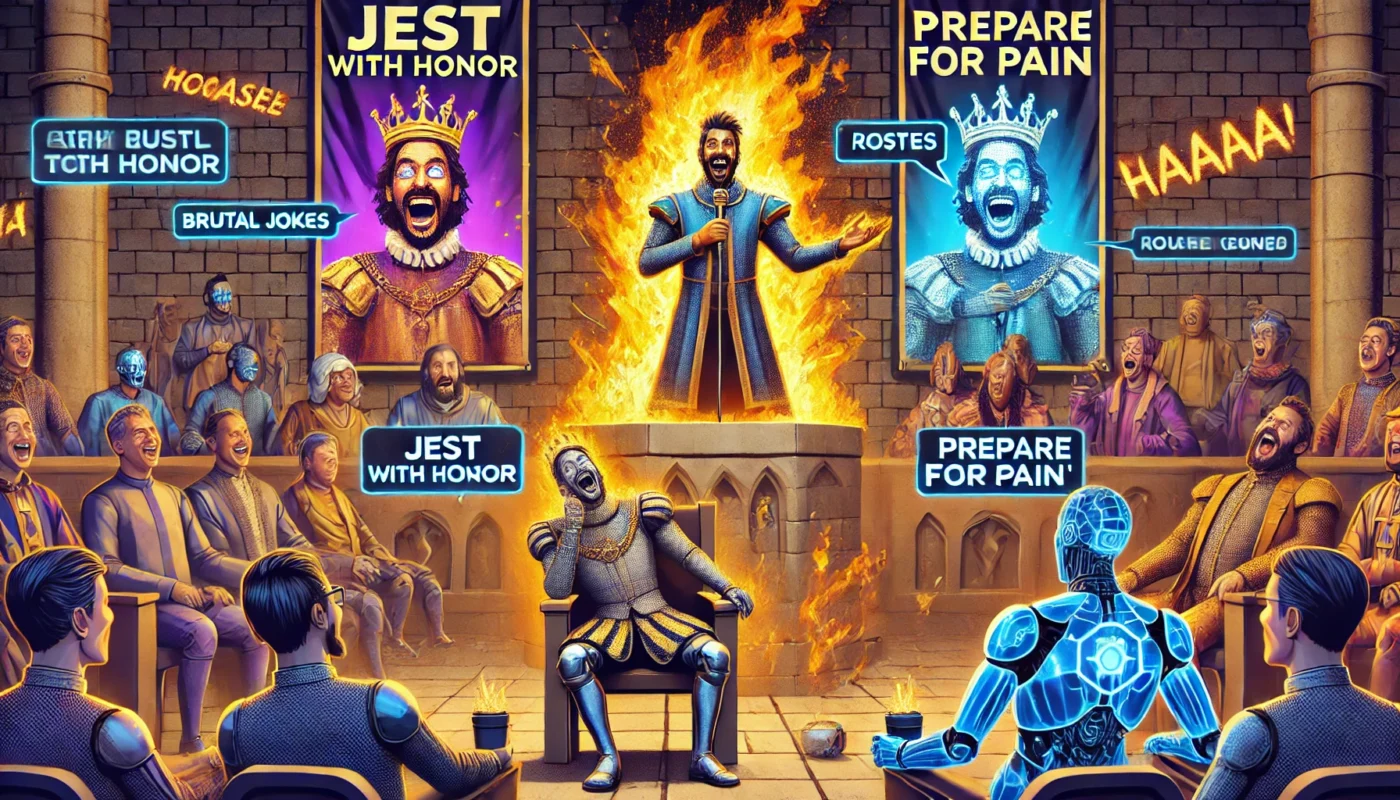
That’s improvisational roast battle — the most glorious, unscripted, rage-scented cage match in the world of stand-up.
What Is an Improvisational Roast Battle?
Take two comics.
Remove their scripts.
Give them:
-
A mic,
-
A mutual hatred,
-
And an audience that smells blood.
Tell them:
“You have 60 seconds to destroy each other… GO.”
They don’t come with prepared jokes.
They come with:
-
Instinct,
-
Snap judgment,
-
And the kind of personal insecurity radar only developed through childhood trauma and open mics.
It’s not bullying.
It’s consensual character assassination.
And when it’s done right?
It’s art.
The Craft of Being Cruel… Lovingly
Good roast comics don’t just insult.
They surgically identify your flaw, exaggerate it, and attach it to a metaphor so brutal it makes your therapist lean in.
Example:
“You look like the guy who lost custody of his Roomba.”
Or:
“She has the vibe of a school shooter’s ex-wife — confident and very, very quiet.”
It’s not about hate.
It’s about precision.
The best insults aren’t generic.
They’re custom-tailored trauma grenades that explode with laughter instead of shrapnel.
Why the Best Roasters Come From the Saddest Childhoods
Let’s be real.
You don’t get good at roast battles because you had:
-
A loving family,
-
Emotional boundaries,
-
Or successful eye contact in high school.
You get good because you were:
-
Bullied,
-
Forced to be funny as a defense mechanism,
-
And raised in environments where sarcasm was currency.
Roast comics are verbal survivalists.
They don’t fight to win.
They fight because it’s the only language they trust.
And that edge?
Makes them lethal.
“You Look Like…”: The Sacred Phrase of Improvised Carnage
It starts with two words:
“You look like…”
Then comes:
-
A metaphor,
-
A character sketch,
-
A hyper-specific image that should not exist… but absolutely does.
“You look like the forgotten extra from a meth PSA.”
“You look like a substitute teacher who got canceled on Yelp.”
“You look like you cry to Pitbull songs in AutoZone parking lots.”
These aren’t jokes.
They’re instant portraits.
The audience doesn’t just laugh.
They see it.
And once they see it?
It’s unforgettable.
The Timing Is Everything (And the Timing Is Cruel)
Improvised roasts have no room for hesitation.
You can’t say:
“Wait, let me think…”
You have to:
-
Look,
-
Analyze,
-
Fire.
And if the crowd gasps?
That’s currency.
If they groan?
Even better.
Because roast battles aren’t polite.
They’re fencing with flamethrowers.
And the winner?
Is usually the one who held eye contact while saying the meanest thing humanly possible.
The Rules of the Game (Also Known as “Suggestions We Will Absolutely Violate”)
Officially, most roast leagues say:
-
No punching down.
-
No racism, sexism, ableism.
-
No attacking something the person can’t change.
Unofficially?
The rules are:
-
Be funny.
-
Be fast.
-
And if you cross a line, make sure the joke is so good, no one cares.
Improvised roasts are a high-wire act over a pool of gasoline.
And if you can walk that line?
You become a legend.
If not?
You learn. Fast.
The Audience Is Not Innocent
Roast battle crowds are:
-
Savages,
-
Encouragers,
-
And emotional arsonists.
They don’t want nice.
They want:
-
Gasps,
-
Screams,
-
Applause that sounds like a bar fight is about to break out.
They’re not offended.
They’re hungry.
They came for blood, betrayal, and two comics bonding over mutual destruction.
And when it happens?
They erupt.
Not because it was kind.
Because it was brilliant.
When the Roasts Are So Accurate, It Hurts (Then Heals)
The best roast isn’t mean.
It’s true.
“You look like a guy who insists he’s a ‘dog dad’ but can’t commit to a plant.”
That lands because:
-
It’s specific,
-
It’s visual,
-
And it feels like it was whispered by the ghost of a disappointed ex.
The comic laughs.
The audience laughs harder.
And somehow?
Everyone feels better.
Roasting isn’t damage.
It’s shared exposure therapy.
And the punchline?
Is the closure.
What the Funny People Are Saying
“A great roast is when the person laughs and says, ‘You’re not wrong.’” — Jeff Ross
“If you can’t take a joke, don’t sign up to be called the human embodiment of expired mayonnaise.” — Jamar Neighbors
“Improvised roast battles are jazz with trauma.” — Nikki Glaser
“It’s not about hate. It’s about going toe-to-toe with someone smart enough to ruin you — lovingly.” — Tony Hinchcliffe
“If the joke is too real, you get a hug after. Sometimes.” — Sarah Silverman
Roast Me, Daddy: The Comedy Form That Hugs With a Closed Fist
Improvised roast battles are:
-
Mean but meaningful,
-
Brutal but bonding,
-
Cruel but weirdly respectful.
You don’t do it because you hate your opponent.
You do it because you trust they’ll hit back harder.
And when it’s over?
You hug.
You high-five.
And you go home knowing you just said the worst thing you’ve ever said — on purpose — and it worked.
That’s not just comedy.
That’s war poetry.