 by
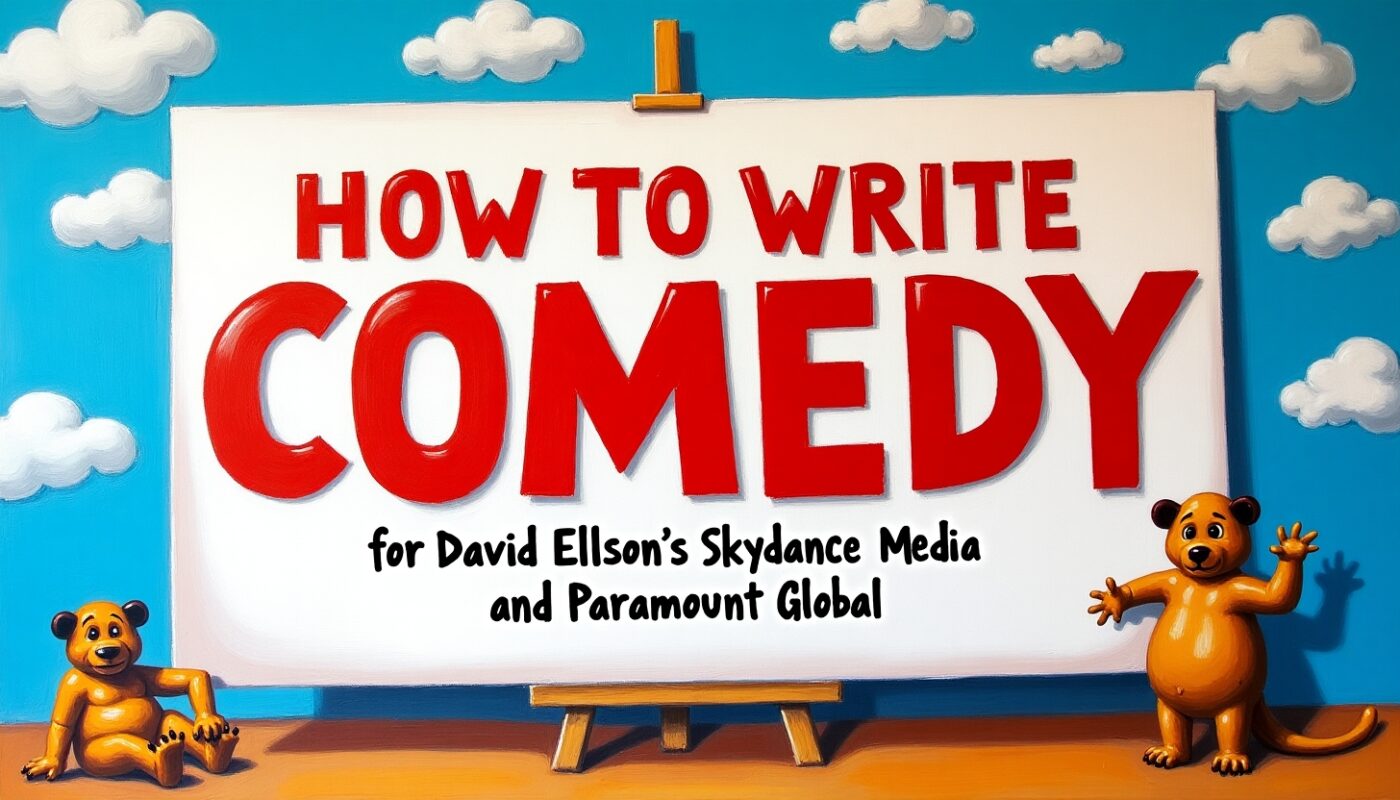
by How to Write Comedy for David Ellison’s Skydance Media and Paramount Global
By Staff Writers at ComedyWriter.info
Welcome to the Machine
David Ellison’s Skydance Media, having recently absorbed Paramount Global like a python swallowing a theme park, is now the entertainment industry’s ultimate intellectual property juggernaut. If you’re a comedy writer, that means one thing: opportunity.
And also: complexity, bureaucracy, corporate notes from people who once wrote punch-up for a cereal box, and the existential dread of making a poop joke that survives a 14-person email thread.
But fear not. This article is your serious, industry-savvy guide to crafting comedy for the Skydance–Paramount hydra without losing your voice—or your WGA card.
Understand the Skydance-Paramount Tone: Franchise First, Funny Second
Skydance and Paramount operate in a universe where Intellectual Property (IP) is sacred and character brands are more regulated than nuclear launch codes. You’re not writing a “comedy.” You’re writing a “laugh-friendly content vehicle optimized for a multi-quadrant audience with sequel potential.”
So before you pitch your “edgy postmodern animated monkey priest series,” ask yourself:
-
Can this idea survive a brand integration with Doritos?
-
Would SpongeBob make a cameo without damaging his toy line?
-
Can it be rebooted three times in one decade?
If the answer is yes, congratulations—you’re already writing like a Skydance insider.
Know Your Comedy Sandbox: What You’re Allowed to Play With
Skydance–Paramount owns or distributes a massive slate of characters and franchises, including:
SpongeBob, South Park, Star Trek, Beavis and Butt-Head, Transformers, TMNT, Dora, Mission: Impossible, and nearly everything Taylor Sheridan breathes on.
Each of these properties has its own rules, tone, legal guardians, and style bibles thicker than the Old Testament.
What This Means for You:
-
You can’t make Dora say “damn.”
-
You can’t kill off a Transformer for a punchline (unless you bring them back five minutes later with a sponsorship deal).
-
SpongeBob can do slapstick but not “grossout irony.”
-
South Park? You’re allowed, but only if Trey and Matt say yes—and they probably won’t.
Tip: Read the tone guides for each show. If you’re working through an agent or development exec, demand access to these before pitching. Otherwise, your idea will be dead on arrival.
Writing for Taylor Sheridan’s Universe: Grit Is the Punchline
Writing comedy for Yellowstone or Tulsa King might sound impossible—but dark comedy thrives in masculine, hyper-serious landscapes.
Rule #1: Don’t mock the cowboy.
Rule #2: Mock the modern world through the cowboy’s eyes.
Think of humor in this realm as existential deadpan. Examples that work:
-
A rancher who believes therapy is for horses but goes anyway.
-
A DEA agent trying to infiltrate a yoga studio.
-
A cowboy who won’t ride electric bulls because “they’re part of Bill Gates’ weather machine.”
Pitch angle: Sheridan is open to satire if it’s authentic, doesn’t undermine the emotional arcs, and doesn’t make the hats look small.
Get Corporate-Savvy: Who You’re Actually Writing For
It’s rarely just “Skydance” or “Paramount.” You’re writing for layers of executives with differing priorities:
| Group | Motivation |
|---|---|
| Skydance Execs | Prestige, IP longevity, international appeal |
| Paramount Studios | Legacy, nostalgia, advertiser-friendly tone |
| Streaming Division | Clicks, algorithmic stickiness, social shareability |
| Licensing/Brand | Merchandising potential, TikTok compatibility |
A joke that kills in the writer’s room may be strangled in the Licensing Department’s spreadsheet if it “conflicts with global Happy Meal potential.”
Pro Tip: In writer’s rooms, anticipate brand concerns before they arise. Label risky jokes “sandboxable” or offer “alt-friendly” punchlines in your draft.
Platform Specificity: Streaming vs Broadcast vs Animation
Skydance–Paramount comedy isn’t one-size-fits-all. Tailor your writing to the platform:
Streaming (Paramount+)
-
Bingeability is king.
-
More flexible tone and rating (TV-MA is okay).
-
Meta-humor, long arcs, serialized jokes = yes.
-
Great for hybrid satire (think BoJack meets Taylor Sheridan).
Broadcast (CBS, Comedy Central)
-
Family-friendly.
-
Structure-heavy. Think act breaks, punchline cadence, laugh-per-minute counts.
-
No F-bombs. Yes to innuendo.
-
Characters must “learn” or grow every episode.
Animation (Nickelodeon, South Park)
-
Cartoon logic applies—don’t pitch realism.
-
Rewrites will happen quickly, often for toy safety reasons.
Format Mastery: Submit Like a Professional
Even if you’re a genius, Skydance-Paramount will bin your script if you can’t follow format.
Formatting Checklist:
-
Title page with correct property, episode title, your name, WGA #.
-
Final Draft or PDF only. Google Docs is for interns.
-
Comedy beats per minute. Every 30 seconds, ask: where’s the funny?
-
Character consistency. SpongeBob doesn’t become Rick from Rick & Morty. Neither does Dora.
-
Act structure. For TV: 3-act for animation, 4-act for live-action, 5-act for CBS.
-
Page length. 22 minutes = 32 pages. Don’t go rogue.
Pro Tip: For development samples, include a one-page tonal summary and a mock-up of toy potential. Yes. Really.
Develop Your Own IP (That Looks Like Theirs)
If you’re not writing for existing franchises, but hoping to get your original comedy greenlit, you need to:
-
“Sheridanify” your world. Grit. Legacy. Dust. Deep voiceovers.
-
Bake in brandability. Picture it on a lunchbox.
-
Create expandable universes. If your short film idea can’t generate a prequel, a spinoff, and a musical—keep cooking.
Examples of “Skydance-style” comedy pitches:
-
“Montana Middle School” — A dramedy where 7th graders run a failing cattle ranch while surviving puberty.
-
“Survivor: HOA” — Satirical reality sitcom where suburbanites sabotage each other with legalese and lawn flamingos.
-
“CSI: Barbecue Unit” — Comedy procedural about a forensic grilling team solving cold ribs cases.
Use Their Buzzwords Without Dying Inside
Here’s a cheat sheet of Skydance-Paramount Development Bingo Terms and how to translate them:
| Exec Speak | What It Actually Means |
|---|---|
| “Elevated comedy” | We want something smart enough for critics but dumb enough for merch |
| “Multigenerational appeal” | Put a boomer, a millennial, and a kid in the same scene |
| “360 potential” | Can this become a ride, an NFT, or a t-shirt? |
| “Postlinear flexibility” | We don’t know if it’ll air in order, so don’t rely on continuity |
| “Brand-safe edge” | Be edgy, but only in ways that trend on TikTok and won’t get us sued |
Write like you’ve been on 14 Zooms that used these phrases and you’ll pass the first sniff test.
Get In the Room, Stay in the Room
It’s not just about being funny. It’s about being reliably funny under pressure with corporate decorum.
What Showrunners Want:
-
Writers who can pitch 20 jokes per scene, cut 19, and not cry.
-
People who understand IP protection without being bitter about it.
-
Ability to write for someone else’s character, not your college improv persona.
-
Collaboration over cleverness.
Pro Tip: Never make your identity the bit. Make the work the bit. You can be chaotic genius after the show is picked up.
Final Advice: Learn from the Masters
Study recent successes and failures across the Skydance-Paramount ecosystem.
Watch and analyze:
-
SpongeBob SquarePants (franchise maintenance)
-
South Park (topical bite + legacy format)
-
Yellowstone (character-first tone, even in drama)
-
Transformers: EarthSpark (balancing nostalgia with reboot)
-
Beavis and Butt-Head Do the Universe (revival satire)
Ask:
-
What’s the tone balance?
-
How do they handle exposition and punchlines?
-
What’s the character-to-merch ratio?
Then write what fits—but push just enough to feel fresh.
Be Funny. Be Flexible. Be Franchise-Literate.
Writing comedy for David Ellison’s Skydance Media and Paramount Global isn’t about selling out—it’s about selling smart. You can preserve your comedic voice while also hitting beats that please shareholders, development execs, and nostalgic Gen Xers.
The best comedy writers in this ecosystem:
-
Understand the assignment,
-
Respect the IP,
-
Know when to go loud and when to subvert softly,
-
And always, always ask: Can this survive the reboot cycle?
Now saddle up. The writers’ room is waiting, and it’s filled with brand consultants and a cowboy in a suit.
For more tools, pitch templates, and real-world script breakdowns, visit ComedyWriter.info — where funny gets serious.

Originally posted 2025-07-27 10:22:32.