 by
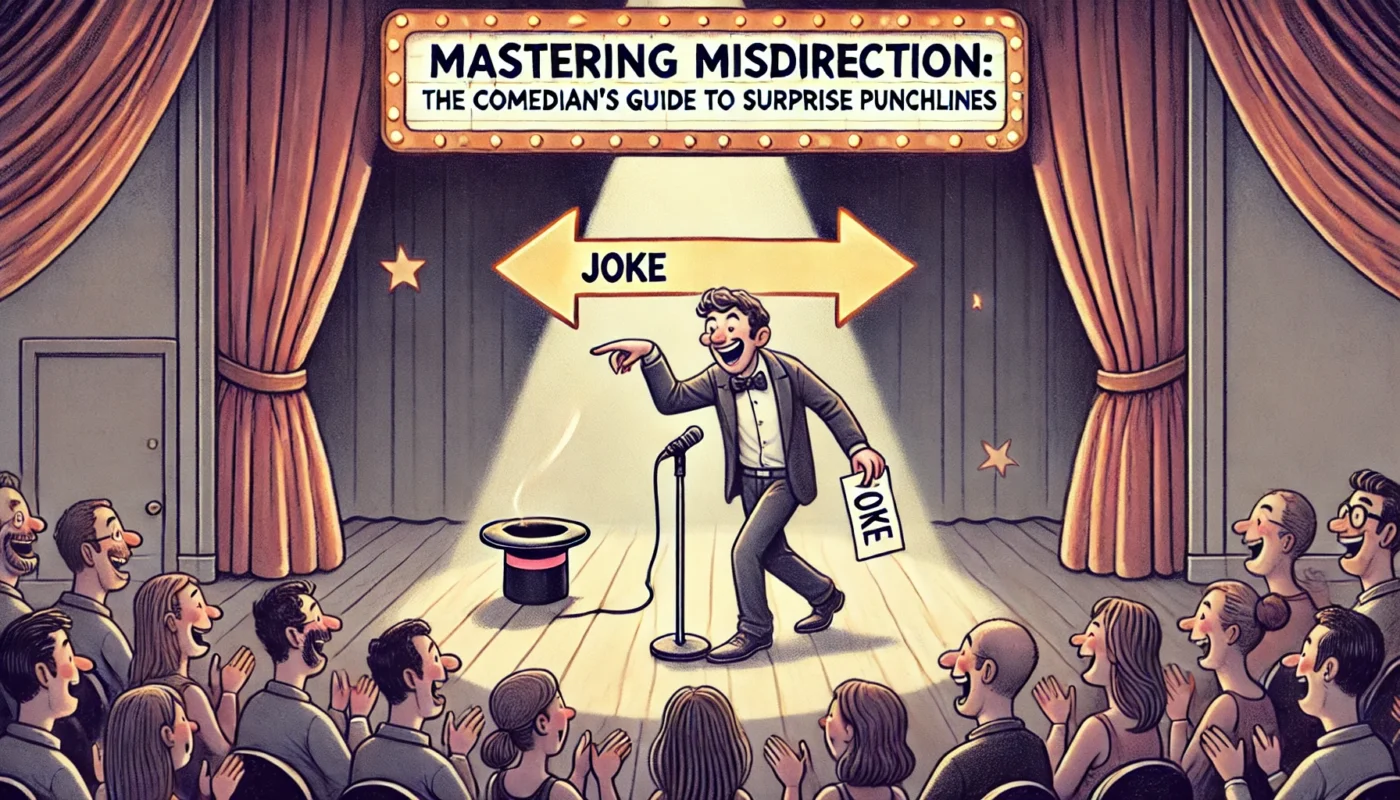
by Mastering Misdirection: The Comedian’s Guide to Killer Punchlines
What’s the deal with misdirection? It’s the secret sauce behind killer punchlines that catch you off guard – making you laugh before you even realize what happened. Think of those times a comedian led you one way, then bam! took a left turn. That bewildered belly laugh wasn’t an accident. It was crafty misdirection: the art of leading an audience down one path only to suddenly pull the rug out from under their expectations. It’s the comedic equivalent of a magic trick – one moment you’re following the story innocently, the next moment the comedian has pulled a rabbit out of a hat (or more likely, a laugh out of your gut).
Misdirection isn’t just for magicians with flashy capes – it’s every comedian’s trusty sidekick. Just as a magician might wave one hand to distract you from the other medium.com, a comedian uses words to guide your mind one way while the punchline sneaks in from another direction. The result is a delightful surprise. In this article, we’ll explore how misdirection works, why it makes us laugh, and how you can use it to deliver punchlines that slay. We’ll also toss in 15 laugh-out-loud tips (heavy on the exaggeration and absurdity) and real-world examples from stand-up, writing, and even magic. So grab a seat – this is gonna be a fun ride into the world of comedic misdirection.
What Is Misdirection in Comedy?
In comedy, misdirection is basically sleight-of-hand for your brain. It’s when a comic sets up an expectation in the audience’s mind… and then does something completely different. The setup is the bait, the punchline is the switch. As one comedy coach quips, misdirection in stand-up is when a comic sets up an expectation and then “walks out of the club never to be seen again” chrishead.com – a jokey way to say the payoff wildly subverts what you thought was coming. In other words, the setup plants an idea and the punchline flips it on its head.
For example, take a classic one-liner from Rodney Dangerfield: “My wife and I were happy for twenty years.” That sounds like the start of a sweet story. Then he snaps the punchline: “Then we met.”yourdictionary.com. Suddenly, “happy for twenty years” means they hadn’t met yet – a twist that gets you laughing at your own false assumption. Or consider British comic Jack Dee’s line, “I hate people who think it’s clever to take drugs… like customs officers.” The pause tricks you into thinking he’s chastising drug users, then surprise! the punchline reveals he meant confiscating drugs. We, the audience, fill in an obvious meaning for the setup, only to be proven hilariously wrong.
If the audience can see the punchline coming, the joke falls flat. Misdirection works because it leverages surprise. The comedian leads you one way, then yanks the steering wheel. The result is that delightful moment where you realize you’ve been fooled – and you love it. A great misdirection is a comic’s way of saying “Gotcha!” and the laughter is your good-natured surrender.
Why Misdirection Works: The Psychology of Surprise
Why does this trick of expectations make us laugh so reliably? Psychologists say a lot of humor comes from incongruity – basically a clash between what we expected and what actually happened. Over 200 years ago, the philosopher Immanuel Kant described laughter as “the sudden transformation of a strained expectation into nothing.” en.wikipedia.org. In plain terms: a joke builds up an expectation and then obliterates it. We experience a jolt of surprise and a release of tension – and out comes a laugh.
Our brains are basically prediction machines, always trying to guess what’s next. Misdirection takes advantage of that. You think you’ve figured out the story the comic is telling, but then the punchline makes you realize you were on the wrong track. It’s a mini cognitive “gotcha!” A classic study even showed how powerful misdirection can be: people watching a video were asked to count basketball passes, and during it a person in a gorilla suit walked through. Half the viewers didn’t notice the gorilla at all (snexplores.org)! Their attention was so focused on one task that they were blind to the absurd surprise. Comedians exploit this same phenomenon: the setup focuses your attention one way, so you don’t see the punch coming from another direction.
On a neurological level, a good surprise can trigger a pleasure response – a little hit of dopamine – because our brains love “solving” the twist of a joke. And socially, there’s a fun bonding in being fooled together; the audience collectively goes, “Ha! You got us!” In short, misdirection works because it tickles our love of surprise and rewards us for being in on the clever subversion.
Misdirection in Action: From Stand-Up to Magic
Misdirection is everywhere once you start looking for it.
Stand-Up Comedy: Nearly every stand-up has used this trick. We’ve already seen how one-liner kings like Dangerfield set you up and knock you down with a surprise. Even modern comics like Anthony Jeselnik build seemingly innocent setups that lead to shockingly left-field punchlines – the setup lulls the crowd, and the twist hits like a bolt. And storytellers like Ron White hide misdirection in longer tales: he’ll plant a detail early and you won’t realize it was a setup for a punchline until he delivers the payoff much later, catching you off guard.
Writing & Sitcoms: Comedy writers use misdirection on the page and screen, too. Sitcoms often present a line or situation that the audience interprets one way, then reveal a completely different meaning. For example, a TV character might appear to be talking about one thing, but in the final line we find out they meant something else entirely – cue laughter from a classic misunderstanding. Humor writing can use “red herrings” in text the same way, leading readers to assume an obvious outcome and then flipping it.
Magic & Other Tricks: Magicians basically wrote the book on misdirection, so much that “magic is misdirection and misdirection is magic”pmc.ncbi.nlm.nih.gov. A comedic magician might crack a joke to divert your attention while the real trick happens elsewhere. The audience laughs at the joke and misses the sleight-of-hand. Even professional pickpocket entertainers like Apollo Robbins use humor as misdirection: you’re charmed by the jokes and patter, and you don’t notice that your watch just vanished. Comedians and magicians are cut from the same cloth here – both use distraction and surprise as tools to astonish and delight you.
15 Observational Tips for Killer Misdirection
Ready to add misdirection to your comedy toolkit? Here are 15 quick tips and observations – each blending a bit of exaggeration, absurdity, contrast or irony – to help you deliver punchlines like a pro. (And hey, who says learning can’t be funny?)
-
Lead ’Em One Way, Then Yank the Wheel: Guide your audience down a logical road, then suddenly veer off into absurdity. The setup should feel natural, and the punchline should feel like a wild left turn. They’ll love the whiplash.
-
Hide the Punchline in Plain Sight: Use an ambiguous setup that seems obvious. Let the audience assume the easy meaning, then reveal the other meaning in the punchline. It’s a comedic “gotcha” – the clue was there all along, but no one noticed until you point it out.
-
Twist the Logic: Set up a statement that sounds rational or philosophical, then crack it with a punchline that exposes a silly truth. This ironic misdirection takes something highbrow and gives it a hilarious reality check. (For example: “I’m a huge believer in procrastination. It teaches you that anything can wait until tomorrow.”)
-
Exaggerate to Absurdity: Start with a real, mundane scenario, then blow it way out of proportion. The contrast between a normal setup and an over-the-top punchline is comedy gold. (E.g., “My phone died, so I was forced to talk to people. Terrifying.”)
-
The Ol’ Switcheroo: Make it sound like you’re talking about A, when it’s really B. Complain about a “terrible roommate” and then reveal you’re describing your cat. The audience’s mental image flips and so does their laughter.
-
Use a Decoy Laugh: Throw in a small joke or funny aside during your setup to momentarily satisfy the audience’s laughter. While they’re chuckling at that decoy, slip in your real punchline from their blind side. Two laughs for the price of one setup.
-
Keep a Straight Face (and Tone): Deliver your setup like it’s just regular conversation. If you seem like you’re “telling a joke,” people brace for it. But if your setup sounds like a normal story or fact, the surprise hit of the punchline will catch them off guard.
-
Contrast the Mundane with the Ridiculous: Pair something ordinary with something outrageous. “I start every morning with coffee, toast, and a brief cry for humanity.” The mundane setup makes the crazy twist even funnier.
-
Subvert a Stereotype: Use the audience’s assumptions against them. Set up a scenario that plays into a familiar trope or stereotype, then spin it on its head. (For instance: “I did finally buy a house this year… in Monopoly.”) They’ll laugh at the unexpected direction and the sneaky social commentary.
-
Understate the Crazy: Describe an absurd situation as if it’s perfectly normal. The misdirection between your calm tone and the outrageous content makes people double-take and then crack up. (“Winning the lottery was kinda a hassle, to be honest.”)
-
Add a Visual Surprise: If you’re performing, use your body language or expression to misdirect. Act out the setup one way, then switch your face or posture suddenly for the punchline. Even in writing, you can describe a character’s serious look turning silly. That sudden visual shift reinforces the unexpected punchline.
-
Plant a Hidden Clue: Sneak your punchline’s setup into the story early on – a tiny detail that seems irrelevant. When you hit the punchline, the audience realizes that detail was there the whole time, hiding in plain sight. It’s a satisfying “aha!” moment that makes the laugh louder.
-
Master the Pause: A well-timed pause before the punchline builds suspense and misdirects the audience’s thoughts. They’ll start completing the joke in their own mind (usually incorrectly) during the silence – and that’s when you drop the punchline hammer, catching them by surprise.
-
Relatable Setup, Ridiculous Payoff: Begin with something everyone recognizes and agrees with. Then take it to a ridiculous extreme in the punchline. The audience goes from nodding “so true” to laughing “okay, not that true!” in a heartbeat.
-
Satirical Sleight-of-Hand: Use misdirection to make a point with humor. Say what people expect to hear (earnest, polite, politically correct), then reveal what you really mean in a punchline that highlights the absurd truth. It’s a great way to get a laugh and sneak in some sharp insight while you’re at it.
Conclusion: Timing, Confidence, and Practice
At the end of the day, misdirection is about confidence and timing. Surprise is your friend – and knowing when to spring that surprise is just as crucial as knowing what to say. Lead your audience down the setup path with conviction, then deliver the punchline like you’re pulling a tablecloth off a set table (and the dishes are somehow still standing). If you sell it, they’ll buy it – and they’ll love being fooled.
Here are a few actionable ways to sharpen your misdirection skills and comedic timing:
-
Write and Flip: Take a normal statement and brainstorm unexpected ways to end it. Practice turning obvious setups into surprise punchlines. Keep a notebook of setups you overhear in daily life (many “innocent” phrases hide potential double meaningschrishead.com).
-
Test on Real People: Work out your misdirection jokes in front of an audience – whether at open-mic nights or just friends around a table. Watch their reactions: Did they gasp or laugh at the punchline? If they saw it coming, tweak the setup or timing. Real feedback is the best teacher (and if a joke bombs, hey, at least you learned something!).
-
Study the Pros: Pick your favorite comedians and notice how they use misdirection. Pause a Netflix special and try to predict the punchline – you’ll quickly appreciate how cleverly comedians lead and mislead. Also, practice your pause before the punchline; that beat of silence can build tension and make the payoff explode.
With each joke you craft, remember the misdirection mantra: set ’em up, then knock ’em down in a way they never saw coming. And when you deliver that punchline matters as much as what it is – a split-second pause or a raised eyebrow at the right moment can turn a chuckle into a howl. Do it all with your own style – whether it’s a dry Seinfeldian observation or a wild Ron White yarn – and commit to the bit. The more you practice, the better you’ll get at playing puppet-master with your audience’s expectations. Now get out there and give ’em one heck of a show they won’t see coming!
Originally posted 2025-05-17 15:01:57.


