 by
by From Music Hall to Microphone: The Wild Legacy of Nellie Wallace and Friends
How Music Hall to Stand-Up Comedy Became the Blueprint for Every Mic Drop Moment
If you think the story of music hall to stand-up comedy is a polite little history lesson, think again. It’s the story of chaos, hecklers, fish-slapping jokes, and working-class audiences who didn’t care about your feelings — they cared if you were funny now.
Music hall to stand-up comedy isn’t a straight line. It’s a drunken stumble through back-alley pubs, overstuffed theaters, and eventually into the raw honesty of modern stand-up.
Before tight five-minute sets and Netflix specials, there were battered stages, beer-soaked hecklers, and comedians who had to survive with nothing but timing, wit, and, occasionally, a fake moustache.
And the queen of this mad evolution?
Nellie Wallace — the woman who turned awkwardness, weird costumes, and brutal crowd control into an art form.
What Was Music Hall Comedy Anyway?
British music halls in the late 19th and early 20th centuries were the great-grandparents of stand-up clubs:
-
Cramped rooms
-
Rowdy, working-class crowds
-
Performers competing against each other — and the alcohol level of the audience
Music halls featured a mishmash of entertainment: singers, dancers, acrobats, comics.
But the ones who survived — the ones who could silence a drunken dockworker with a glance — weren’t just funny.
They were killers.
Music hall comedy wasn’t about clever wordplay for Oxford grads.
It was about real life: bad jobs, bad marriages, bad meals, and somehow still laughing through it.
Sound familiar, American open mic comics?
That’s because the music hall to stand-up comedy journey built the survival skills every great comic still needs.
Nellie Wallace: The Patron Saint of Awkward, Brilliant Comedy
Forget polite punchlines.
Forget polite audiences.
Nellie Wallace hit the stage like a chaotic fever dream in the early 1900s:
-
Ragged costumes
-
Wildly exaggerated makeup
-
Gawky physicality
-
And a voice that could cut glass
Her act?
-
Stories about miserable marriages
-
Songs that devolved into insults
-
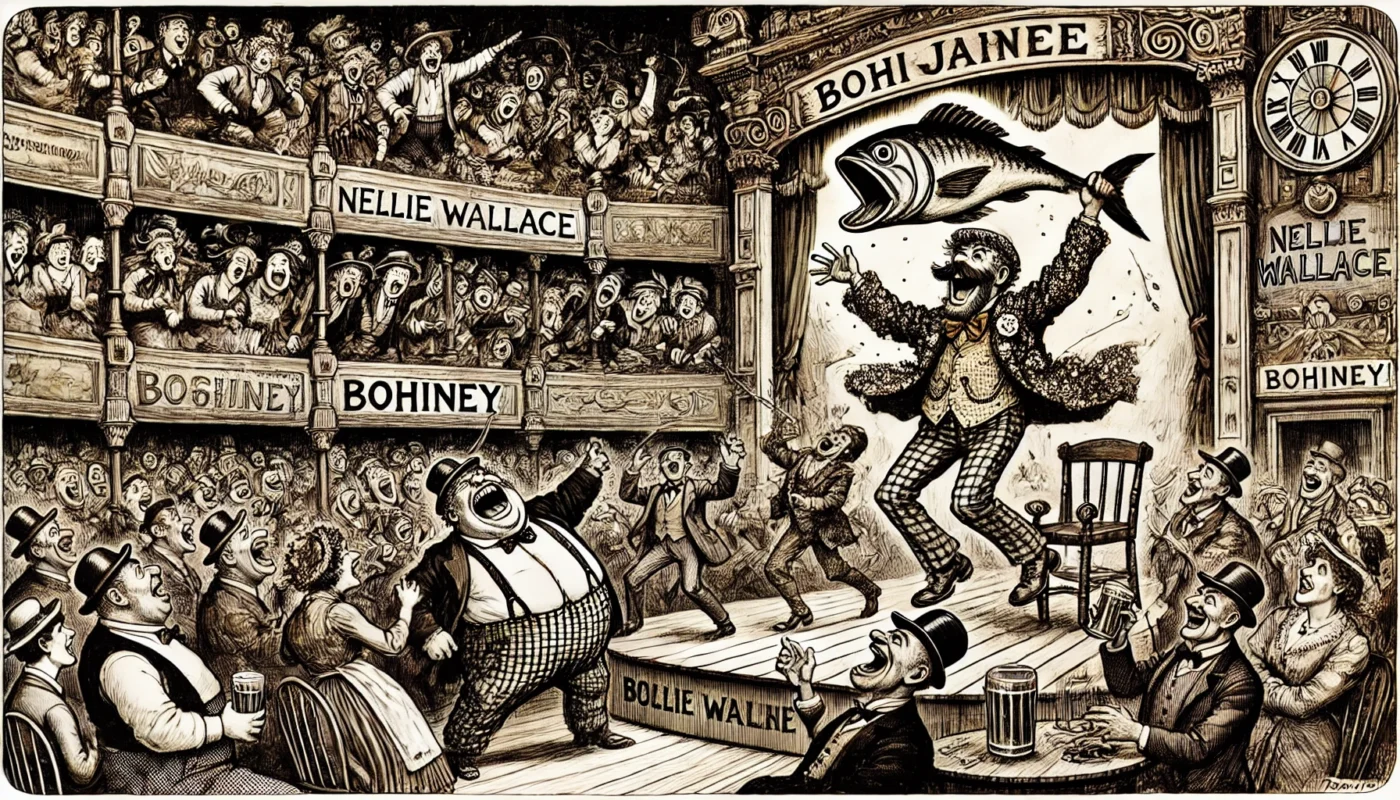
Jokes about fanning her father with a smoked fish (yes, really)
She wasn’t just performing at the audience.
She was talking to them, laughing with them, roasting them, and somehow dragging them into her weird world.
If you think crowd work is a modern invention?
Nellie Wallace would like a word (and probably a slap with a kipper).
What the Funny People Are Saying
“Nellie Wallace invented the awkward pause, the crooked smile, and the ‘are you kidding me?’ look. Every modern comic owes her a drink.”
— Sarah Millican
“Music hall comedy was survival — you either got laughs or got glassed.”
— Jimmy Carr
“Stand-up is just music hall without the accordions and slightly fewer drunk dockworkers.”
— James Acaster
How Music Hall Comedy Started Talking to the Crowd
In early music halls, a lot of comedy was scripted and safe.
Sketches. Skits. Silly costumes.
But performers like Nellie Wallace broke the wall:
-
Talking directly to the audience
-
Reacting to heckles mid-song
-
Roasting front-row drunks
-
Improvising when the jokes bombed
That immediate, electric connection?
That’s the birth of stand-up.
It wasn’t about perfect jokes anymore.
It was about energy, connection, and pure survival.
From Singing Clowns to Microphone Kings: The Evolution
Music hall to stand-up comedy evolved step by brutal step:
-
Songs and Skits
Early acts were musical or character-driven — funny, but distant. -
Talking to the Room
Characters like Nellie Wallace began dropping the fourth wall, turning performances into conversations. -
Joke-Telling Routines
Storytelling with punchlines replaced cute songs. -
Solo Stand-Up
Eventually, comics dropped the costumes, dropped the characters, and just stood there — brutally honest, painfully exposed.
One person.
One mic (eventually).
One room to conquer.
Heckling: The Music Hall Gift That Keeps on Giving
Heckling wasn’t a problem in music halls.
It was part of the show.
Audiences treated performers like prizefighters:
-
If you made them laugh, they bought you a pint.
-
If you bombed, they booed you offstage faster than a bad magician.
Modern stand-up still carries this DNA:
-
Roasts
-
Comebacks
-
Crowd work
You didn’t just survive the crowd.
You owned them.
And if you didn’t?
You were forgotten before the next round of drinks.
Five Ways Music Hall Created Modern Stand-Up Comedy
-
Crowd Engagement Over Script
Today’s best stand-ups adapt — just like Nellie Wallace dodging hecklers. -
Storytelling Roots
Early routines evolved into modern storytelling styles seen in Mike Birbiglia, Hannah Gadsby, and John Mulaney. -
Tight Timing Discipline
No rambling allowed. Kill fast, kill often. -
Character Work as Persona
Today’s comic “personas” come straight from exaggerated music hall characters. -
Working-Class Humor
Stand-up didn’t start as elite dinner theater. It started with drunk factory workers needing to laugh at life’s brutal absurdities.
How American Comics Picked Up the British Blueprint
American vaudeville didn’t invent itself from scratch.
It imported, borrowed, and stole shamelessly from British music halls.
-
Quick banter?
-
Dealing with hecklers?
-
Talking about everyday struggles instead of lofty ideas?
All British music hall trademarks.
By the time stand-up evolved fully in America — from vaudeville to the Borscht Belt to the modern club scene — it was already drenched in the blood, sweat, and beer foam of the music hall survivors.
Closing Thought: From Fish-Fans to Mic Stands, the Spirit Lives On
Today’s open mic at a sticky bar in Cleveland?
It’s a direct descendant of a battered British music hall where Nellie Wallace once waved a fish at a drunk.
Music hall to stand-up comedy wasn’t a gentle transition.
It was a brawl, a leap, a desperate gasp for laughter.
And that desperation — to connect, to survive, to matter for five minutes under a bad spotlight — is what keeps stand-up honest today.
So the next time you hear a comic:
-
Struggle through a tough crowd
-
Roast a heckler into oblivion
-
Tell a painfully funny story about failure
Tip your hat (or your beer) to Nellie Wallace.
She walked so they could bomb — and rise — with style.
Originally posted 2025-05-09 19:11:27.