 by
by The Rise of Stand-Up Comedy Classes in America
When Jokes Went to School: A Surprisingly Serious History
There was a time when the idea of teaching stand-up comedy would have gotten you laughed off the stage — and not in a good way. Stand-up was supposed to be raw. Messy. Earned through years of rejection and cheap beers in smoky rooms. If you needed a class to learn it, maybe you weren’t funny enough to survive.
But somewhere along the line, something weird happened:
Comedy got formalized.
Workshops popped up. “How to Be Funny” courses sprouted like weeds in college catalogs. And in the process, comedy classes transformed from punchlines into pipelines — launching careers, creating stars, and giving thousands of would-be comics their first badly needed taste of stage time.
Today, comedy classes are everywhere — from grungy back rooms to Ivy League campuses. And whether you think they’re a gift or a scam, there’s no denying it:
Stand-up comedy went to school.
The Early Days: Comedy Was a Trade, Not an Art
In the early 20th century, stand-up wasn’t something you studied.
It was something you survived.
Vaudeville performers, burlesque comics, and early nightclub acts learned by doing — night after night after night. You didn’t get a syllabus. You got heckled until you figured out how to fight back with a smile.
Advice came the old-fashioned way: drunkenly slurred at you by an older comic who’d seen it all and lost half his teeth doing it. And the advice was usually something like:
-
“Always open with a joke about the room.”
-
“Never wear shorts onstage unless you want to die.”
-
“If you can’t get ’em with jokes, get ’em with charm.”
There were no exams. No certificates. The only diploma you earned was surviving three consecutive sets without getting glassed.
The First “How-To” Movement: The Birth of Comedy Manuals
By the 1940s and ’50s, though, some comics realized there was a market for demystifying the process.
Books like Lupino Lane’s How to Become a Comedian started to pop up. These early manuals weren’t about high art — they were practical survival guides: timing, voice, movement, and yes, how to tell old gags so they still sounded fresh.
Fast forward to the 1980s and 90s, and books like Judy Carter’s Stand-Up Comedy: The Book helped usher in a more modern view. Carter’s big idea?
Stand-up isn’t just about telling jokes — it’s about telling your story.
Instead of recycling tired one-liners about mother-in-laws and airplane food, she encouraged comics to mine their own lives for material. Your divorce, your bad back, your weird obsession with ferrets — it was all fair game.
You weren’t just performing.
You were bleeding (hopefully while making people laugh).
The manuals weren’t perfect — some advice aged worse than a seafood buffet — but they laid the groundwork for what was coming next: the comedy class boom.
Comedy Classes Explode: From Dive Bars to Universities
By the late 90s, stand-up workshops were popping up everywhere:
-
Community centers.
-
Adult education programs.
-
Improvisation theaters.
-
Actual colleges.
In Los Angeles, Jamie Masada’s Laugh Factory launched its Comedy Camp for Kids, giving inner-city youth a free shot at learning stand-up. In Chicago, The Second City — already an improv giant — started offering stand-up workshops to civilians who wanted to take a shot at the mic.
Even some big-name clubs like The Comedy Store in LA (under Mitzi Shore’s ferocious reign) quietly became training grounds. Young comics were “encouraged” — sometimes brutally — to workshop, refine, and rethink their material based on the world’s harshest feedback: live audiences.
Suddenly, aspiring comics didn’t have to spend ten years scraping by in open mics.
They could fast-track their way to competence.
(Notice I said competence, not greatness. No class can guarantee greatness.)
What Actually Happens in a Stand-Up Comedy Class?
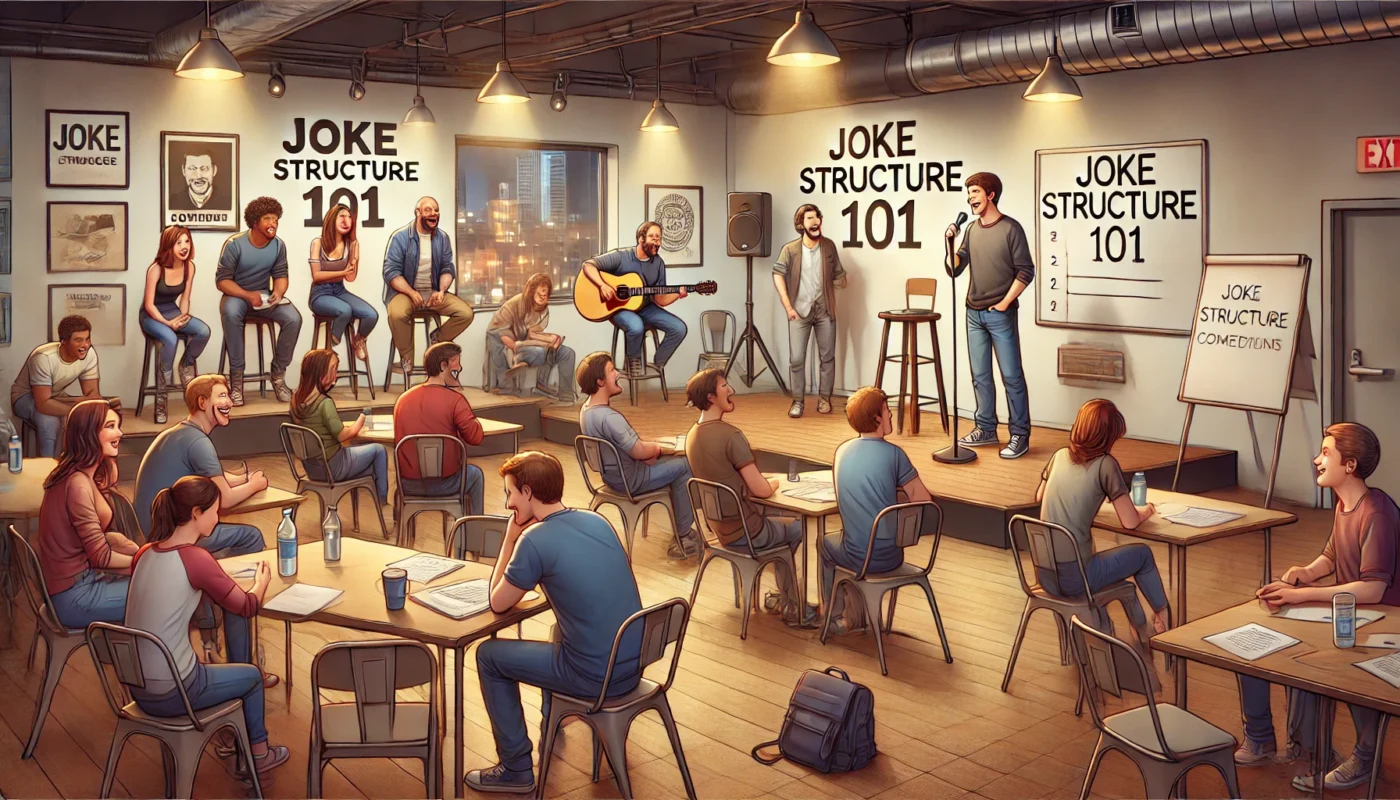
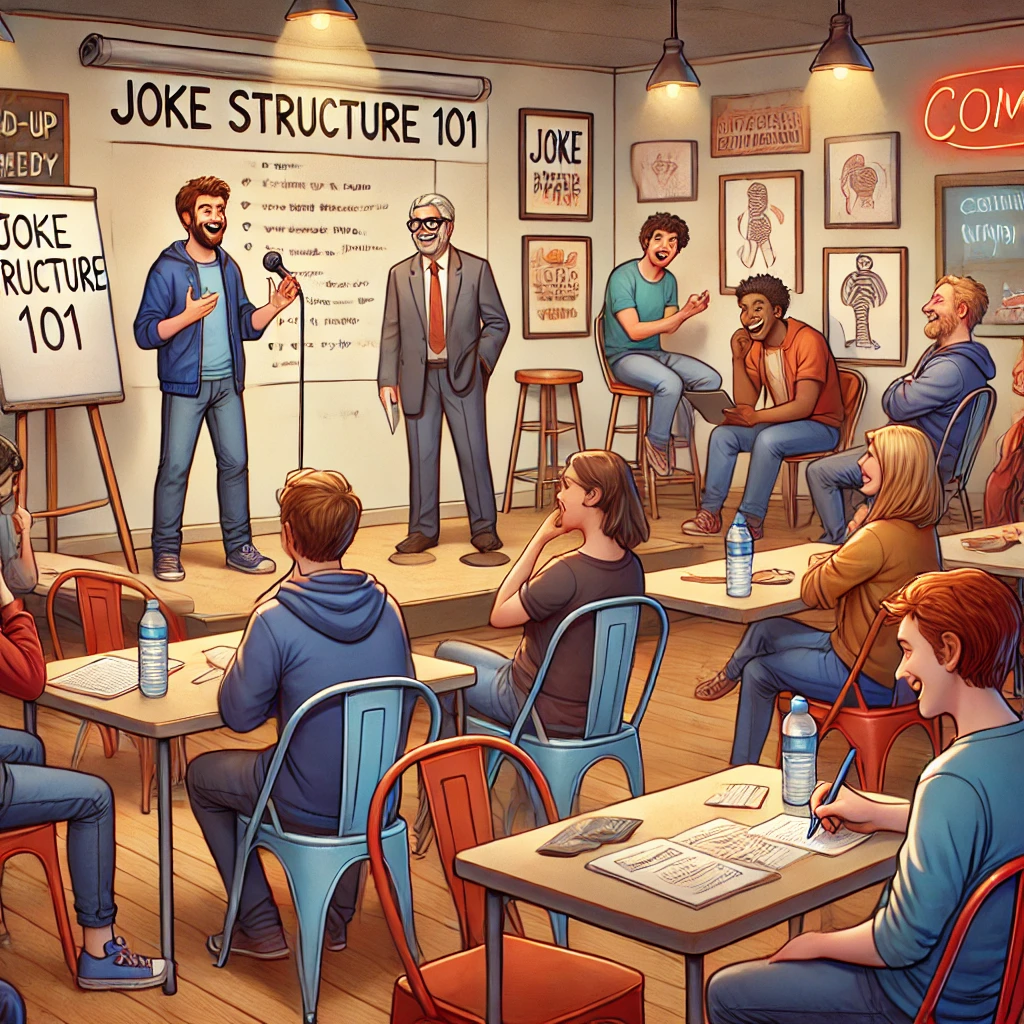
A typical comedy class experience might look something like this:
-
You walk in, terrified, clutching a notebook full of questionable jokes about your ex.
-
You sit in a circle with 8–12 other terrified strangers, all wondering if they’re secretly brilliant.
-
The instructor — a grizzled comic with 20 years of stage scars — gives you basic rules: setup, punchline, tag, timing.
-
You write five minutes of material.
-
You perform it badly.
-
Everyone cringes supportively.
-
The instructor tears it apart — kindly, if you’re lucky; savagely, if you’re lucky and they actually care.
The goal?
To get you from “clueless open mic disaster” to “passably funny amateur” — hopefully without losing your soul along the way.
Good classes focus on structure, stage presence, and finding your authentic voice.
Bad classes churn out cookie-cutter hacks who think shouting “What’s up with airplane food?!” is still edgy.
Critics vs. Defenders: The Great Debate Over Comedy Classes
Ask five comics about comedy classes, and you’ll get six arguments.
Critics say:
-
“You can’t teach funny.”
-
“Classes produce hacks.”
-
“Real comedy can only be learned onstage, bombing over and over.”
Defenders say:
-
“You can teach technique — timing, structure, delivery.”
-
“Classes give beginners a safe space to fail.”
-
“Not everyone has access to dive bars and three years of free time.”
The truth, as usual, lies somewhere in between.
No class can make you funny.
But a good class can teach you how to be funny faster — or at least how not to be awful for as long.
It’s the difference between handing someone a guitar and saying, “Good luck!” versus teaching them three chords so they can at least get through “Wonderwall.”
Why Comedy Classes Matter More Than Ever
Today’s aspiring comics face a battlefield their predecessors couldn’t even imagine:
-
Shorter attention spans: You have 30 seconds to win them — maybe.
-
Social media scrutiny: Your worst bomb can be immortalized forever.
-
Algorithm-driven fame: One viral clip can launch you — or ruin you.
In that environment, smart comics realize:
You can’t afford to wing it forever.
Classes provide:
-
Feedback loops.
-
Community support.
-
Stage time (even if it’s in a grimy classroom).
-
The chance to bomb quietly before bombing loudly.
They don’t replace the hard work. They just help you start the hard work smarter.
Famous Comics Who Taught or Benefited From Classes
Surprise: some of your favorite comics either taught workshops, took them, or at least strongly supported the idea.
-
Judy Carter: Ran countless seminars in LA, directly helping launch many careers.
-
Greg Dean: Taught a structured comedy-writing system that’s still referenced today.
-
Wanda Sykes: Studied writing and performance in formal settings before hitting it big.
-
Chris Rock: Credits his early tight five-minute sets to carefully studied timing — something he learned, not inherited.
Even comics who claim to hate classes usually admit — if you pin them down — that early mentorship, workshops, or structured writing sessions helped them shape their craft.
What Makes a Good Comedy Class vs. a Scam?
A Good Comedy Class:
-
Focuses on joke structure and stage skills.
-
Encourages you to develop your own voice.
-
Offers regular live performance opportunities.
-
Gives honest, specific feedback (not just “you’re great!” nonsense).
A Bad Comedy Class:
-
Promises you’ll be “famous in six weeks.”
-
Forces you to mimic the instructor’s style.
-
Charges you thousands for vague “tips” and no stage time.
-
Doesn’t prepare you for real audiences — only friendly classmates.
If the teacher promises Netflix specials and fame…run.
If they promise brutal honesty, hard work, and lots of bombing?
Congratulations — you found a real one.
How Online Classes Are Changing the Game
In the age of Zoom, YouTube, and Masterclass, comedy education has gone digital.
Now you can:
-
Watch legendary comedians break down their writing process.
-
Attend virtual open mics from your living room.
-
Get roasted by strangers without ever putting on pants.
It’s democratized access to coaching — but it’s also made it easier for con artists to sell snake oil.
Rule of thumb?
If you’re not scared you might bomb, you’re probably not learning anything real.
The Future of Comedy Training
The next evolution of comedy classes will probably look like this:
-
AI-powered joke feedback: Algorithms analyzing your setups, punchlines, and pacing.
-
VR open mics: Virtual clubs where you can practice bombing in front of holographic drunks.
-
Global writing workshops: Real-time feedback from peers around the world.
But even with all the tech, one thing won’t change:
You still have to bomb.
You still have to eat it, feel it, and crawl out of the wreckage, joke notebook in hand, heart still stupidly hoping for one more laugh tomorrow.
And no app, no robot, no digital classroom will ever take that beautiful, miserable, hilarious process away from you.
Thank God.
Originally posted 2025-05-01 02:40:34.