 by
by How Stand-Up Comedy Has Always Been a Hand-Me-Down Art
The Secret History of Laughs Passed Down Like Family Recipes
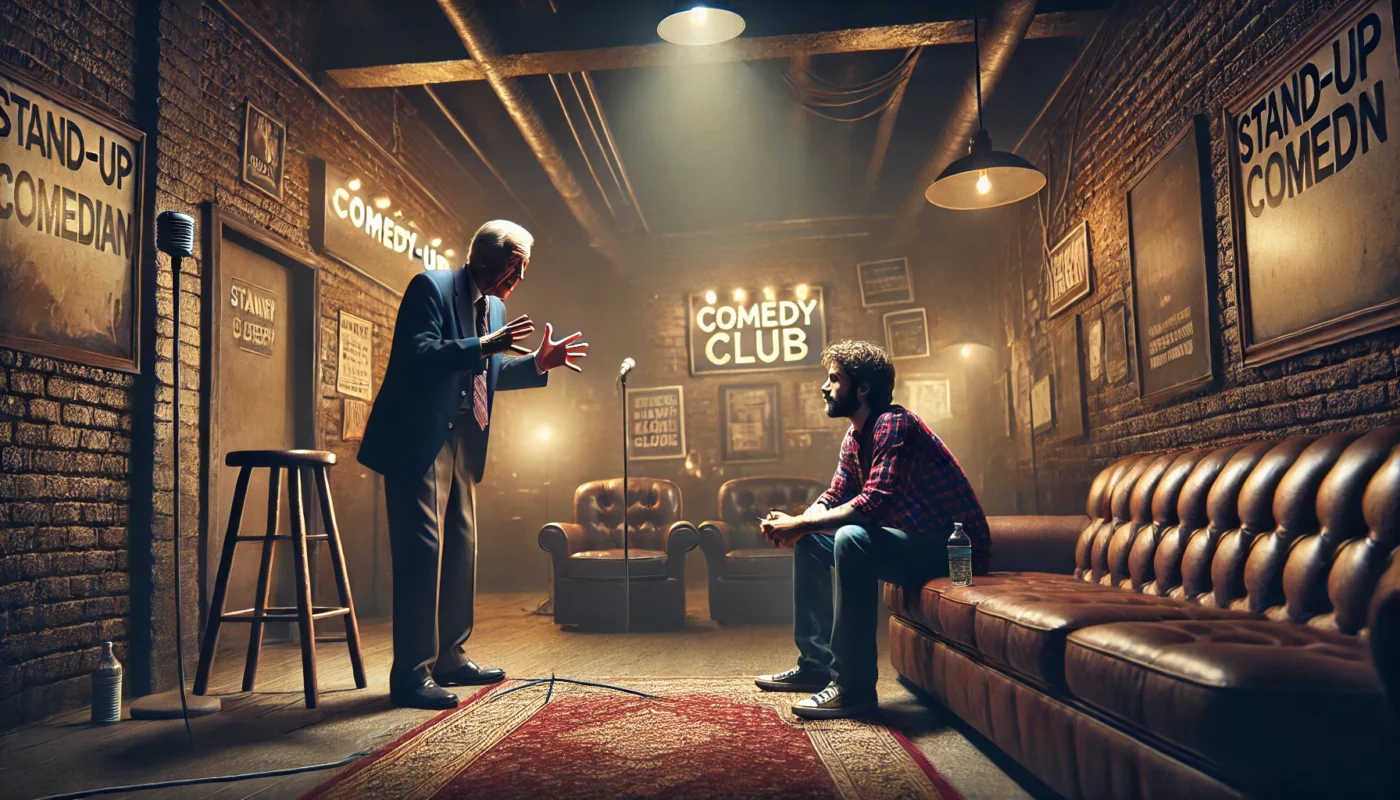
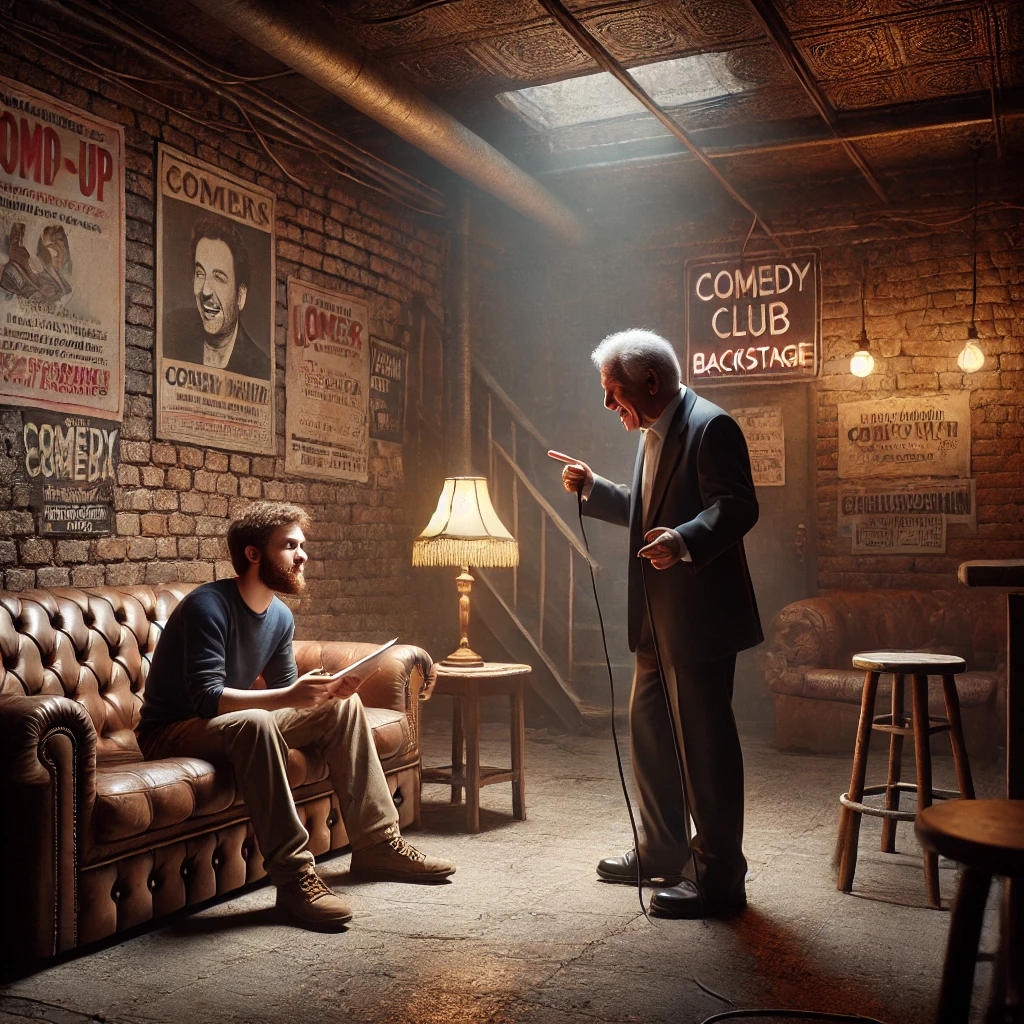
Picture this: You’re a young comic bombing so hard the bartender starts offering you a drink on the house just to stop talking. You stumble offstage, humiliated, wishing the earth would open up and swallow you whole. Then, an older comic—grizzled, half-drunk, vaguely smelling of cigarettes and regret—sidles up to you at the bar. He orders a beer, takes a long pull, and says, “Kid, you don’t suck, you just haven’t been hit by enough chairs yet.”
Congratulations. You’ve just experienced the real American stand-up comedy school.
Long before “comedy classes” were a thing, stand-up was handed down like old war stories—one eye-roll, one sarcastic grunt, one unsolicited lecture at a Waffle House at a time. In the U.S., stand-up comedy evolved not through universities or workshops but through the broken, bloodied oral tradition of comics helping each other survive.
Why “Teaching Comedy” Sounds Like a Joke—But Isn’t
Ask any seasoned comedian about teaching stand-up and you’ll probably get a snort, a curse word, and a 10-minute rant about “how you can’t teach funny.” Fair. But here’s the paradox: comics have always taught each other.
Even back in vaudeville days, it was common for a struggling performer to get pulled aside backstage and told, “Hey, next time, lead with the dog joke. People like dogs more than they like you.” Sometimes it was cruel. Sometimes it was kind. Always, it was direct. It had to be: bad advice could kill a career before it even made it out of Cleveland.
The underlying truth? Comedy isn’t just a talent—it’s a set of techniques, instincts, and survival skills honed by trial and error, often under the rough tutelage of someone who’s seen it all, bombed it all, and lived to tell you what not to do.
Mentorship by Roast: How Comedians Shape Each Other
Forget gently worded feedback forms or team-building retreats. Stand-up mentorship is brutal and beautiful, like having your soul mugged by a drunk poet.
Take the example of Bob Monkhouse, one of the great British comedians who also influenced U.S. comics. When he wasn’t onstage slaying crowds, he was cornering younger comics backstage and telling them exactly where they were boring the audience to death. “Lose your pants or lose your crowd” wasn’t just colorful advice—it was a survival strategy.
In America, similar wisdom passed through generations: George Burns mentoring Jack Benny, Lenny Bruce inspiring Richard Pryor, Pryor later influencing everyone with a microphone and a chip on their shoulder. Woody Allen’s managers Jack Rollins and Charles Joffe didn’t just book him gigs—they sat with him until 4 a.m., helping him edit down rambling jokes into punchy bits that wouldn’t get him booed offstage.
Mentorship in stand-up is a kind of tough love camp where the only graduation ceremony is the day you bomb and don’t cry about it.
Coffee Shops, Dive Bars, and the True Classrooms of Comedy
In the grand tradition of American stand-up, the real classes happen in the least likely places: behind greasy diners, outside smoky backdoors, or at a bar that still has carpet for some reason.
You see it even today in cities like New York, Austin, Chicago, and San Francisco. After an open mic, a few battered comics linger by the bar, dissecting each other’s sets like surgeons who flunked out of medical school. They don’t pull punches:
-
“You rushed the punchline, dummy.”
-
“You’re funnier when you’re angrier. Get madder.”
-
“Three poop jokes in a row? What are you, six?”
It’s a brutal, ego-bruising feedback loop, and if you’re lucky, it makes you better. If you’re unlucky, it makes you reconsider your entire life path while sadly eating microwave burritos at 2 a.m.
It’s Not About Politeness. It’s About Survival.
Modern stand-up isn’t just about “finding your voice”—it’s about finding it while dodging hecklers, bad sound systems, dead-eyed crowds, and your own self-doubt. That’s why the tradition of veterans passing down advice matters.
Because here’s the real secret: comedy is a team sport played alone.
You’re out there on that stage solo, sure. But every smart comedian carries the voices of their mentors like invisible armor:
-
The voice that says, “Let the audience catch up.”
-
The voice that says, “Quit apologizing before the joke.”
-
The voice that says, “Pace yourself—nobody laughs when you sound like a coked-up auctioneer.”
These are the whispered truths that keep comics alive long enough to get good.
How Comedy Mentorship Looks in 2025
Today’s mentorships look a little different—sometimes fueled by TikTok DMs, Zoom writing groups, or desperate Instagram reels. But the heart is the same.
Younger comics still latch onto older ones, hungry for wisdom, recognition, or even just a non-sarcastic thumbs-up. And seasoned comics still show tough love—sometimes very tough:
-
Roasting you mercilessly because if you can’t handle jokes about yourself, you shouldn’t be onstage.
-
Reminding you that killing it at an open mic in a vegan bookstore doesn’t mean you’re ready for Saturday night at the bar where the headliner is a guy with a pet snake.
-
Telling you to slow the hell down and trust your own material.
Some things don’t change. They just get repackaged with hashtags.
The Myth of the Self-Made Comedian
There’s a dangerous myth in American culture: the idea of the “self-made” stand-up comic who conquered the scene through sheer willpower and natural genius.
Here’s the reality: Nobody does this alone.
Every great comic was shaped, coached, challenged, and sometimes straight-up bullied by others. Robin Williams had Rollins and Joffe. Dave Chappelle had the D.C. open mic scene sharpening him like a knife. Joan Rivers leaned on mentorship from the early TV pioneers. Even Richard Pryor had guys like Redd Foxx giving him tips—and sometimes tough-love insults—when he was still figuring it out.
If you think you can build a stand-up career in a vacuum, guess what? That’s not a career. That’s just a very loud diary.
Why Comedy Advice is Often Bad—and Still Valuable
Here’s the catch: a lot of the advice you’ll hear from older comics will be absolute garbage.
-
“Always insult the first guy you see!” (Good luck when the first guy is a cop.)
-
“Talk about your junk! People love junk jokes!” (Maybe…in 1992.)
-
“Never ever talk politics!” (Tell that to George Carlin.)
But here’s why bad advice still matters: it forces you to think critically about your own voice. You either integrate it or reject it, but either way, you grow.
Comics don’t just inherit wisdom; they inherit confusion, and they have to sort it out onstage with nothing but a microphone and a prayer.
Personal Stories: When the Bar Talk Saved the Act
Ask any American stand-up about the best advice they ever got, and you’ll hear some version of:
-
“An old drunk guy at a bowling alley told me to ‘wait for the laughs.’ Changed my whole rhythm.”
-
“A bitter headliner in Tulsa told me my whole act was trash. Best thing anyone ever said to me.”
-
“A club manager screamed, ‘Stop trying to be clever, just be you!’ and it unlocked my closer.”
These moments aren’t framed certificates on a wall. They’re scars, tattoos, invisible bruises that remind you why you’re still swinging.
Closing the Loop: Paying It Forward
Here’s the beautiful part: when those young comics survive, get good, and find their voice…guess what they do?
They go back to the open mics, the bars, the backrooms—and find some terrified newbie sweating through their set.
And they sidle up, buy them a cheap beer, and say, “Kid, you don’t suck. You just haven’t been hit by enough chairs yet.”
And the cycle continues.
Final Thoughts: Why the Comedy Tradition Is Sacred
Stand-up is more than jokes. It’s a lineage.
Every tag, every punchline, every bit of advice handed down like a battered baseball glove matters. Whether it’s a crusty old-timer telling you to “throw out that stupid bit about cats,” or a slightly more successful peer roasting you over onion rings, it all adds up.
Comedy isn’t a race. It’s a weird, hilarious, blood-stained relay.
You don’t just run it.
You inherit it.
And if you’re lucky—really lucky—you’ll someday hand off the baton yourself.
Maybe while sitting at a bad diner, sipping lukewarm coffee, while some poor kid across the booth asks, “Do you think I’m funny?”
Originally posted 2025-04-29 02:41:39.