 by
by Why Timing is Everything in Comedy Writing: The Science Behind the Laugh
By Alan Nafzger, Ph.D. — Professor, Screenwriter, and Author of “Laughing Matters: A Professor’s Guide to Stand-Up”
Why Timing is Everything in Comedy Writing
The Science Behind the Laugh
Introduction: The Beat Before the Boom
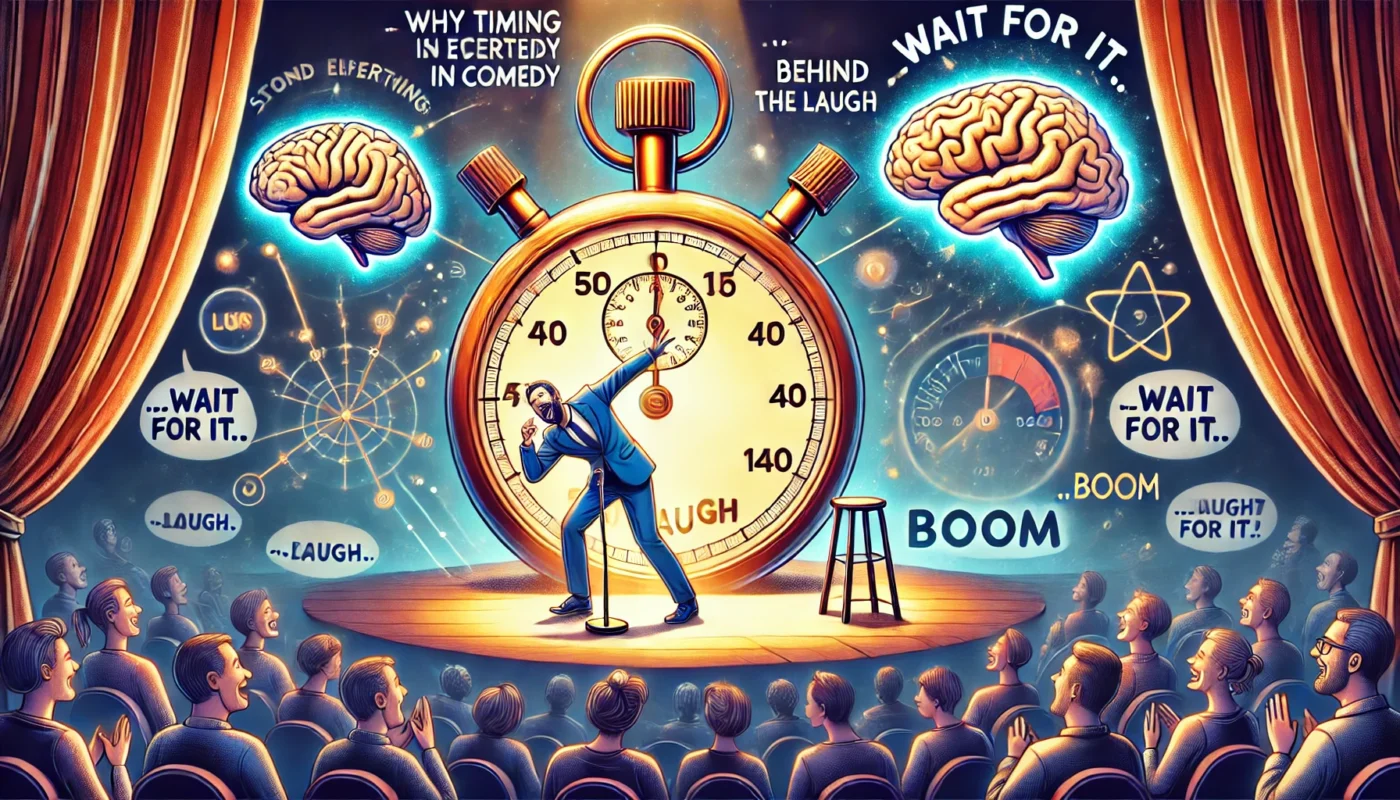
Timing in comedy is more than just rhythm — it’s the split-second decision that makes a joke land or fall flat. It’s the pause before the punchline, the breath before the twist, the silence that stretches just long enough to make the laugh explode. And it’s not just instinct — it’s science.
Laughter is a reflex triggered by surprise and release, and timing controls both. Whether you’re delivering a stand-up set or a keynote with humor, knowing when to speak — and more importantly, when to stop — is the difference between chuckles and chaos.
This article breaks down how timing works neurologically, emotionally, and theatrically, with practical tools to help you pace your punchlines, embrace the pause, and let the silence do some of the talking.
The Invisible Rhythm of Comedy
In my dual careers as a political satirist and comedy professor, I’ve discovered that timing isn’t just part of comedy—it’s the oxygen that makes it breathe. Whether dissecting congressional hearings or writing punchlines, I’ve seen how milliseconds can separate a roaring laugh from awkward silence.
This article will reveal:
-
The neuroscience behind comedic timing
-
How political satire masters like Jon Stewart weaponize pacing
-
Practical exercises to sharpen your timing instincts
-
Why your brain’s “surprise detection” system craves perfect delivery
1. The Science of Timing: Why Your Brain Loves a Well-Placed Pause
The 0.5-Second Rule
Research from the University of Maryland shows laughter peaks when punchlines land within 0.5-1.5 seconds after setup (Provine, 2000). This matches our cognitive processing speed for surprise.
Political Comedy Case Study:
When Samantha Bee delivers the line:
*”The GOP’s new climate plan…” (1.2-second pause) “…is to wait for Rapture.”*
The pause creates tension, letting the absurdity sink in.
2. Four Timing Techniques Used by Pros
A. The Strategic Pause (The “Stewart Maneuver”)
Jon Stewart’s signature move:
-
Delivers damning political fact
-
Makes eye contact with audience (0.8 seconds)
-
Raises eyebrow as punchline lands
Exercise: Practice saying “I trust politicians…” (pause) “…to disappoint.” Vary pause length while recording yourself.
B. Accelerated Stacking (The “Chappelle Chorus”)
Dave Chappelle builds momentum in stories by:
-
Starting slow: “So I’m in Ohio…”
-
Gradually speeding up: “…and this guy asks for selfie… my phone dies… his cousin owes me $20…”
-
Delivering rapid-fire tags
Try This: Time yourself telling a story, speeding up with each sentence.
3. Political Satire’s Timing Secrets
The “Daily Show” Formula
-
Setup (serious news clip)
-
Beat (0.5 sec)
-
Punchline (contrasting commentary)
-
Reaction shot (holds laugh)
Example:
Clip of senator saying “I’ve always been transparent…”
(beat)
Host: “…like Trump’s tax returns.”
4. Exercises to Master Timing
The Metronome Method
Set a metronome to 60 BPM. Deliver punchlines only on the click to train precision.
Late-Night Monologue Drill
Rewrite political headlines as jokes using this structure:
Setup (2 seconds) + Punchline (on beat 3)
Example:
“Florida man tries to pay taxes…” (beat)
“…with Bitcoin and a coupon.”
5. When to Break Timing Rules
The “Louis C.K. Pause”
Sometimes violating timing creates humor. Louis C.K. would:
-
Extend pauses uncomfortably long
-
Let audience laughter interrupt him
-
Restart mid-thought
Warning: Only break rules after mastering them.
Conclusion: Your Timing Toolkit
Great comedic timing is both science and art. As I tell my political science students: “Analyzing a joke’s rhythm is like studying a filibuster—every pause has purpose.”
Want More? Download my Timing Drills for Satirists at AlanNafzger.com
Originally posted 2025-05-17 13:13:45.