 by
by Copyright and Comedy: Protecting Your Jokes
How to Write Comedy That’s Yours-and Keep It That Way
Why Joke Theft Is the Comedy World’s Oldest Crime
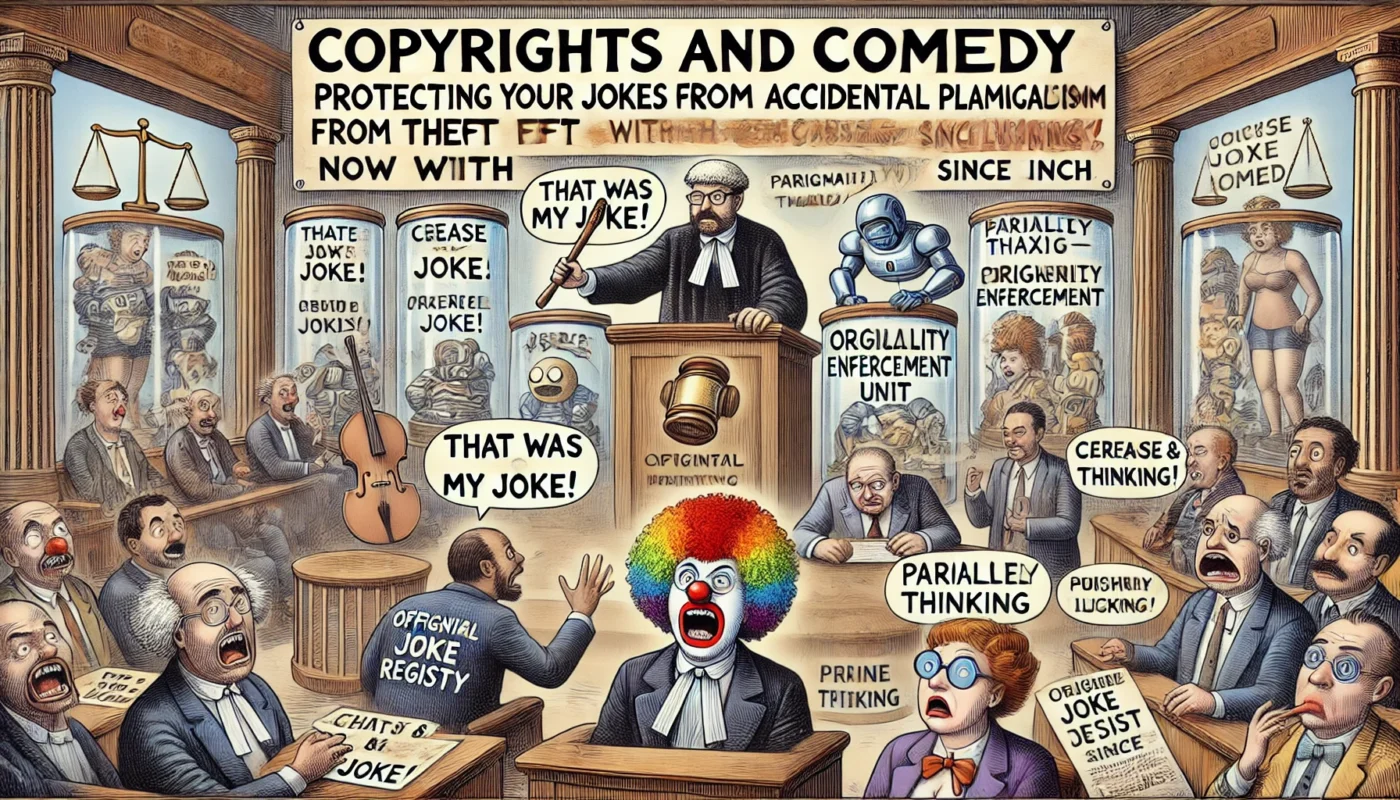
If you’ve ever been in a green room and heard, “Dude, that’s my punchline”, you already know: joke theft is the oldest unreported misdemeanor in showbiz.
In the world of comedy, protecting your jokes isn’t just about ego-it’s about intellectual property, financial value, and professional reputation.
So if you’re wondering how to write comedy that’s protected from copycats, ripoffs, and line-swipers, this is your legal-ish guide to safeguarding what comes out of your brilliant, slightly unhinged brain.
Can You Actually Copyright a Joke?
The Short Answer: Sort of.
Legally, you can’t copyright an idea-only the expression of that idea.So while the concept “airline food is bad” isn’t protected, your exact wording of a bit about being offered expired hummus on Spirit Airlines is.
According to the U.S. Copyright Office:
- Copyright protects original works of authorship
- This includes written scripts, recorded performances, and published material
Not protected:
- Ideas
- Titles
- Concepts
- Vibes (yes, even funny ones)
Step 1: Document Everything Like a Paranoid Genius
Time-Stamp Your Work
When you write a joke, bit, or script:
- Save it in a digital doc with a timestamp
- Email it to yourself
- Save to cloud storage (Dropbox, Google Drive)
- Use a notes app that syncs across devices
This proves you had the joke first.It doesn’t guarantee a win in court, but it gives you receipts in the court of public opinion-and Twitter, which is worse.
Record Your Sets
Always record your performances:
- Audio or video
- Keep files labeled by date and location
- Back them up
This is your insurance against forgetfulness, hecklers, and hacky thieves.
Step 2: Understand What Can Be Registered with the U.S. Copyright Office
Eligible Comedy Materials:
- Stand-up scripts
- Screenplays
- Published essays or books
- Audio recordings
- Videos (YouTube specials, sketches, etc.)
Register at copyright.gov, pay the fee ($45-$65), upload your material, and boom-you’ve got official ownership.
This doesn’t prevent theft-it gives you the right to sue or scare the pants off someone with a cease and desist.
Ineligible:
- “My set at Chuckle Barn, April 8, 2024” (unless published/recorded)
- Tweets (unless part of a larger collection)
- That one zinger you shouted during a bar fight
Tip: Bundle your jokes into larger bodies of work for copyright protection:
“Collected Stand-Up Bits, Vol. 1″”Jokes That Got Me Booed in Milwaukee”
Step 3: Perform Like You Own It
Establish Ownership Through Visibility
The more you perform or publish a joke under your name, the harder it is for someone to plagiarize without getting caught.
- Post clips with your watermark
- Publish jokes in blogs, books, or newsletters
- Claim your bits proudly on social media
Comedians steal from the shadows. Make your light so bright they can’t hide under it.
Build a Signature Voice
The best protection? Write comedy that only you could write.
Example:
- Bo Burnham’s jokes don’t work outside of Bo Burnham
- Wanda Sykes’ material sounds wrong coming from anyone else
- Ron White telling a Maria Bamford story? Weird and unsettling
If your jokes are tied to your style, rhythm, and worldview-they’re harder to steal and harder to sell secondhand.
Step 4: Call Out Theft-But Don’t Be Reckless
What to Do If Someone Steals Your Joke
Step 1: Stay calmStep 2: Gather evidence (timestamps, performance dates, recordings)Step 3: Reach out privately-assume ignorance before maliceStep 4: If that fails, escalate publicly (carefully) or with legal help
When to Let It Go
Not every similar joke is theft.There are only so many ways to talk about:
- Zoom meetings
- Airport security
- Dating app disasters
Parallel thinking is real. So is coincidence. Choose your battles wisely. Don’t burn bridges over a Tinder pun.
What the Funny People Are Saying
Marc Maron:
“You can’t copyright pain-but you can damn well put your name on the way you process it.”
“If they’re stealing your jokes, it’s a compliment. If they’re stealing your career, get a lawyer.”
Trevor Noah:
“Write so specifically that if they copy you, it’s obvious-and embarrassing.”
Step 5: Publish, Perform, and Push Content
Self-Publish Your Material
Compile your jokes into:
- E-books
- Newsletters
- Substack posts
- Print zines with ironic covers
Copyright law favors the published, not the perfect. Don’t wait to go viral. Go visible.
Use Performance as a Claim-Stake
Performing your jokes regularly, on record, and in public gives you:
- Evidence
- Audience validation
- Street cred
Thieves hate Google. Beat them to the SEO punch.
Step 6: Collaborate Carefully (And Sign Stuff)
Protect Co-Writing Projects
If you co-write:
- Sketches
- Scripts
- Comedy albums
…you need a clear agreement on:
- Ownership
- Royalties
- Performance rights
- Use in future projects
Even if it’s your best friend. Especially if it’s your best friend.
Use Collaboration Agreements
Google “collaboration agreement template comedy.” Customize it. Sign it. Save it.
Or don’t-and risk watching your co-writer pitch your joke on SNL while you scream into a burrito.
Comedy Case Files: Famous Joke Theft Scandals
Dane Cook vs. Louis C.K.
Similar jokes. Public beef. Awkward Louie episode where they aired the tension.Result: No lawsuits, but a lesson in parallel thinking vs. plagiarism perception.
Amy Schumer Accusations
Multiple comics claimed she lifted bits. She denied it. Internet sleuths went wild.Outcome: No legal action, but branding damage. Even if innocent, the smoke sticks.
Carlos Mencia vs. Joe Rogan
Rogan confronted Mencia on stage for allegedly stealing jokes from George Lopez and others.Mencia’s reputation took a hit harder than any lawsuit could deliver.
Step 7: Consider Trademarks for Recurring Characters or Segments
If you create:
- A recurring bit like “The Angry Uber Driver”
- A branded sketch format
- A fictional character you perform as…
…you might be eligible for trademark protection.
Examples:
- Stephen Colbert’s “Stephen Colbert” character (yes, trademarked)
- Larry the Cable Guy (persona = brand = merch = $$$)
Tip: Talk to an entertainment lawyer if your brand starts growing legs-and merch.
Step 8: Hire a Lawyer Before the Trouble Starts
When You Need an Entertainment Lawyer
- Selling a script
- Signing a publishing deal
- Syndicating your comedy content
- Negotiating a streaming special
They’ll protect your rights and spot traps like:
- “Work for hire” clauses
- Lifetime rights grabs
- Royalty black holes
Comedians joke. Lawyers protect the punchlines.
The SEO Takeaway: How to Write Comedy That’s Legally Yours
If you want to know how to write comedy that’s protected, remembered, and not silently stolen by someone in the front row, you need to:
- Document your process
- Publish your material
- Trademark your identity when applicable
- Work with professionals
- And write in a voice so unique, it’s theft-proof
Conclusion: Protect Your Funny Like It’s Intellectual Gold
Writing comedy isn’t just expression-it’s intellectual property. You built it. You tested it. You bombed to refine it.So own it.
And if someone tries to take it?Laugh, lawyer up, and write five better jokes by morning.
Disclaimer
This article was co-written by a former stand-up comic turned paralegal and a woman who once filed a copyright claim for a puppet sketch about constipation. We’re not lawyers, but we know how to protect a punchline like it’s a child. Consult a real attorney if things get serious-or if your jokes are so good they’re getting stolen in four time zones.
Originally posted 2025-05-19 10:02:40.