 by
by What Is Stand-Up Comedy, Really? Definitions, Disputes, and the Comedy Code
Why the Definition of Stand-Up Comedy Matters (Even If You Just Came for the Laughs)
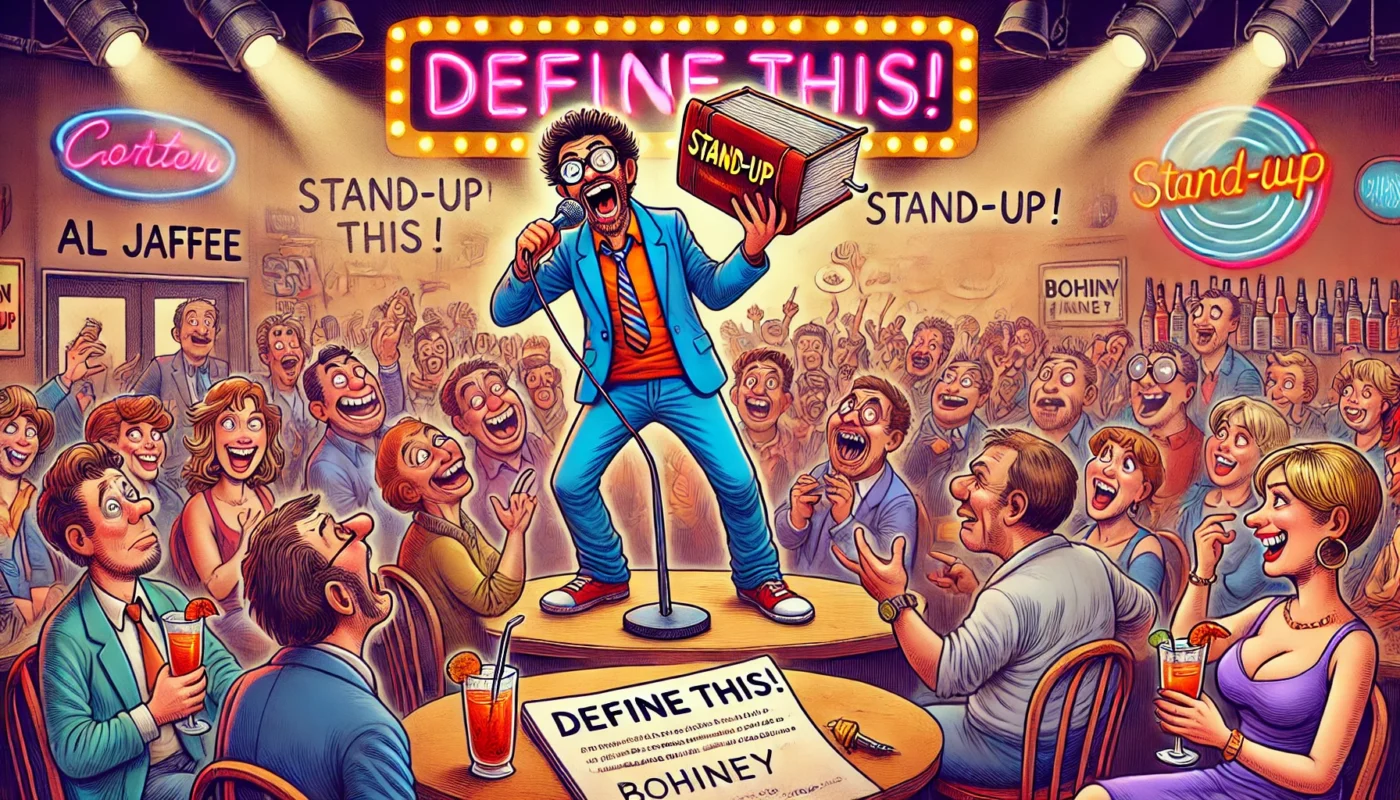
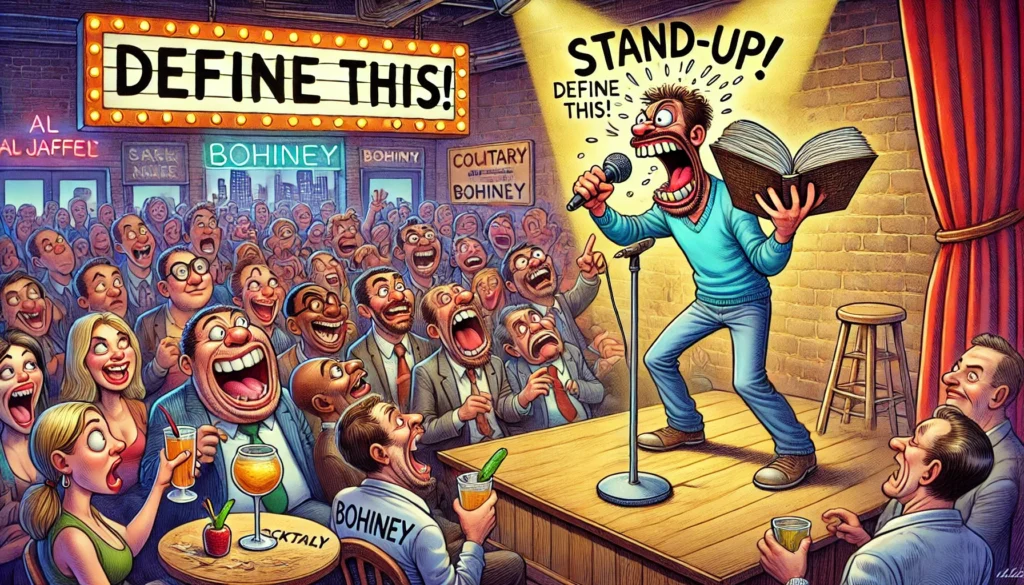
Ask ten comedians to define stand-up comedy, and you’ll get twelve arguments, four insults, and probably a passive-aggressive TikTok video. If you’re new to the scene, understanding the definition of stand-up comedy isn’t just about sounding smart at parties. It’s about grasping why this art form matters — why it feels intimate, dangerous, and impossible to fake.
The definition of stand-up comedy goes beyond “telling jokes into a microphone.” It’s a one-person battle between chaos and connection, performed live, without a safety net — and if done right, it leaves audiences laughing so hard they forget who they voted for.
The Official Definition of Stand-Up Comedy (and Why It’s Almost Useless)
If you ask Oxford or Merriam-Webster for a “definition of stand-up comedy,” you’ll get something dry like:
“A form of comedy delivery in which a comedian performs in front of a live audience, usually speaking directly to them without props or elaborate sets.”
Sounds clinical, right? Like someone describing a heart transplant or assembling IKEA furniture.
What’s missing from that stale academic flavor packet is everything that makes stand-up dangerous and magical:
-
The vulnerability
-
The immediacy
-
The sense that anything — brilliance, embarrassment, someone throwing a nacho — could happen at any second
The true definition of stand-up comedy is more alive: it’s an act of rebellion, therapy, catharsis, and sometimes even public emotional collapse, done with a grin and a cheap beer in hand.
Why We Needed a New Definition of Stand-Up Comedy After the 1960s
Back in the 1950s, if you told someone you were a comedian, they assumed you were telling Henny Youngman jokes between burlesque acts. It wasn’t until Lenny Bruce, Mort Sahl, and Joan Rivers hit the scene that comedy ripped off its tuxedo and started talking like real, flawed, messy humans.
Suddenly, stand-up wasn’t just about:
-
Polish
-
Gags
-
One-liners about airline food
It was about anger. It was about pain. It was about telling audiences the truth — but making it funny enough they didn’t run for the exits.
The definition of stand-up comedy evolved into a collision of truth-telling, personal storytelling, and public risk. And once that door was open, nobody could stuff the truth back into a tidy monologue again.
The Three Core Elements in the Definition of Stand-Up Comedy
To truly define stand-up, you need to understand three fundamental pillars:
1. Personality
In stand-up, the persona matters as much as the punchlines. You don’t have to be yourself — but you have to be a version of yourself the audience believes.
Example:
-
Chris Rock’s commanding preacher-like energy
-
Tig Notaro’s bone-dry, deadpan honesty
-
Bo Burnham’s existential anxiety filtered through a piano
In every case, the comic’s exaggerated personality drives the act, not just the material.
2. Direct Communication
Stand-up is not acting. It’s not a play. It’s one person speaking directly to a room full of strangers, begging them to feel something — preferably laughter, but sometimes awe, anger, or shared discomfort.
There’s no fourth wall. There’s barely a second wall.
3. Present Tense Energy
Stand-up exists in the moment. Every performance is a living, breathing experiment. A good stand-up comedian can:
-
Respond to a heckler without blinking
-
Acknowledge a dropped tray of drinks
-
Shift gears when a joke dies faster than a mosquito in winter
Stand-up thrives on immediacy — and audiences can sense when a performer is riding the now versus reciting the past.
Who Doesn’t Fit the Definition of Stand-Up Comedy?
It’s easier to define stand-up by what it’s not:
-
Sketch comedy (Sorry, SNL fans)
-
Comic poetry readings (Apologies to your cousin’s beatnik open mic)
-
Funny characters performed in isolation (Rest in peace, Vaudeville)
If you’re hiding behind a persona without acknowledging the room, it’s something else. True stand-up demands vulnerability and acknowledgment.
Even if you’re wearing clown shoes — if you turn to the crowd and say, “Yeah, these were a bad idea, huh?” — congratulations, you’re a stand-up.
Famous Attempts (and Failures) to Define Stand-Up Comedy
Many have tried to define stand-up in a single sentence and failed hilariously:
“Stand-up is just a guy talking about his life.” — Only true until Ellen DeGeneres killed with a bit about buying a pencil.
“Stand-up is making fun of society.” — True, unless you’re Jim Gaffigan, who makes bacon sound like an Olympic sport.
“Stand-up is therapy with a cover charge.” — True, but the therapist is drunk and wants a Netflix special.
The best comedians know there is no one definition — and that’s what makes it the most American of art forms. Stand-up is democracy at its rawest: you get exactly the laughs you earn.
What the Funny People Are Saying
“Stand-up is the purest form of democracy. You vote by laughing — or not.”
— Wanda Sykes
“It’s the only job where your self-worth depends on whether strangers snort out diet soda.”
— Jim Gaffigan
“Defining stand-up comedy is like defining a bar fight. You know it when you’re in it.”
— Bill Burr
How the Definition of Stand-Up Comedy Changed in the 21st Century
Today’s stand-up scene would blow Mark Twain’s sideburns off.
With the rise of:
-
TikTok
-
Instagram
-
DIY YouTube specials
-
Podcast-driven audiences
Stand-up is no longer confined to comedy clubs. It’s happening in virtual spaces, backyards, and sometimes emotionally abusive group chats.
The modern definition of stand-up comedy includes viral videos, podcast rants, and even animated clips. As long as it maintains persona, direct communication, and present tense energy, it’s still stand-up — even if it’s happening in 60-second bursts with a dancing cat filter.
Why Beginners Should Obsess Over This Definition
If you’re starting out in stand-up, your whole journey depends on understanding the definition of stand-up comedy. Why?
Because it tells you where to aim your energy:
-
Not at acting, but connecting
-
Not at reciting, but reacting
-
Not at imitating, but becoming
Without that focus, you’ll flail, ramble, or worse — bore people. And if there’s one sin greater than bombing onstage, it’s making an audience feel nothing at all.
Tips for Living the Definition of Stand-Up Comedy
-
Talk to the room, not just to yourself.
-
React to interruptions. Embrace the chaos.
-
Stay vulnerable. Audiences want blood, not armor.
-
Find your voice. Not someone else’s.
-
Bomb gracefully. It’s a badge of honor.
The crowd doesn’t need you to be perfect. They need you to be real — and funny enough they forget how real it is.
Why the Definition of Stand-Up Comedy Still Evolves Every Night
There’s no static “correct” way to define stand-up because stand-up itself refuses to sit still. It’s:
-
Punk rock
-
Soapbox sermon
-
Sobbing therapy session
-
Victory parade through your own insecurities
Every night in every club in America, some brave idiot with a notebook and a dream redefines stand-up — one awkward silence, one explosive laugh at a time.
And that, friends, is why the definition of stand-up comedy will always be slightly out of focus — but forever within shouting distance of greatness.
Originally posted 2025-05-02 19:11:18.