 by
by So I Almost Died — Anyway, Here’s the Joke: Why Dark Comedy Is the Realest Form of Survival
Trigger Warning: This Might Save Your Life
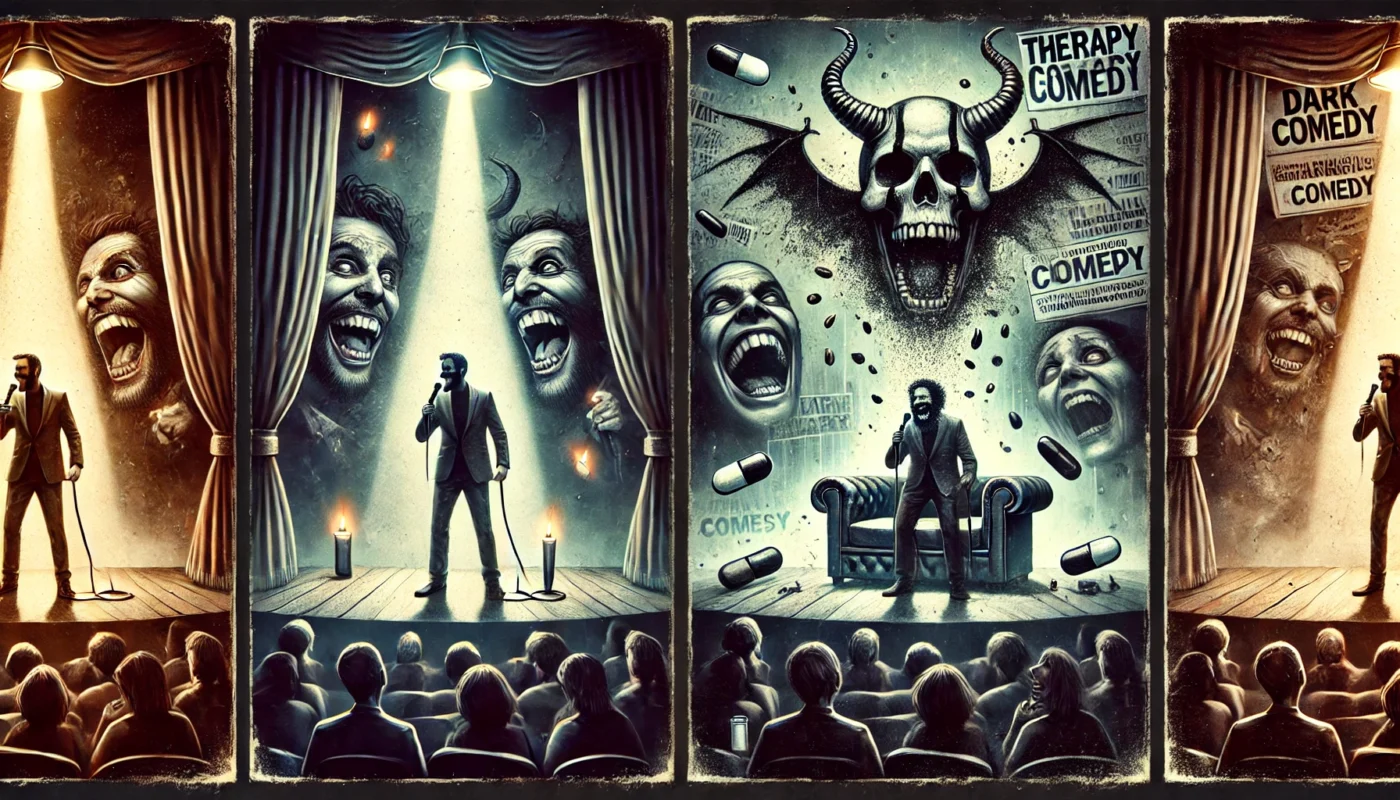
Dark comedy is not for the faint of heart — but it is for the broken-hearted. It’s where the comics go when the therapist is booked, the meds haven’t kicked in, and the only thing left is a microphone and the terrifying honesty of strangers.
They don’t just “go there.” They live there — in that electric space where tragedy and timing meet.
And in a country where grief is commodified and trauma is a hashtag, dark comics don’t offer pity.
They offer punchlines with blood on them.
Robin Williams: The Whirlwind of Joy Hiding the Storm
Robin was physical. Magical. Explosive.
But beneath the improv mania was a soul on fire.
His darkest bits — about addiction, depression, death — landed because he felt every syllable.
“Comedy is acting out optimism.”
That wasn’t a joke. That was a shield.
Robin’s brilliance was not just in his performance — it was in how hard he had to fight to stay funny.
He made the world laugh while carrying a weight none of us could see.
Dark comedy doesn’t always look dark. But it knows where the exits are.
Gary Gulman: The Sad Guy Who Took Notes
In The Great Depresh, Gulman breaks down his life with clinical honesty and emotional precision.
He talks about:
-
Electroconvulsive therapy.
-
Hospital stays.
-
The depression that made him forget how to shower.
Then he makes it hilarious. Meticulous. Lovable.
“I didn’t want to die. I just didn’t want to stand up.”
He doesn’t beg for empathy. He just maps the terrain of mental collapse with GPS accuracy.
And somehow, it helps us feel less lost in our own heads.
When the Joke Is Also a Confession
Dark comedy isn’t observational. It’s autobiographical excavation.
The structure is different:
The laugh isn’t release. It’s recognition.
You don’t clap because it’s clever. You clap because you’ve been there — or know someone who has.
And in that moment, the comic becomes more than funny.
They become a witness.
Paul F. Tompkins: The Quiet Weapon of Grief and Wit
Tompkins is known for whimsy — but his material on grief and addiction cuts deep.
He once said:
“Grief is a roommate who doesn’t pay rent and refuses to leave. But occasionally, it washes the dishes.”
His delivery is warm. But the truth sneaks up on you.
Because dark comedy isn’t always loud.
Sometimes it’s a velvet dagger.
And it still gets the laugh — right after the gasp.
Comics Are the Only People Allowed to Tell the Truth at a Wake
Let’s be honest.
Most eulogies are lies. Most funerals are silent competitions of who’s not falling apart the fastest.
But if a comic speaks?
Suddenly, we’re:
-
Crying,
-
Laughing,
-
And grateful someone finally said what we were all trying not to feel.
Dark comics are the only ones who know how to eulogize without euphemism.
That’s not irreverence. That’s respect through realism.
The Road Gig as Therapy Tour
You’ll hear it in green rooms:
“Yeah, I’m doing that bit about the car accident now. It’s working.”
The “bit” might be about:
-
A miscarriage.
-
An overdose.
-
A family member who vanished into cults, QAnon, or Florida.
The comic doesn’t write the bit to shock.
They write it because they’re tired of carrying it alone.
And when the audience laughs?
That’s the transfer of weight.
That’s the healing.
Jokes About Suicide Are Not Endorsements — They’re Warnings That Worked
So many dark comics have:
-
Survived suicide attempts,
-
Stopped friends from trying,
-
Written bits about the thought process with surgical clarity.
They say:
“I didn’t want to die. I just didn’t see the point in another Tuesday.”
And the audience nods. Because yeah. Tuesday can be brutal.
The joke isn’t glorifying the pain.
It’s proof they lived through it.
And now, you can too.
Dark Comedy Isn’t Trauma Dumping — It’s Trauma Sculpting
There’s a difference between:
-
“Here’s everything awful that’s ever happened to me,” and
-
“Here’s the precise, structured, laugh-engineered way I survived it.”
Dark comics don’t dump.
They curate.
They rewrite the story so they’re not the victim — but the narrator.
And that shift? That’s where the power lives.
What the Funny People Are Saying
“I talk about my darkest moments so people know I’m still here. And so are they.” — Gary Gulman
“The punchline is the heartbeat. If it’s still there, the bit lives. And so do I.” — Paul F. Tompkins
“I’m not making fun of suicide. I’m showing you how I stayed alive long enough to turn it into a closer.” — Neal Brennan
“Dark comedy is a warning shot disguised as a joke. If you hear it, you’re not alone.” — Laurie Kilmartin
“We don’t do this to make you sad. We do it because the laugh might be the only thing left that still feels honest.” — Mike Birbiglia
The Laugh Isn’t a Distraction — It’s the Lifeline
Some people write books.
Some join support groups.
Some become comics and turn the worst thing that ever happened to them into a set that saves someone else.
That’s not exploitation.
That’s rescue via absurdity.
Dark comedy doesn’t promise to fix your life.
But it might help you live in it long enough to laugh about what it’s done to you.
And that?
That’s sacred.