 by
by Global Stages and Sacred Spaces: Where Stand-Up Comedy Lives and Dies
How Stand-Up Comedy Venues Shape the Jokes We Love (and the Ones We Regret Hearing)
When you think about a great stand-up show, you probably remember the jokes, the comic, maybe even the heckler who got verbally annihilated.
But behind every set — every standing ovation, every awkward bomb — there’s a venue.
And stand-up comedy venues are just as much a part of the experience as the guy in a hoodie holding the microphone.
The venue can make or break a show.
It’s not just about lights and seats.
It’s about intimacy, danger, chaos — the perfect conditions for magic or disaster.
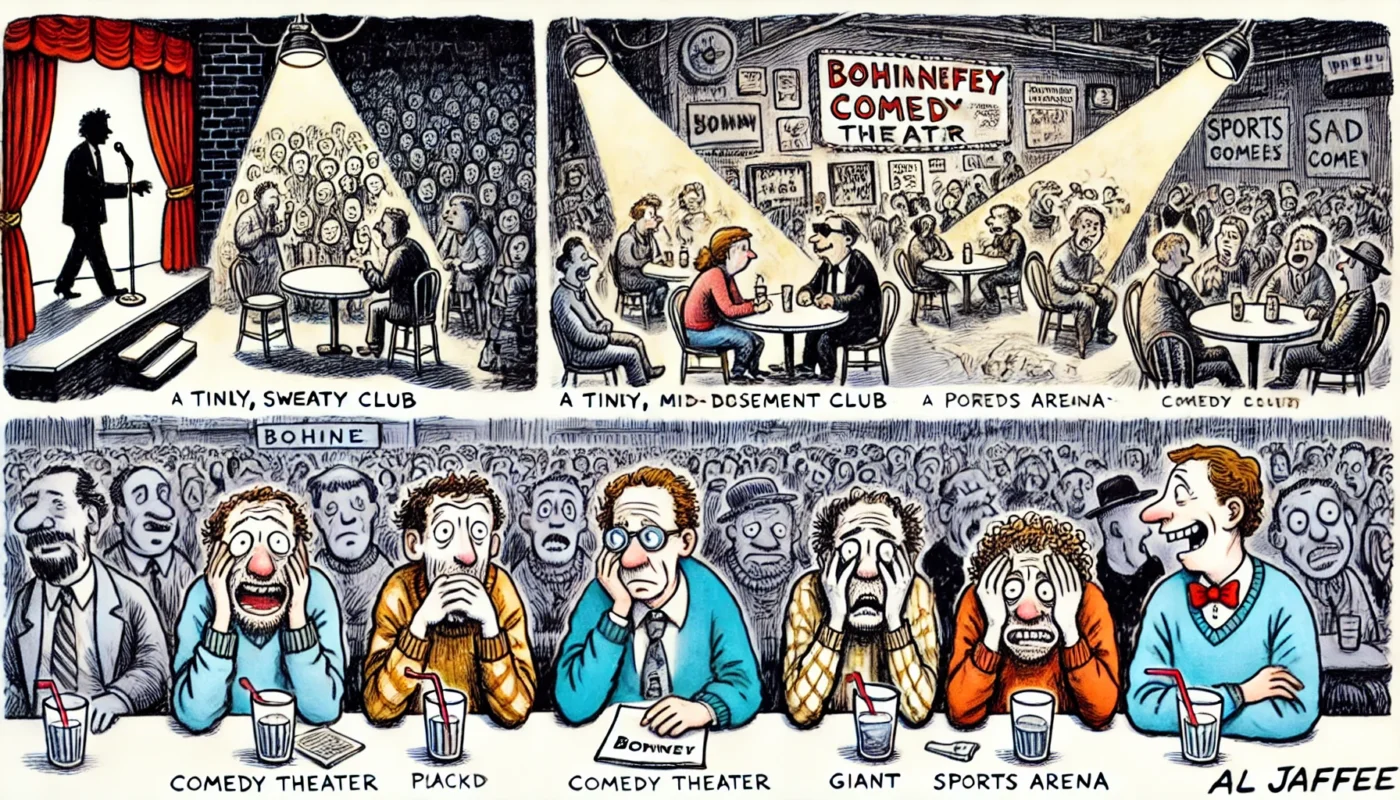
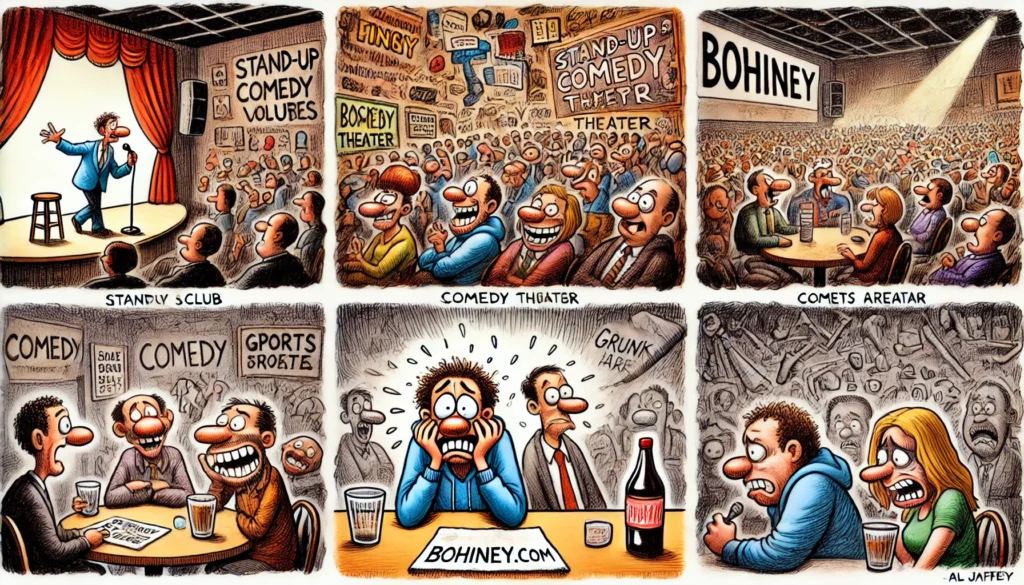
From dive bars to mega-arenas, from backroom basements to sold-out arenas, the stand-up comedy venue shapes the very soul of the joke.
Why Stand-Up Comedy Venues Matter More Than You Think
The best comics know:
The room is the act.
A tight, sweaty comedy club?
You can whisper a punchline and still kill.
An echoing convention center?
You need to roar like a drunken lion just to get heard over the shrimp cocktail orders.
Stand-up comedy venues aren’t passive backdrops.
They amplify or smother the performance.
Venue dictates:
The Holy Trinity of Perfect Stand-Up Comedy Venues
What makes a stand-up venue legendary?
1. Low Ceilings
The laughs bounce back faster.
It feels warmer, closer — like a comedy mosh pit.
2. Tight Crowd
The closer the chairs, the tighter the laughs.
Space kills energy. Elbows and knees breed humor.
3. Dim Lighting
Nobody laughs when they feel exposed.
Darkness = safety = louder laughs.
Combine these three?
You’ve got yourself a comedy pressure cooker — and the best comics thrive inside it.
Legendary Stand-Up Comedy Venues That Built Legends
Here’s where the greats earned their scars:
-
The Comedy Store (Los Angeles)
Birthplace of American rawness. A rite of passage and a baptism by fire. -
The Comedy Cellar (New York City)
Tiny, brick-walled, and brutal. Seinfeld, Chapelle, and Gaffigan cut their teeth here. -
The Edinburgh Fringe Festival (Scotland)
The world’s biggest open comedy battlefield. Succeed here, and you can survive anywhere. -
The Apollo (Harlem)
Historically Black excellence. If you bomb here, you really bomb. -
Soho Theatre (London)
The new school — smart, edgy, experimental. Where the future of comedy hangs out.
Each venue is more than a room.
It’s a personality. A vibe. A dare.
What the Funny People Are Saying
“The Comedy Store isn’t a club. It’s a gladiator arena with worse bathrooms.”
— Marc Maron
“The Cellar’s so tight you could smell the punchlines coming.”
— Jim Gaffigan
“Edinburgh Fringe is where your soul goes to live or die. Sometimes in the same night.”
— Hannah Gadsby
Stand-Up Comedy Venues: From Pubs to Palaces
Comedy used to live in:
-
Pubs
-
Coffee shops
-
Bingo halls
-
Smoky basements
Now?
-
Netflix records in ornate theaters
-
Kevin Hart books football stadiums
-
Corporate gigs happen in Vegas hotel ballrooms bigger than small European countries
The material changes with the space:
-
Small rooms = confessional, intimate jokes
-
Huge arenas = big themes, physicality, and amplified energy
A joke about your cat works in a pub.
In a stadium?
It better involve fireworks and three costume changes.
Why Bad Stand-Up Comedy Venues Are Comedy Graveyards
The wrong venue will kill even the best joke.
Red flags for a bad venue:
-
No stage — Audience doesn’t know when the show starts.
-
Bad lighting — Laughter dies when people feel seen.
-
No drink minimum — No liquid courage, no laughs.
-
Background noise — Good luck out-shouting a blender at a sports bar.
-
Seated too far apart — Laughter needs density to survive.
If you ever bomb at an Olive Garden next to the salad bar, it’s not you.
It’s the venue.
(Probably.)
How Comics Adapt to Different Stand-Up Comedy Venues
The pros adjust their game based on the room:
-
Small rooms — Whisper, lean in, confide.
-
Big theaters — Pace, project, work bigger laughs.
-
Bars — Be aggressive, command respect.
-
Corporate gigs — Don’t mention HR unless you want a new hobby called unemployment.
Venue awareness is a secret weapon.
Learn it or die clutching a silent microphone.
Five Golden Rules About Stand-Up Comedy Venues Every Comic Should Tattoo Somewhere
-
Know the Room Before You Perform
Scope it. Feel it. Fear it (a little). -
Adjust Your Energy
Big room = big jokes. Small room = small confessions. -
Respect the Setup
Bad mic? Broken spotlight? Find your light, even if it’s a disco ball. -
Work the Crowd Size
Thirty people? Make it feel personal. Three thousand? Make it feel like a rally. -
Blame the Venue Quietly
Never blame the venue out loud unless you want zero future bookings. Learn. Adapt. Roar anyway.
Closing Thought: Stand-Up Comedy Venues Are the Unsung Heroes (and Villains) of the Laugh Wars
Every joke you’ve ever loved?
It survived a room first.
It survived bad wiring, weird echoes, sticky floors, blinding lights, grumpy waiters, and drunk hecklers.
Because stand-up comedy venues aren’t neutral spaces.
They’re battlegrounds, breeding grounds, hallowed ground.
A great comic honors the room — and bends it to their will.
A bad comic blames the ceiling height.
Next time you hear a killer set?
Thank the stage.
Thank the low ceiling.
Thank the broken mic that somehow made the comic funnier.
And raise a drink to every room — big or small — that dared to become a temple of laughter.
Originally posted 2025-05-15 19:11:35.