 by
by Dressing for the Demographic: Who’s in the Room and What to Wear
Because the Clothes You Bomb In at a Brooklyn Bar Won’t Work in Branson
In American stand-up, there’s a secret art that separates the good comics from the ones that headline county fairs: knowing your audience—and dressing for them. You don’t show up to a biker bar in sequins. You don’t wear Birkenstocks to a GOP fundraiser. You don’t wear Crocs to anything where people paid more than $12 for a ticket—unless you’re the headliner and your Crocs have rhinestones.
This isn’t about selling out. It’s about survival. If comedy is a conversation, your outfit is the icebreaker. And in a country where the same punchline kills in Portland and gets you tackled in Tallahassee, the fabric on your body matters just as much as the material in your set.
A Crash Course in American Audience Archetypes
Let’s break down the major comedic battlegrounds and what your wardrobe says in each:
1. College Shows
Vibe: Anxiety, hummus, liberal guilt, and $70,000 student loans.
Dress Code: Casual, “I thrifted this and didn’t shower today” chic.
What Works: Hoodies, flannel, ironic tees, vintage anything.
What Fails: Suits, vests, and anything that screams “I’ve paid off my mortgage.”
You show up looking too polished and they think you’re a cop. Wear sneakers and emotionally unavailable body language, and they’ll trust you immediately.
2. Red State Theaters
Vibe: Proud veterans, Chick-fil-A receipts, camo hats.
Dress Code: Normal, humble, beer-friendly.
What Works: Plaid, boots, anything that looks like you’ve used a hammer.
What Fails: Skinny jeans, pastel colors, phrases like “gender fluidity.”
In Arkansas, a denim jacket makes you look like a working-class hero. In Los Angeles, it makes you look like a TikTok influencer’s stylist. Context, folks.
3. Coastal Clubs (NYC, LA, SF)
Vibe: Overthinking, therapy lingo, and oat milk lattes.
Dress Code: Pretend not to care, but absolutely care.
What Works: Neutral tones, indie sneakers, disheveled on purpose.
What Fails: Trying too hard, or not trying hard enough.
Show up in an outfit that says “I’m sad but aware,” and you’re golden.
4. Suburban Fundraisers
Vibe: PTA moms, wine dads, real estate agents named Lisa.
Dress Code: Smart-casual with a Target soul.
What Works: Clean button-ups, safe shoes, approachable energy.
What Fails: Political slogans, deep V-necks, hats indoors.
If your outfit says “I work at HomeGoods,” you’re going to crush.
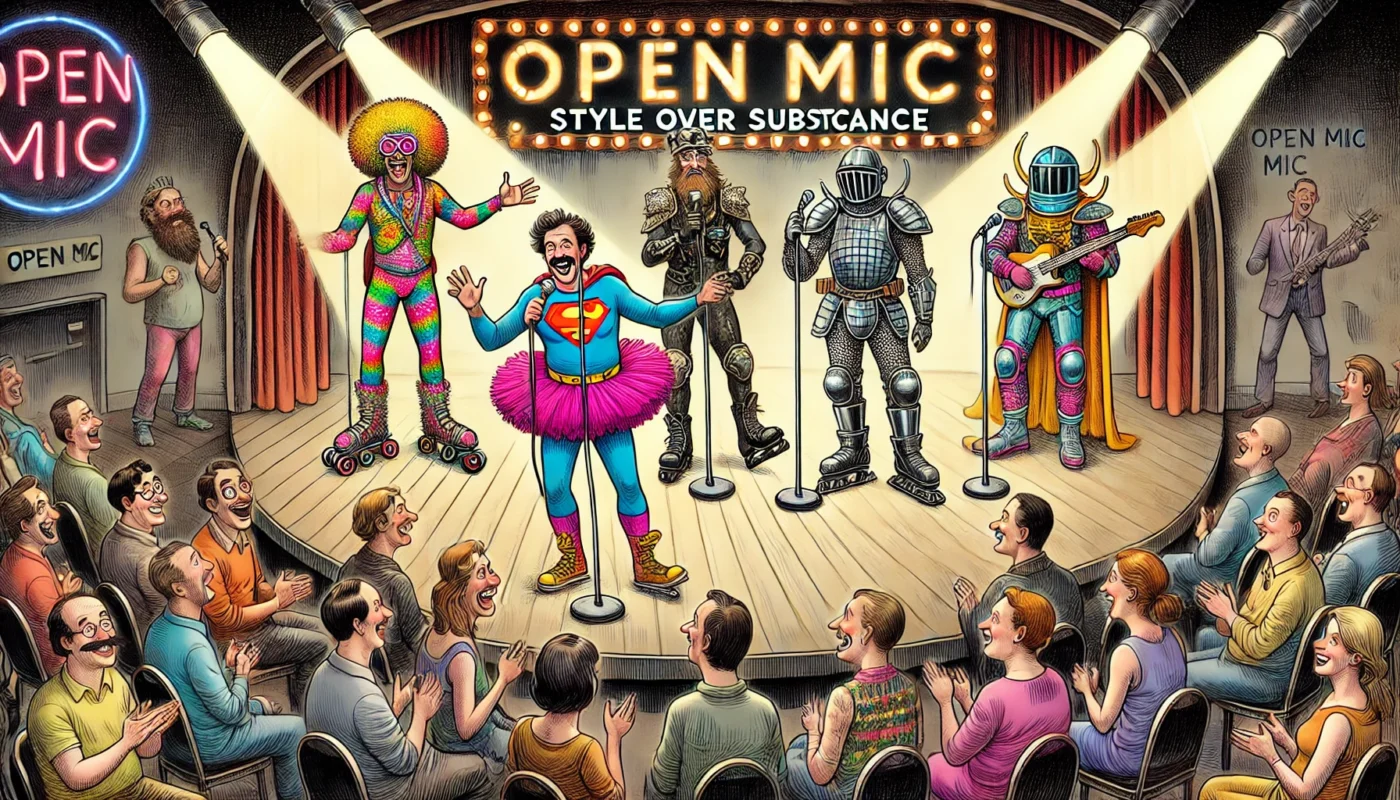
5. Urban Dive Bars
Vibe: Angry open micers, sticker-covered mics, and one guy who always brings a snake.
Dress Code: Chaos and bad decisions.
What Works: Whatever doesn’t stain.
What Fails: Nothing. Honestly, the worse you look, the more credibility you have.
Wearing an actual outfit to a dive show is like bringing a ring light to a cockfight.
What the Funny People Are Saying
“I wore loafers to a show in West Texas. A guy asked if I was there to teach French.” — Kyle Kinane
“In Portland, I wore a scarf. In Nashville, they thought it was a political statement. In Miami, they thought I was a magician.” — Rachel Feinstein
“You can tell if you overdressed by how quickly the bartender stops making eye contact.” — Ian Edwards
“College shows taught me to never wear anything ironed. If your shirt has creases, they’ll assume you’re the administration.” — Matt Rife
“I wore leather pants to a gig in Des Moines once. I’m still banned.” — Atsuko Okatsuka
Audience Profiling: The Fashion Edition
Let’s say you walk into the venue. Look around. Ask: Who’s in the room?
-
Is it a sea of beards and glasses? Great, lean alt.
-
Is it yoga pants and Facebook energy? Clean it up, Karen.
-
Is it tank tops and tattoos? Put on boots and don’t do your ‘feminism is hard’ joke.
-
Is it tech bros in Allbirds? Mention crypto once and move on.
The goal is not to become one of them. The goal is to wear something that tells them: “I’m funny and self-aware.” If you show up dressed like their enemy, the first three minutes are spent rebuilding trust.
The Outfit/Material Sync Test
Ask yourself: does your outfit match your content?
If your set is about being broke, don’t show up in a tailored jacket. If your set is about growing up religious, don’t wear a leather harness. If your set is about body shame, don’t come out in gym gear with visible triceps.
Audiences want to believe what you’re saying. If the vibe of your clothes contradicts your punchlines, it creates psychic tension. Like watching a priest do crowd work in Crocs. It’s just… wrong.
The Midwest Rule: Don’t Look Like You’re Trying
If you’re performing anywhere in the Midwest, heed this rule: effort is suspicious.
They like their comics like they like their sandwiches—unpretentious, sturdy, and not garnished with microgreens.
That means:
-
Neutral tones
-
Sneakers or boots
-
No accessories that suggest you have an Etsy store
If your outfit makes someone ask, “Where’d you get that?” you’ve failed. In Ohio, mystery is threatening.
What Not to Wear and Where
Here’s a cheat sheet of famous outfit bombs:
-
Crocs in Connecticut – Too whimsical. Made a man in the front row audibly say, “No.”
-
Tuxedo in Tulsa – Audience thought it was a prom proposal.
-
Mesh shirt in Minnesota – Caused several heart murmurs and one wet napkin incident.
-
Scarf in Sacramento – Started a 20-minute riff about “fancy boy comics.”
-
Fedora in Florida – Mistaken for a magician-slash-pickup artist. Got heckled by a teenager with braces.
Dressing for Digital: The Instagram Audience Is Real
Even if the audience in front of you doesn’t care what you wear, your online audience does.
That five-second crowd work clip you post? It might go viral—or it might die in a pile of TikTok reels simply because you wore khaki shorts and looked like a Home Depot manager with seasonal allergies.
Pro tip: Always wear at least one piece that says, “I could go viral for this.” A good jacket. A weird pin. A graphic tee that screams, “I’m too online.”
The Gender Trap: Women, Fashion, and the Double Bind
Female comics face the double standard parade every night.
-
Too dressed up = “trying too hard.”
-
Too casual = “not feminine.”
-
Too sexy = “are the jokes even good?”
-
Too modest = “are the jokes too good?”
The solution? Dress like you’re going to a wedding where your ex is the DJ and your therapist is officiating.
It should say: “I care—but not for your approval.”
The best looks balance comfort with intentionality. Every piece says: “Yes, I’m a woman with thoughts. And yes, these boots are from Nordstrom Rack.”
The One Constant: Be Believable
Ultimately, the real goal isn’t fashion. It’s believability.
Your outfit should match:
-
Your material
-
The vibe of the room
When those align, the audience relaxes. They feel like they know you. And when they know you, they trust you. And when they trust you, they’ll follow you anywhere—even into that weird story about crying during an Olive Garden unlimited breadsticks special.
Final Thought: Your Outfit Opens the Set
You’re not dressing for yourself. You’re dressing for the first ten seconds of your act. The clothes are the opener before the opener.
So here’s your checklist before the next show:
-
Who’s in the room?
-
What are they wearing?
-
What do they expect me to be wearing?
-
What’s the version of me they’ll trust the fastest?
Get those answers right, and your jokes land faster. Get them wrong, and you spend five minutes digging out of a polyester-shaped hole.
Because in stand-up, what you wear doesn’t just make an impression.
It writes your opening line before you do.
Originally posted 2025-05-11 21:14:34.