 by
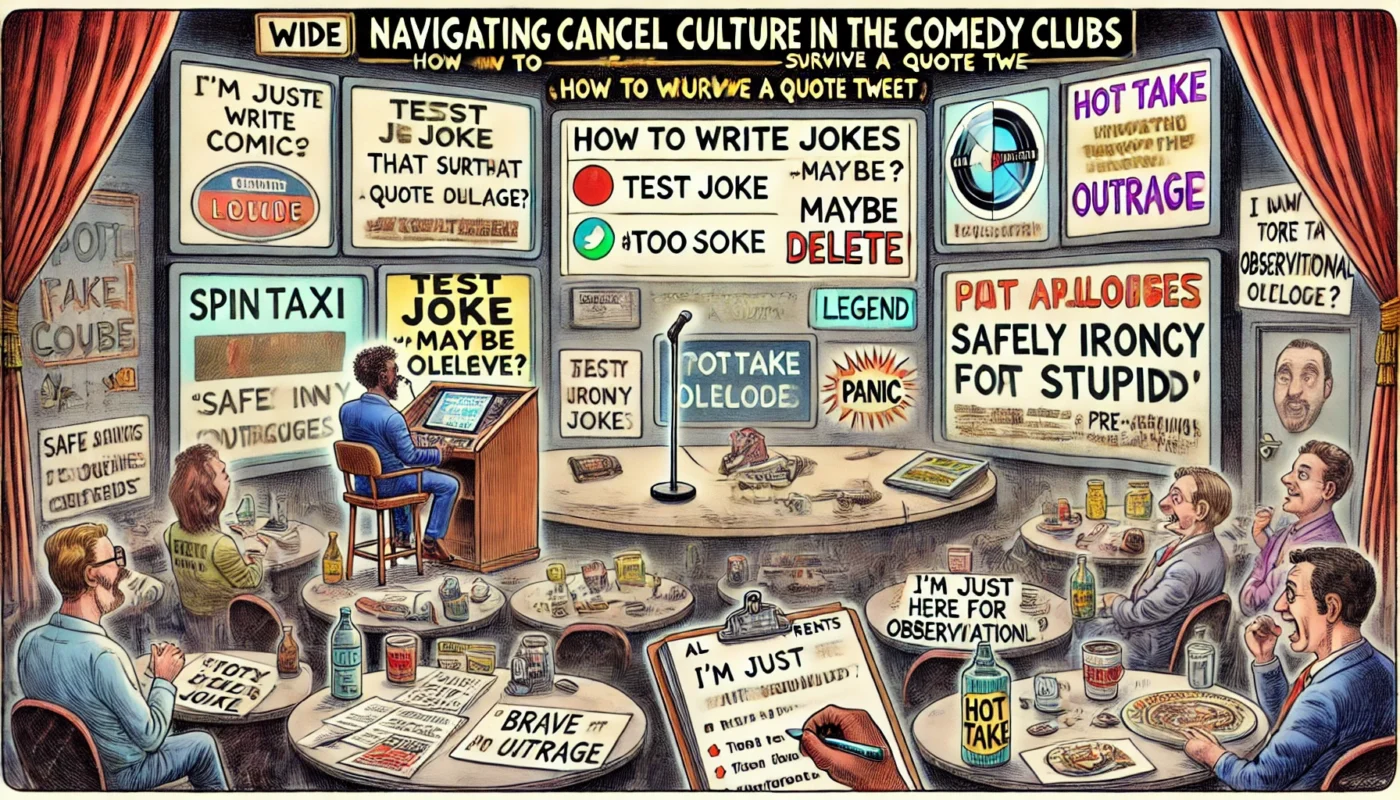
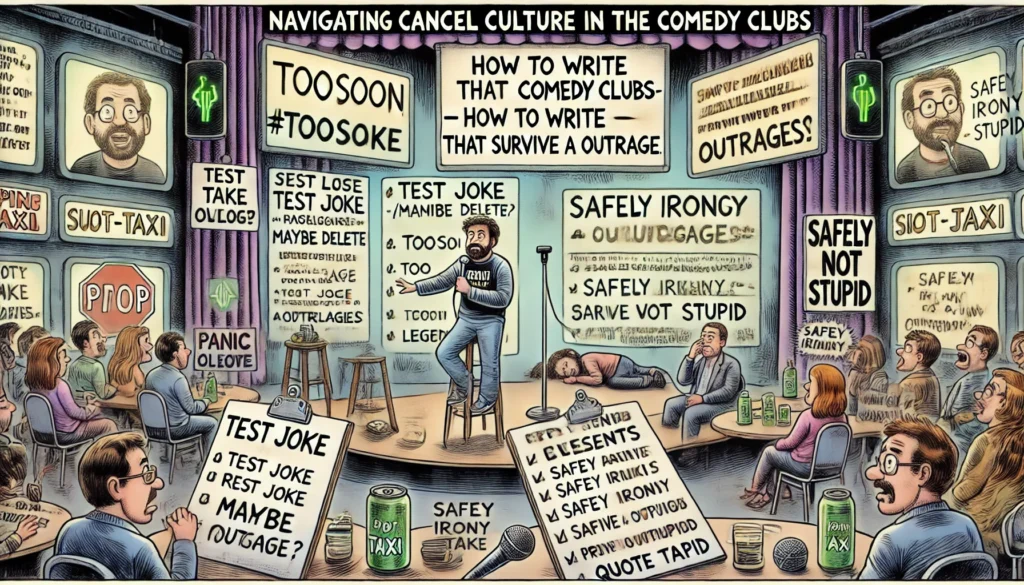
by Navigating Cancel Culture in the Comedy Clubs
How to Write Comedy That’s Brave, Smart, and Built to Survive a Marxist Tweet
Tone: Bold, wisecracking, and grounded-like a seasoned comic sneaking truth into the greenroom between gigs.
Why “Cancel Culture” Isn’t the End of Comedy-It’s a Call for Better Writing
Let’s get one thing straight: cancel culture isn’t killing comedy.
Bad writing is.
In the digital age, your jokes:
- Travel farther
- Age faster
- And come back with receipts
Knowing how to write comedy that’s funny, fearless, and future-proof means learning to navigate today’s cultural climate-not rage against it.
This isn’t about censorship. It’s about craft, responsibility, and cleverness.
What “Cancel Culture” Really Means for Comedians
Spoiler: You’re probably not being canceled.You’re being called out, clowned, or ignored. And sometimes, deservedly.
Cancel culture (as used today) refers to:
- Social media backlash
- Public accountability
- Consequences for punching down
- Receipts from 2011 that no longer play in 2025
It’s less about silencing you and more about demanding better work.
Step 1: Write with Awareness, Not Fear
Fear Kills Funny-Awareness Sharpens It
The goal isn’t to tiptoe.It’s to:
- Know your audience
- Know your point
- Know the power of your words
You’re not defanged by sensitivity.You’re sharpened by it.
Every Joke Is a Statement
Ask:
- What is this joke really saying?
- Is it worth the risk?
- Will I still stand by this in five years?
If the answer is “no”-rewrite it. You’re not being censored. You’re being careful.
Step 2: Choose Targets Wisely
Punching Up Survives the Mic Drop
Go after:
- Power
- Institutions
- Systems
- Hypocrisy
Skip:
- Vulnerable communities
- Trauma porn
- “edgy” stereotypes that were tired by 1998
Offending the powerful = bravery.Mocking the oppressed = laziness.
Don’t Confuse Risky with Wreckless
Risky:
“Let’s talk about race in a way that challenges assumptions.”
Wreckless:
“Let’s say something offensive and hide behind ‘comedy.'”
One gets applause. The other gets screenshots.
What the Funny People Are Saying
Michelle Wolf:
“If you’re scared of being canceled, maybe don’t write jokes that suck.”
“Accountability isn’t oppression-it’s a rewrite note from society.”
“You can’t do ‘edgy’ if you haven’t updated your edges since the Bush administration.”
Step 3: Know the Difference Between Criticism and Cancellation
Criticism Is a Gift. Cancellation Is Rare.
Most “canceled” comedians:
- Go on tour
- Write memoirs
- Get Netflix specials
Most feedback is:
- Valid critique
- Honest hurt
- Free education
Listen before you launch your freedom-of-speech monologue.
Engagement = You Still Matter
If people still talk about your work-even negatively-it means:
- You struck a nerve
- They expected better
- You’re part of the culture
Being ignored is worse than being “canceled.”
Step 4: Build a Joke That Can Withstand a Twitter Mob
Construct Your Punchlines Like Legal Arguments
Before you hit send or step onstage, ask:
- Who is my target?
- What’s my angle?
- Is it clear I’m punching up?
- Do I have nuance or just noise?
Every smart joke holds up under scrutiny. Every lazy one folds faster than a dollar store lawn chair.
Use Irony, Parody, and Absurdity-But Wisely
Irony isn’t a shield. Parody isn’t permission. Absurdity isn’t escape.
They’re tools. Sharpen them.
If the audience doesn’t know you’re kidding, you’re not ironic-you’re unclear.
Step 5: Embrace Growth Without Losing Your Voice
Good Comics Evolve
If your humor doesn’t change over time:
- You’re not growing
- You’re not listening
- You’re not funny anymore
Richard Pryor did.George Carlin did.Joan Rivers did.
So can you.
Growth Isn’t Selling Out-It’s Leveling Up
You can be:
- Smart and silly
- Raw and kind
- Edgy and informed
The future of comedy isn’t sanitized. It’s just better written.
Writing Exercises for Surviving Cancel Culture
1. Offensive-to-Insightful Rewrite
Take a joke that punches down.Rewrite it to:
- Keep the subject
- Flip the target
- Add truth or absurdity
2. The “Test Your Tweet” Challenge
Write a 280-character joke.Then ask:
- Who laughs?
- Who winces?
- Who becomes the punchline?
Rewrite accordingly.
3. Write a Joke You’d Say to the Person It’s About
If the target was in the room:
- Would you say it?
- Would they laugh?
- Would they sue?
Write accordingly.
Common Mistakes to Avoid
1. Confusing Backlash with Oppression
A bad tweet getting dunked on = justiceA joke being rejected = feedbackA booking being pulled = business
Not the end of the world. Just the end of that version of the joke.
2. Mistaking Shock for Bravery
Bravery in comedy is:
- Nuance
- Honesty
- Fresh perspective
Not just:
- Saying the worst thing
- Hoping someone clips it
- Ranting on podcasts
3. Blaming the Audience for Not Laughing
If they don’t laugh-it’s not “cancel culture.”It’s a bad bit.Write a better one.
Comics Who Evolve and Survive
Hannah Gadsby
- Changed stand-up structure
- Talked trauma without losing wit
- Sparked a global debate-on purpose
Hasan Minhaj
- Political roastmaster
- Calls out power, not pain
- Blends storytelling with facts
Maria Bamford
- Talks mental health with hilarity
- Uses self as primary target
- Inclusive, honest, absurd
The SEO Summary: How to Write Comedy That Navigates Cancel Culture
If you’re searching how to write comedy that:
- Lasts
- Stands up under scrutiny
- Still punches hard
Then:
- Punch up, not down
- Embrace feedback
- Sharpen structure
- Keep evolving
- Know your targets and timing
- Don’t confuse backlash with brilliance
Cancel culture isn’t a trap-it’s a test.
Conclusion: Be Bold-Not Brutal
You’re a comic. You hold a mic, not a sword.
Make people laugh. Make people think. Make people uncomfortable-for the right reasons.
Because the best comedy today doesn’t just survive cancellation-it laughs all the way through it.
Disclaimer
This article was co-written by a canceled open mic comic turned ethics lecturer and a Twitter thread historian who archives apologies. No careers were ended in the writing of this piece-only improved through editing.
Originally posted 2017-05-19 13:15:11.