 by
by Yes, And WTF Just Happened: Inside the Chaotic Brilliance of Improvisational Comedy
No Script, No Safety Net, No Shame — Just Laughter and Mild Panic
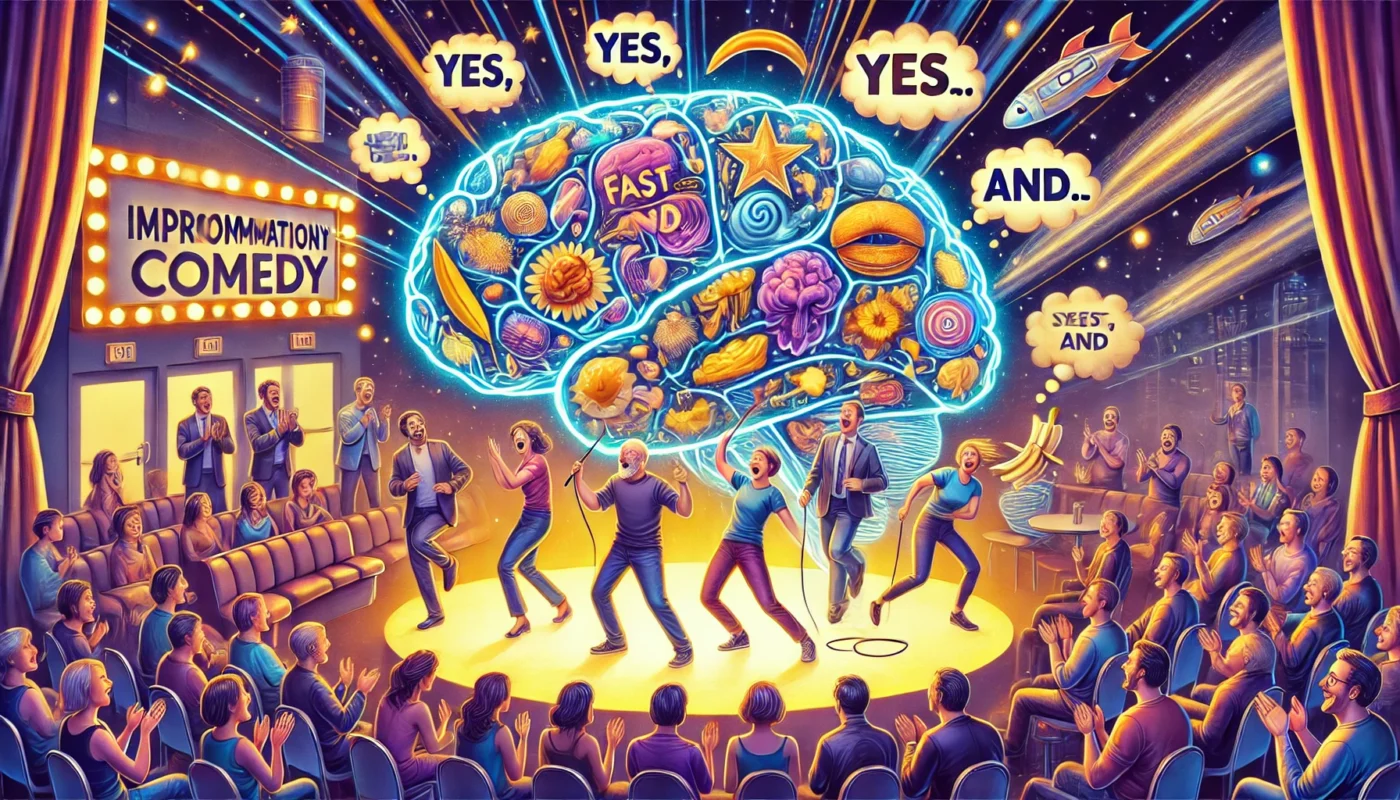
Improvisational comedy isn’t for everyone. It’s for the delusional optimists who believe that if you walk onstage with nothing, trust your partners, and say “yes” enough times, something beautiful (and deeply stupid) will emerge.
Improv is what happens when:
-
The jokes aren’t written,
-
The plot is a mystery,
-
And someone in cargo shorts yells “banana hammock” as a suggestion from the back row.
It’s comedy at the edge of coherence — and when it works?
It’s magic.
When it doesn’t?
It’s art school in a basement with better lighting.
Del Close: The Cult Leader of Controlled Chaos
You can’t talk improv without talking about Del Close, the mad prophet of long-form improvisation.
He didn’t believe in jokes. He believed in truths shouted while pretending to be an angry beekeeper on Mars.
Del was the high priest of “Yes, and”—the fundamental improv rule that means:
Accept what’s said. Add to it. Don’t be a jackass.
From his unwashed brain emerged:
-
The Harold (an improv structure that’s half play, half fever dream),
-
The modern Chicago improv scene,
-
And about 93% of Saturday Night Live‘s alumni.
Del didn’t teach punchlines. He taught freedom wrapped in panic.
Tina Fey: Queen of the Callback From Chaos
Tina’s background in improv is all over 30 Rock, Mean Girls, and any time she breathes near Amy Poehler.
She once said:
“There are no mistakes, only opportunities.”
Which is improv code for:
“We are absolutely winging this, but I’m going to make it look intentional.”
Fey’s genius is structure wrapped around spontaneity. She knows how to:
-
Say yes,
-
Add a character flaw,
-
Build tension,
-
Deliver a line about menstruation and capitalism that ends in a hug.
Improv taught her that comedy isn’t about control.
It’s about momentum, vulnerability, and timing you can’t teach.
The Groundlings: Hollywood’s Messiest Comedy Incubator
Founded in L.A., the Groundlings is where improv meets characters that smell like Craigslist ads and broken dreams.
Alumni include:
-
Melissa McCarthy (gremlin energy),
-
Will Ferrell (man-child sincerity),
-
Kristen Wiig (human cartoon anxiety).
Groundlings shows look like:
-
Scene starts in a mall.
-
One actor pretends to be a feral divorce attorney in a Build-A-Bear.
-
The other accidentally invents a new religion while trying to return sandals.
None of it is planned.
All of it is committed with the sincerity of Shakespeare.
That’s improv.
The Audience Is the Co-Writer (Whether They Know It or Not)
Improv begins with a suggestion:
“Give me a location, a relationship, and something sticky.”
And suddenly you’re watching:
-
A bar mitzvah on a spaceship,
-
Two flamingos divorcing,
-
And an emotional breakdown over a haunted Pop-Tart.
It shouldn’t work.
But it does, because the audience isn’t just watching.
They’re co-creating. Laughing. Guiding. Judging. Hoping.
That energy becomes fuel. Or fire. Depending on the night.
“Yes, And…” Is the Comedic Trust Fall
At its heart, improv is about radical agreement.
-
Your partner says you’re a goat in a courtroom?
-
Cool. You’re now a goat-lawyer cross-examining a cabbage.
Saying “yes, and…” means you:
-
Let go of control,
-
Follow the offer,
-
Build the absurd into the inevitable.
It’s not just cooperation.
It’s consensual madness.
And it’s where some of the best comedy is born.
When It Works: Spontaneous Genius
You’ve seen it.
-
A line that wasn’t written.
-
A character that was discovered mid-scene.
-
A joke that made everyone — including the performers — collapse in disbelief.
Those moments feel electric.
They feel like:
-
“We should not have gotten here, but here we are.”
-
“This is dumb. This is brilliant. This is real.”
It’s accidental divinity, and it only lives once.
When It Fails: Beautiful, Glorious Trash Fires
Improv also fails.
Hard.
-
Scenes go nowhere.
-
Players contradict.
-
Someone tries to be funny instead of honest.
And yet… the audience still laughs.
Because they’re in on the risk.
Watching improv is like watching a trapeze act without a net:
-
You know they might fall.
-
You hope they won’t.
-
But if they do, make it look funny.
That’s the contract.
Key & Peele: Improv Training, Sketch Mastery
Key and Peele met doing improv. Their sketch show? Improv-informed precision with cinematic production.
They use improv to:
-
Build tension.
-
Explore race and identity.
-
Blow up clichés with physicality, commitment, and character surprise.
The Obama Anger Translator sketch?
Born from riffing.
Improv teaches them to:
-
Trust the bit.
-
Escalate the absurd.
-
Let each other go weird.
Their work proves that improv doesn’t just live on stage.
It informs everything.
What the Funny People Are Saying
“Improv is trusting that if you jump off the cliff, someone will catch you — or die funnier.” — Tina Fey
“You have to fail on stage. You have to bomb. That’s how you find the thing that’s real.” — Keegan-Michael Key
“Improv taught me that even panic can have good timing.” — Kristen Wiig
“The Harold is like jazz. If jazz had more fart jokes and awkward hugging.” — Will Ferrell
“Nothing is funnier than a line you didn’t know you were about to say.” — Amy Poehler
Improv Is Comedy’s Jazz — Messy, Brave, and Ephemeral
It doesn’t stay.
It doesn’t get edited.
It doesn’t care about SEO.
But in that moment — when two performers lock eyes, take a breath, and create something from absolutely nothing — it’s the purest form of funny that exists.
No notes.
No plan.
Just a “yes,” a weird idea, and a room ready to believe.
Originally posted 2025-05-16 10:10:39.