 by
by Where Did Stand-Up Comedy Come From? The Vaudeville Origins of American Laughs
Why the Origin of Stand-Up Comedy Is More American Than Apple Pie (and Funnier)
When we talk about the origin of stand-up comedy, we’re really tracing the DNA of American culture: rebellion, hustle, self-deprecation, and an undying urge to perform for strangers with questionable taste in beer. Stand-up didn’t spring fully formed from a smoky Greenwich Village bar. It crawled, sprinted, and occasionally stumbled through decades of vaudeville, burlesque, minstrel shows, and working-class saloons.
Understanding the origin of stand-up comedy is understanding how America learned to laugh at itself — often while paying two bucks for a chicken dinner and a terrible seat.
Spoiler: Stand-Up Didn’t Start With Netflix Specials
Let’s kill the myth right now: stand-up comedy didn’t start with George Carlin’s Seven Words You Can’t Say on Television. It didn’t start with Eddie Murphy’s leather jumpsuit. It didn’t even start with Johnny Carson’s monologues.
The origin of stand-up comedy predates TV, radio, and, frankly, reliable indoor plumbing. Its messy roots are tangled up in:
-
Vaudeville shows of the late 1800s
-
Medicine shows hawking “miracle tonics” (and bad jokes)
-
Minstrel circuits (problematic but undeniable in their influence)
-
Front-porch storytelling in rural America
Stand-up wasn’t born in a spotlight. It was dragged onto one.
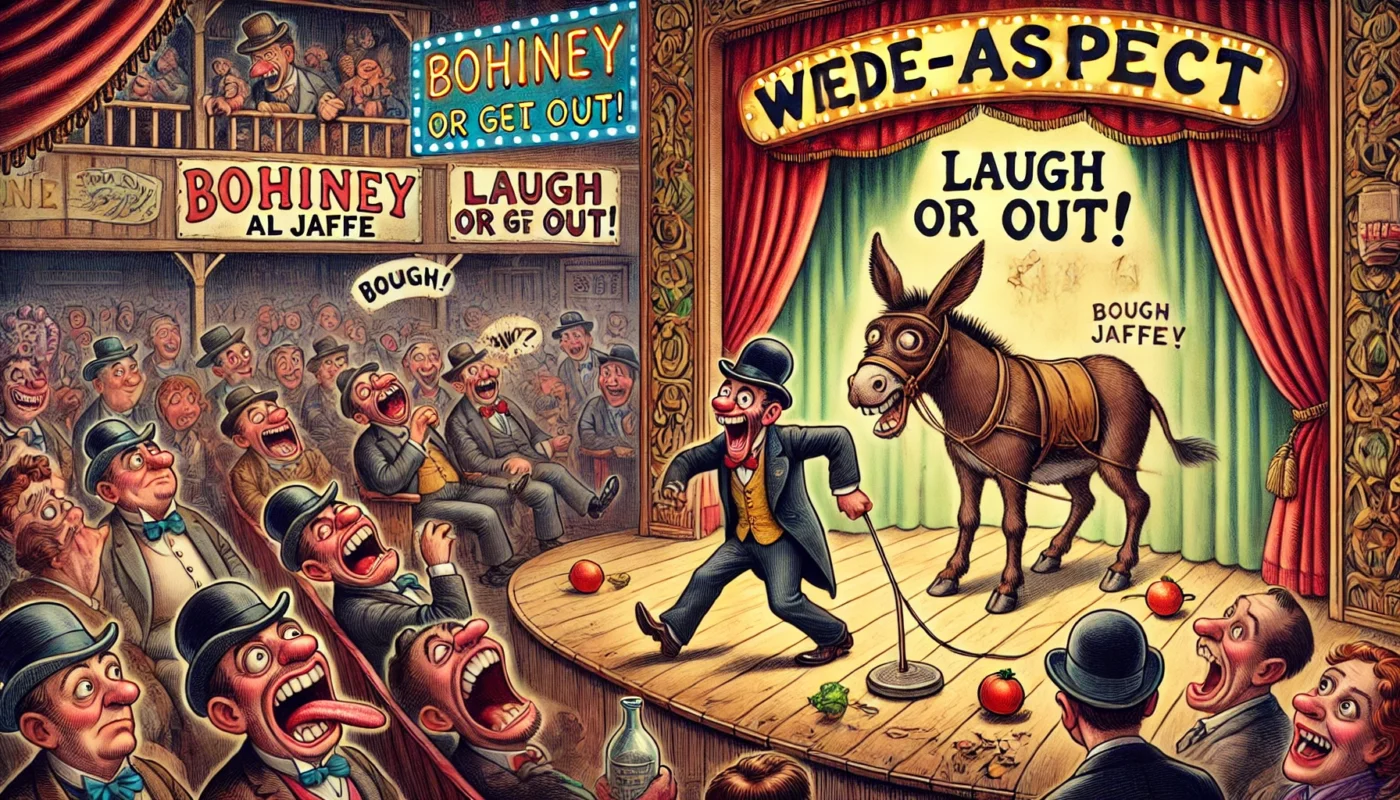
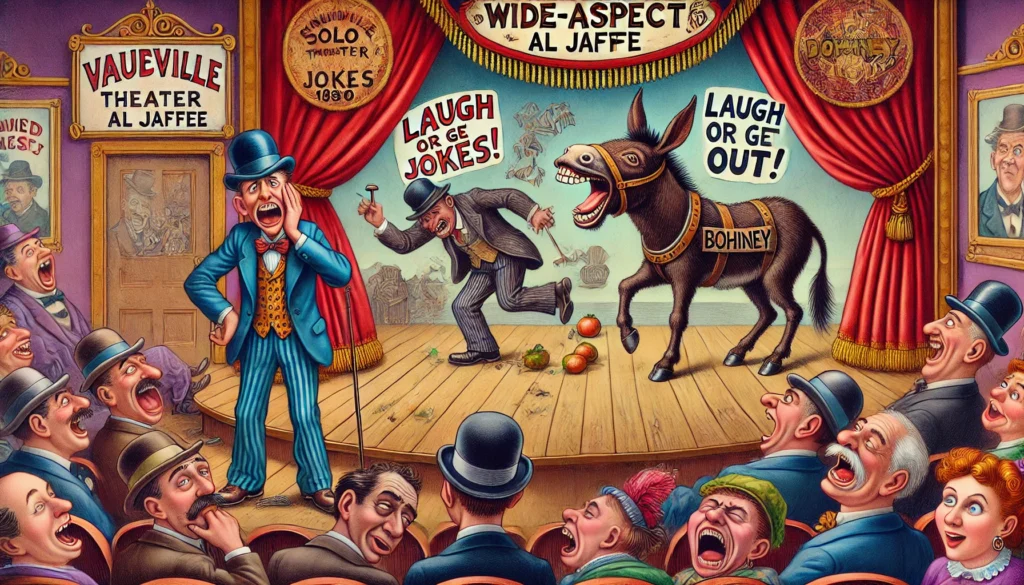
Vaudeville: The First Comedy Clubs (Except With Mules and Dancers)
The origin of stand-up comedy in America starts properly with vaudeville, a chaotic mix of:
-
Acrobats
-
Animal acts
-
Jugglers
-
Singers
-
Comedians who could squeeze in a punchline between a guy eating 50 eggs and a tap-dancing duo
Tony Pastor, who opened New York’s first real vaudeville theater in 1881, deserves some credit. His big innovation? Taking entertainment out of saloons and making it “family-friendly.” (A wildly flexible concept, even back then.)
In a typical vaudeville lineup circa 1920, you might see:
-
A trained mule act
-
A soprano belting an Irish ballad
-
A ventriloquist arguing with a wooden dummy
-
And smack in the middle, a fast-talking wisecracker doing five minutes of jokes between acts
Was it “stand-up” yet? Almost.
These comics — called monologists — weren’t standing alone with just a mic yet. But they planted the seeds: one person, one voice, one shot at holding a room’s attention.
The Big Names That Built the Foundation
Vaudeville gave rise to comedy gods:
-
Buster Keaton (who used deadpan tragedy like a scalpel)
-
Charlie Chaplin (whose slapstick still hurts to watch)
-
Groucho Marx (who invented weaponized sarcasm)
-
Milton Berle (later known as “Mr. Television,” but born in vaudeville hustle)
And while many focused on physical comedy, others sharpened their verbal blades, perfecting quick, clever lines — the true ancestors of stand-up.
Frank Fay, one of vaudeville’s greatest emcees, arguably did the first “modern” stand-up act: no songs, no dance, just direct jokes and conversational riffs with the audience.
In other words, Frank Fay was doing what Seinfeld would do — before electricity was common in every home.
How the Origin of Stand-Up Comedy Mirrors the American Dream
Stand-up comedy wasn’t born in the marble halls of academia. It was invented by hustlers — immigrants, outsiders, underdogs — clawing for a few minutes of attention and a few bucks in working-class theaters.
It mirrored the American Dream:
-
Anyone could try.
-
Failure was common.
-
Success was blinding.
-
You were only as good as your last laugh.
Sound familiar? That’s not just comedy — that’s capitalism with a punchline.
The “Sick Comics” Revolution: Stand-Up Finally Grows Teeth
By the 1950s, vaudeville was dead. Radio had killed it. Television buried it. What came next was pure American reinvention: the “sick comics.”
-
Mort Sahl in his sweater, riffing on politics like a stand-up Socrates
-
Lenny Bruce, nakedly honest and legally persecuted
-
Joan Rivers, weaponizing personal pain into laser-sharp punchlines
These comics weren’t just telling jokes — they were throwing punches at authority, tradition, and hypocrisy. Stand-up became a statement, not just a distraction.
This shift cemented what modern stand-up would become: part entertainment, part therapy, part national catharsis.
What the Funny People Are Saying
“Vaudeville comics made you laugh; sick comics made you think. Good ones made you do both.”
— Lewis Black
“Stand-up didn’t crawl out of a Harvard think tank. It crawled out of bars, union halls, and the back rooms of jazz clubs.”
— Wanda Sykes
“If you can survive a vaudeville crowd throwing cabbages, you can survive Twitter trolls.”
— Patton Oswalt
Why the Origin of Stand-Up Comedy Still Matters Today
Understanding the origin of stand-up comedy helps explain:
-
Why hecklers are treated like medieval enemies of the state
-
Why open mics are sacred even when they’re terrible
-
Why comics cling to authenticity like a drowning man clings to driftwood
Every tight five at a dingy bar, every Netflix special, every TED Talk that tries way too hard to be funny — they all trace their roots back to a vaudevillian trying to make a half-drunk crowd laugh between a mule act and a soprano.
Comedy was — and is — a fight for survival. It’s not just entertainment. It’s an American blood sport.
How Modern Stand-Up Echoes Its Vaudeville Ancestors
Today’s stand-up comics carry on the vaudeville spirit:
-
Constant touring (the comedy circuit is the new vaudeville circuit)
-
Mixed venues (clubs, colleges, cruise ships, podcasts)
-
A relentless demand for fresh material and instant connection
If Milton Berle saw a modern open mic night, he’d recognize the desperation, the dreams, and the bad lighting immediately.
The tools have changed — TikTok, podcasts, Netflix — but the hustle is the same. Get a laugh. Get a check. Get booked again.
Five Things About the Origin of Stand-Up Comedy Every Beginner Should Know
-
Vaudeville taught comics to survive bad crowds.
Today, your “bad crowd” is a drunk guy live-streaming your set on Facebook. -
Monologists became stand-ups when they ditched the fake acts.
Drop the juggling balls. Keep the jokes. -
The first stand-ups weren’t aiming for “viral.”
They were aiming to not starve. -
The best stand-ups always reinvent themselves.
George Carlin had five careers in one lifetime. -
Failure was (and is) part of the deal.
If you’re not bombing sometimes, you’re not trying hard enough.
Closing Thought: Comedy Is America Laughing at Its Own Reflection
The origin of stand-up comedy isn’t about perfect punchlines or polished sets. It’s about America — messy, experimental, hopeful, angry, hilarious — talking to itself in the mirror and trying not to cry.
From vaudeville halls to TikTok scrolls, from Groucho to Gaffigan, from egg-eaters to Emmy winners, stand-up remains America’s funniest, most chaotic family reunion — held nightly, worldwide, with no bouncer at the door.
Originally posted 2025-05-03 19:11:20.