 by
by Punchlines in a Tuxedo: The Bob Hope Guide to Being Funny for 70 Years
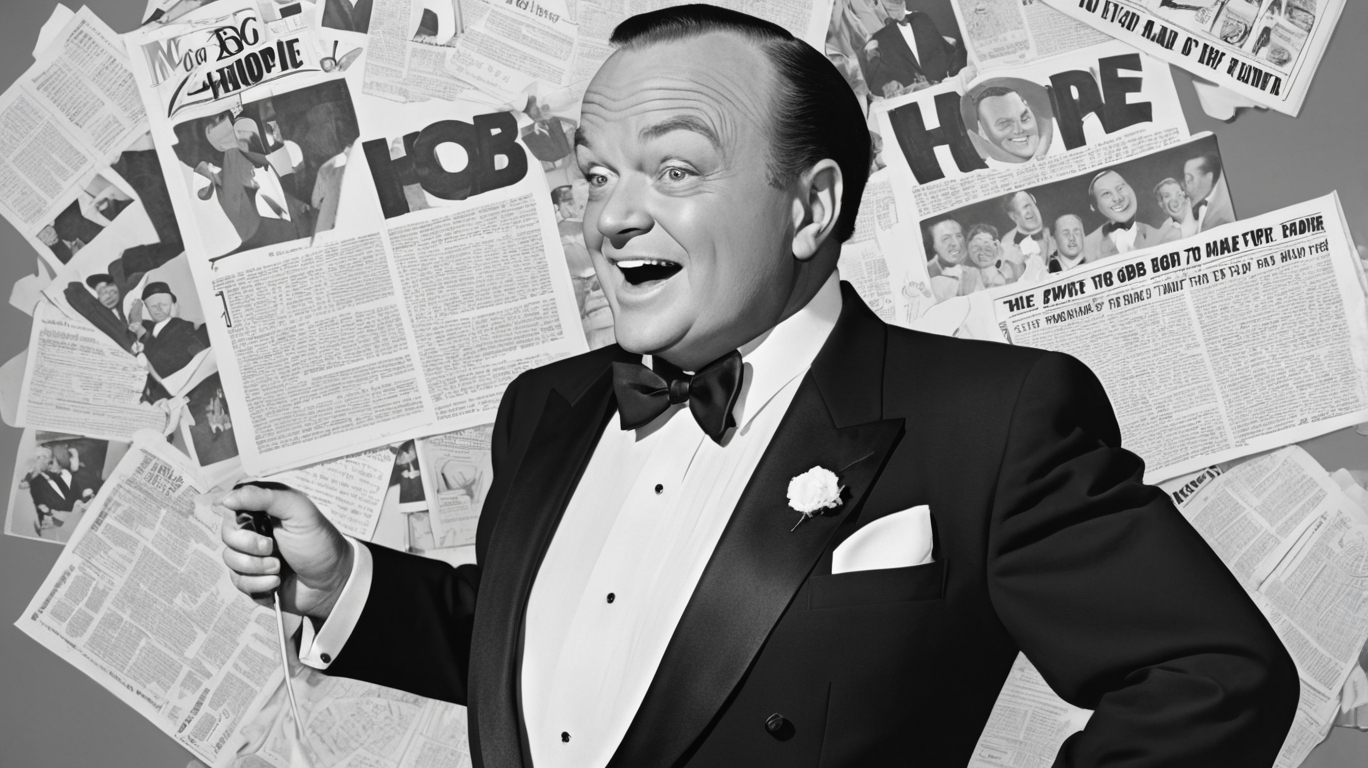
There are funny people. There are legends. And then there’s Bob Hope—a man who wore comedy like a tuxedo and delivered punchlines so reliably, America practically saluted him for it. He wasn’t just a stand-up comedian, an actor, or a television host. He was a punchline factory in cufflinks, and somehow, his brand of humor stayed fresh from the days of the Charleston to the dawn of the Internet.
The Comedy Constant Across 10 Decades
Bob Hope didn’t merely exist in the entertainment industry—he dominated it. From vaudeville stages in the 1920s to iPhones streaming “Road to…” movies on classic film apps, his reach is unparalleled. He joked through the Great Depression, WWII, the Cold War, the Summer of Love, Watergate, Reaganomics, and Bill Clinton’s saxophone era—without ever having to use four-letter words or throw a mic.
Hope proved that comedy doesn’t have to be filthy to be fearless. It just has to be fast, sharp, and relatable. His longevity wasn’t luck—it was craft.
What Made Bob Hope Funny? (No, Seriously)
At the center of Bob Hope’s humor was his relentless topicality. Every night, he opened with monologues that sounded like they were peeled off the front page of the day’s newspaper. If Congress sneezed, Hope already had a joke ready about the national Kleenex shortage.
His delivery was rapid-fire. No meandering setups. Just:
“California is a great place to live—if you’re an orange.”
That joke isn’t just clever. It’s Hopeian: current, visual, and deadpan. He didn’t linger. He drove the punchline.
And let’s not forget his persona. The tuxedo-clad coward with an eye for the ladies and a heart of tin? It worked. Whether he was paired with Bing Crosby or performing solo for GIs in Saigon, Bob Hope’s character was the lovable schemer, the guy who wouldn’t fight a war but would flirt with its nurses.
He Had Writers—Lots of Them—But the Voice Was All Hope
Bob Hope’s “joke machine” was infamous. He employed a team of writers like a late-night host on steroids. Mel Shavelson, Larry Gelbart, and other greats cranked out one-liners like they were producing munitions.
Still, the final delivery, the musicality of the laugh, the timing, the smirk—that was all Hope.
Tuxedos and Trenches: A Unique Double Life
Few comedians can say they bombed at the Oscars and literally dodged bombs in a war zone. Hope could. He hosted the Oscars 19 times and USO tours in almost every American military conflict from World War II to the Gulf War.
“We’ve got great entertainment tonight. I even brought along some comedians… in case I’m not funny.”
That’s not just a joke—that’s morale support in a zoot suit.
Hope’s Style: Suggestive But Safe
Bob Hope was the undisputed king of innuendo. Not dirty—winkingly suggestive. His jokes had just enough steam to make your grandma blush and your grandpa chuckle.
“She’s got a figure that makes the Mona Lisa look like a linoleum floor.”
Today’s comics might call it tame, but Hope’s charm was in riding the edge without crossing it. He didn’t shock you. He teased you.
Hope vs. Time: Why He Never Got Old
How does someone stay funny from radio to cable TV? Hope evolved without selling out. He never became bitter, never whined about “kids today,” never yelled into a microphone about cancel culture. He just adjusted the aim of his punchlines and kept smiling.
He understood the fundamental rule of longevity in comedy: don’t lecture the audience—entertain them.
Modern Comedians Still Owe Him Royalties (Spiritually Speaking)
Johnny Carson, David Letterman, Jay Leno, even Seth Meyers—every late-night host is walking in Bob Hope’s custom-polished footsteps. They owe their monologue structure, their news-based jokes, and their charming persona to Hope’s blueprint.
He was the prototype. The original. The tuxedoed trailblazer.
Why Bob Hope Still Matters
Today, in an age where being funny often means being furious, Hope reminds us that humor can be graceful. That one-liners can be clean and devastating. That being beloved across generations is harder than going viral for one week.
He didn’t roast people to destruction. He warmed them up with a flame-thrower of charm and a smirk that never quit.
Conclusion: The Man in the Tux with the Joke in His Pocket
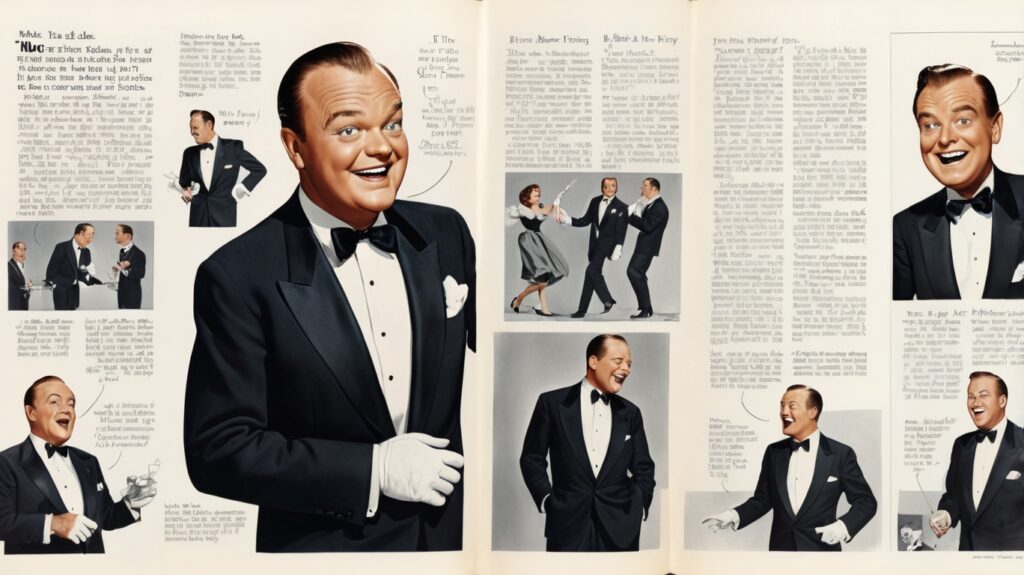
In the end, Bob Hope didn’t just wear a tux—he was the tuxedo of comedy: elegant, timeless, and always ready for the next laugh. For 70 years, he proved that punchlines, when delivered with heart and a little wink, never go out of style.
Originally posted 2025-06-10 04:30:45.