 by
Politico‘s Payroll Predicament: The USAID Sugar Daddy Scandal
From Breaking News to Broke News: When Government Grants Meet Journalism’s Paychecks
In what can only be described as a plot twist straight out of a political thriller, Politico, the esteemed purveyor of political news, has found itself in the middle of a funding fiasco that could be straight out of a soap opera titled “As the World Turns… to USAID.”
We’ve all heard of breaking news, but Politico has taken it to a new level with what we’re now calling “broke news.” Allegations have surfaced, courtesy of the MAGA crowd, that Politico was sipping from the USAID funding fountain, turning what should be objective journalism into something that looks suspiciously like government-sponsored content.
Imagine this: Politico’s newsroom, once bustling with the sound of clacking keyboards and the smell of coffee, now echoing with the silence of unpaid salaries. “Technical glitch,” they say. But in the world of political satire, we know better. This wasn’t a glitch; it was a government grant gone awry.
“Subscription or Subsidy?” you might ask. Turns out, Politico might have been playing a different game altogether. Instead of courting readers, they were allegedly in bed with Uncle Sam, turning every article into a cleverly disguised foreign aid report. The audacious claim is that Politico was essentially running on a ‘pay-to-play‘ model, but with taxpayer dollars.
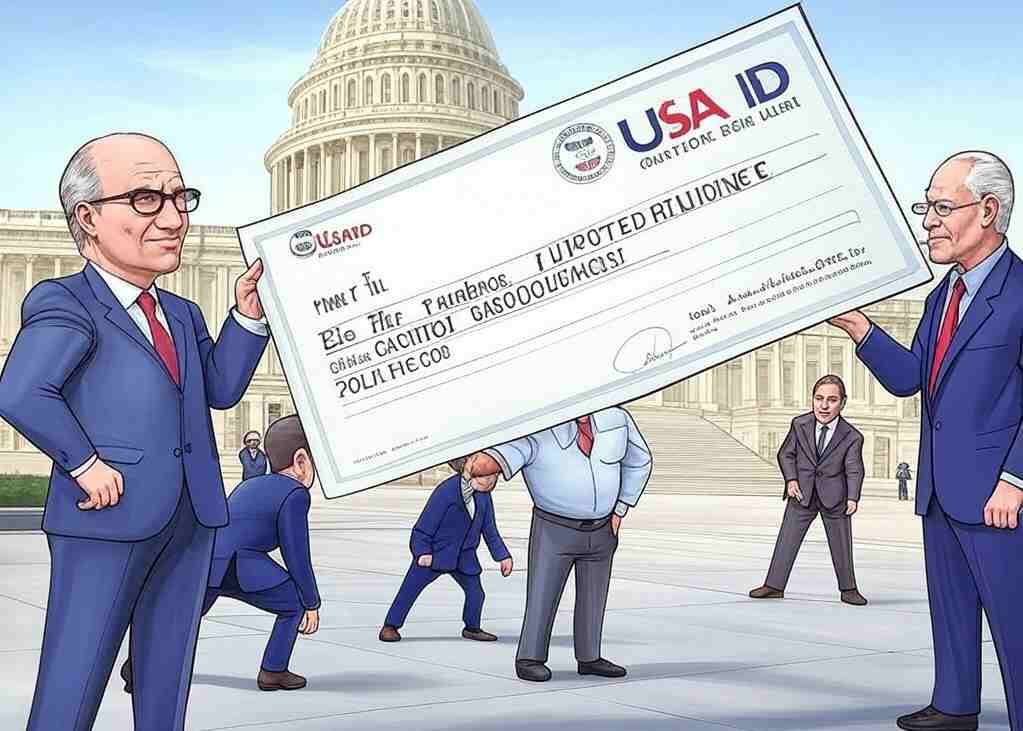
The MAGA math is simple: Politico got $8 million from USAID, which in their world, is like saying they were funding their coffee habit with national debt. But here’s the kicker – no one at Politico got paid. Were they all just part-time volunteers for the USAID propaganda machine?
The big reveal came when Politico almost admitted, “We don’t need your subscription fees; we’ve got Uncle Sam on speed dial!” Transparency in journalism, it seems, is like a window with blackout curtains – you know there’s something behind it, but you’re not sure what.
Elon Musk, in his infinite wisdom, wants to shut down USAID, perhaps thinking it’s the secret funder behind journalism’s slow death. And in a circle of corruption so poetic it could be set to music, we see USAID funding Politico, Politico criticizing Trump, and Trump wanting to cut the very funds that keep the news cycle spinning.
The truth tape at USAID might as well be for Politico’s fact-checkers, because with this funding, distinguishing ‘fake news’ from ‘funded news’ has never been harder.
So, as we watch Politico’s media meltdown, where the plot twist is “We can’t pay our actors!”, we’re left wondering: was this all just a government grant or a giant gaffe? The only thing we know for sure is that in this swamp of political journalism, Politico might have been swimming in USAID’s money pond all along.
In the end, as Trump and Musk plot the shutdown of USAID, one can’t help but chuckle at the thought – they might just be trying to cut off Politico’s secret sugar daddy.
Stay tuned for more dramatic episodes in the ongoing saga of journalism, where the real news might just be how it’s all funded.
Politico Observations
- Funding Fiasco: The idea that Politico might have been bailed out by USAID funds paints a picture of journalism teetering on the edge, only to be saved by government intervention. It’s a satirical take on how news outlets might depend on government funding to keep the wheels of ‘breaking news‘ turning. This scenario humorously suggests that perhaps the urgency of some headlines was fueled by the urgency to justify such funding. It’s a light-hearted jab at the intersection of media and government, questioning if the news we consume is influenced by where the money comes from.
- Subscription or Subsidy? This observation humorously critiques the business model of Politico, suggesting that instead of relying on reader subscriptions, they might have been dipping into a different kind of revenue stream – one that’s taxpayer-funded. It paints a picture of media outlets playing a game where the rules are set by government subsidies rather than market demand. The quip about ‘pay-to-play‘ with taxpayer dollars mocks the notion that the content might serve the interests of those who fund it rather than the public’s.
- Corruption or Creative Accounting? Here, the humor lies in the absurdity of thinking that every Politico article could be a hidden advertisement for USAID’s work. This observation playfully questions the integrity of journalism when tied to government funding, suggesting that even their reporting on international affairs could be a subtle nod to the agency’s efforts. It’s a satirical take on how funding sources might subtly influence editorial content, turning what should be objective journalism into a PR campaign.
- Paycheck Panic: This humorous take on Politico’s payroll issues suggests a scenario where the newsroom staff might turn to USAID for an emergency bailout. It’s a playful exaggeration, poking fun at how deep the ties might go between media and government, where even salary issues could be resolved through government grants. It’s a light-hearted way to critique potential conflicts of interest and the dependency on government funds.
- Technical Glitch or Political Witch Hunt? This observation uses humor to question the credibility of Politico’s explanation for payroll issues, implying that such ‘glitches’ could be a cover for something more sinister or at least politically motivated. It suggests that if USAID was involved in funding, perhaps they’ve also taken over the administrative functions, like payroll, in a satirical nod to how far the influence might stretch.
- Swamp Creatures: Here, the satire is aimed at Politico’s supposed role in the political ‘swamp,’ suggesting they’ve not only been in the murky waters of politics but have literally been swimming in USAID’s money pond. It’s a humorous way to criticize perceived corruption or at least a cozy relationship between media and government entities, where both might benefit from each other’s existence.
- MAGA Math: This observation humorously critiques the MAGA narrative by comparing the alleged $8 million from USAID to something as trivial as funding a personal coffee habit with national debt. It’s a playful way to question the scale and impact of such funding on Politico’s operations, suggesting that the numbers might be exaggerated or misunderstood for political gain.
- Salary Scandal: The idea of Politico’s staff working without pay, humorously portrayed here, suggests they might be more like volunteers for a government propaganda campaign than professional journalists. This quip mocks the notion of media independence, hinting that if there was indeed funding from USAID, it might come with strings attached regarding the content or direction of their journalism.
- The Big Reveal: This humorous take mocks the notion that Politico might not need reader subscriptions if they have direct access to government funds. It paints a picture of a media outlet that’s more beholden to government coffers than to its audience, satirizing the dependency on external funding sources and questioning the integrity of their reporting.
- Government Grant or Giant Gaffe? The humor here lies in the suggestion that Politico might be oblivious to or intentionally hiding their funding from USAID. It’s a satirical look at transparency in media, where the ‘covert funding‘ checkbox might have been left unchecked, either due to oversight or by design, to maintain the appearance of independence.
- Elon’s Shutdown Plan: This observation humorously ties Elon Musk’s desire to shut down USAID to the notion that the agency might be secretly funding journalism, like Politico. It’s a playful critique of how influential figures might view government agencies, suggesting that their real motive could be to cut off funding to media outlets they disagree with.
- The Corruption Cycle: Here, the humor illustrates a poetic but cyclical nature of political corruption where funding leads to criticism, which leads to policy changes affecting funding. It’s a satirical view on how intertwined politics, media, and government funding can become, creating a feedback loop that benefits no one but the system itself.
- Transparency Trouble: This observation uses humor to describe Politico’s transparency issues by likening it to a window with blackout curtains. It’s a playful way to criticize the lack of clear disclosure about funding or influences, suggesting there’s much hidden behind what’s presented to the public.
- The Truth Tape: The humor in this quip lies in the imagery of USAID’s caution tape meant for Politico’s fact-checkers, implying that the truth might be off-limits or obscured by government influence. It satirizes the idea that even fact-checking could be compromised if the funding source has its own agenda.
- Fake News or Funded News? This observation humorously suggests that with USAID funding, Politico’s reporting might not be ‘fake news’ but rather ‘government-sponsored entertainment.’ It’s a satirical take on how external funding might influence the narrative, questioning whether the news is objective or just another form of state-sponsored media.
- The Unpaid Interns: This quip humorously exaggerates the plight of Politico’s interns, suggesting they’re the last bastion of unpaid labor in a sea of government-funded salaries. It mocks the idea of media organizations relying on government funds, where even interns might expect some form of government support.
- The Payroll Puzzle: The humor here lies in likening Politico’s payroll issues to a child’s excuse for not doing homework, suggesting that such ‘technical errors’ might be a convenient cover for deeper issues related to funding or mismanagement. It’s a satirical way to question the explanations given by media outlets when financial discrepancies arise.
- The Media Meltdown: This observation humorously compares Politico’s payroll crisis to a dramatic plot twist in a soap opera, where the real drama isn’t in the news they report but in their inability to pay their staff. It’s a playful jab at how internal issues can overshadow the external news they’re meant to cover.
- Benny’s Big Tweet: Here, the humor comes from picturing Benny Johnson, known for his conservative commentary, reporting on Politico’s funding like a fox guarding a henhouse. It’s satirical commentary on how those with vested interests might be the ones calling out corruption or funding issues, questioning the impartiality of the critique.
- The Shutdown Strategy: Finally, this observation humorously suggests that Trump and Musk’s plan to end USAID might be less about global aid and more about cutting off Politico’s financial support. It’s a playful critique of political motives, implying that even decisions about international aid could be influenced by domestic political battles or personal vendettas against the media.
Comedian Lines on Politico
- John Oliver: “So, USAID is now funding media outlets? I guess ‘foreign aid’ now includes aiding journalists in foreign policy.”
- Stephen Colbert: “I always thought USAID was about feeding the hungry, not feeding stories to the press.”
- Trevor Noah: “USAID funding media outlets? That’s like the fox paying the news to say the henhouse is fine.”
- Bill Maher: “The government funding the media? That’s like a referee accepting tips from the home team.”
- Jimmy Kimmel: “I thought USAID was about helping people in need, not helping media companies meet their bottom line.”
- Conan O’Brien: “So, USAID is funding media outlets now. I guess that’s what they mean by ‘breaking news.'”
- Jay Leno: “USAID is giving money to the media? I guess that’s what you call ‘pay-per-view’ journalism.”
- Ellen DeGeneres: “I always thought USAID was about helping people in need. Turns out, the media was in need… of cash.”