What’s a Joke? Understanding the Science of Funny
Jokes: The Mysterious Creatures of Comedy
A joke is like a raccoon in your garbage—unexpected, slightly chaotic, and usually leaves people either laughing or deeply confused. Most people would define a joke as “something that makes others laugh,” but that’s like defining pizza as “something that fills you up.” It’s technically true, but it doesn’t explain why one slice of pepperoni sends you into euphoria while another one from a gas station just makes you question your life choices.
The same goes for jokes. They can kill in one setting and bomb in another. So, if a joke doesn’t get a laugh, does it stop being a joke? Is it just… words? Is it like Schrodinger’s Cat, where it’s both funny and not funny until someone reacts?
If you tell a joke in the woods and no one laughs, did it ever really exist?
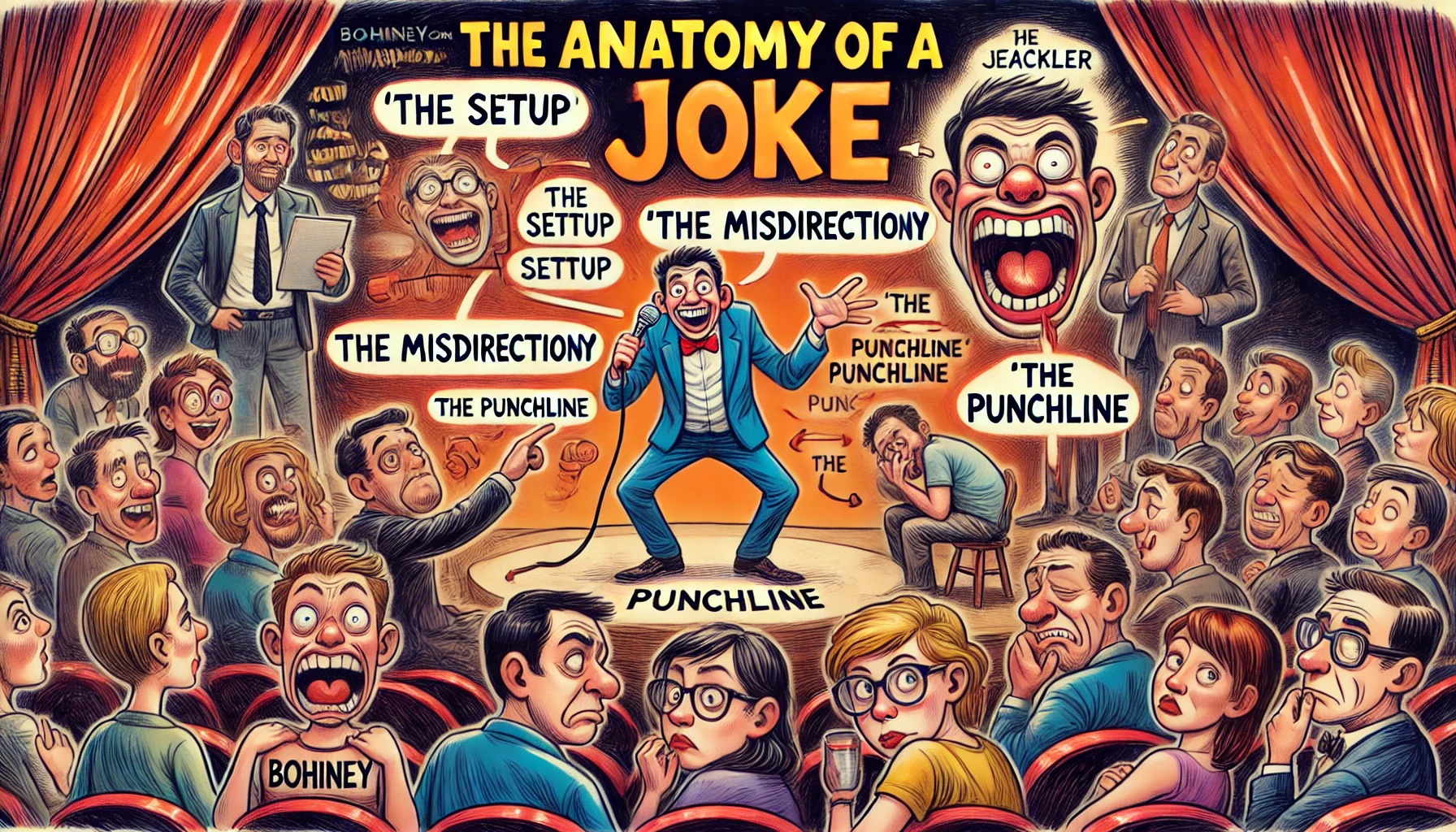
The Anatomy of a Joke
Jokes aren’t just random sentences that stumbled into a bar together. There’s a structure, a rhythm—almost a science—to them. Every good joke contains three essential elements:
- The Setup: This is where you lure the audience in, like a magician setting up a trick.
- Example: “I told my wife she should embrace her mistakes.”
- The Misdirection: The moment when they think they know where you’re going… but they don’t.
- Example: “She gave me a hug.”
- The Punchline: The unexpected turn that flips their expectation and lands the laugh.
- Example: “Then she left me.”
Why Do Some Jokes Work While Others Flop?
The difference between a killer joke and a comedy disaster is timing, delivery, and the audience’s willingness to be amused. If you walk into a funeral and tell a knock-knock joke, it’s less “ha-ha funny” and more “why is security escorting me out?”
Jokes thrive on surprise. They set up an expectation and then yank the rug out from under it. That’s why you don’t explain a joke after telling it—because nothing kills humor faster than dissecting it. It’s like stopping mid-dance move to describe how your knees are bending.
The Jokes That Transcend Time
Some jokes work no matter where, when, or how they’re told. These are the universally funny bits—often built on human nature, absurdity, or the inescapable tragedy of existence. (Dark? Yes. Accurate? Also yes.)
Examples:
- Irony: “I love long walks—especially when they’re taken by people who annoy me.”
- Absurdity: “I asked my dog what two minus two is. He said nothing.”
- Relatable Pain: “I used to be in shape. Then I learned what cake was.”
What Makes a Joke Universally Funny?
- Relatability: If everyone’s experienced it, it’s probably funny.
- Exaggeration: Life’s ridiculous; taking it to the extreme makes it funnier.
- Wordplay: The right words in the right order at the right time. It’s comedy magic.
Final Thought: The Joke is Always Alive
A joke isn’t just a laugh—it’s a contract between the teller and the audience. When it works, it’s a high-five from the universe. When it doesn’t, it’s an awkward handshake with reality. But either way, the joke itself never dies. It just waits for the right moment.
And if that moment never comes? Well… maybe it’s just ahead of its time.